
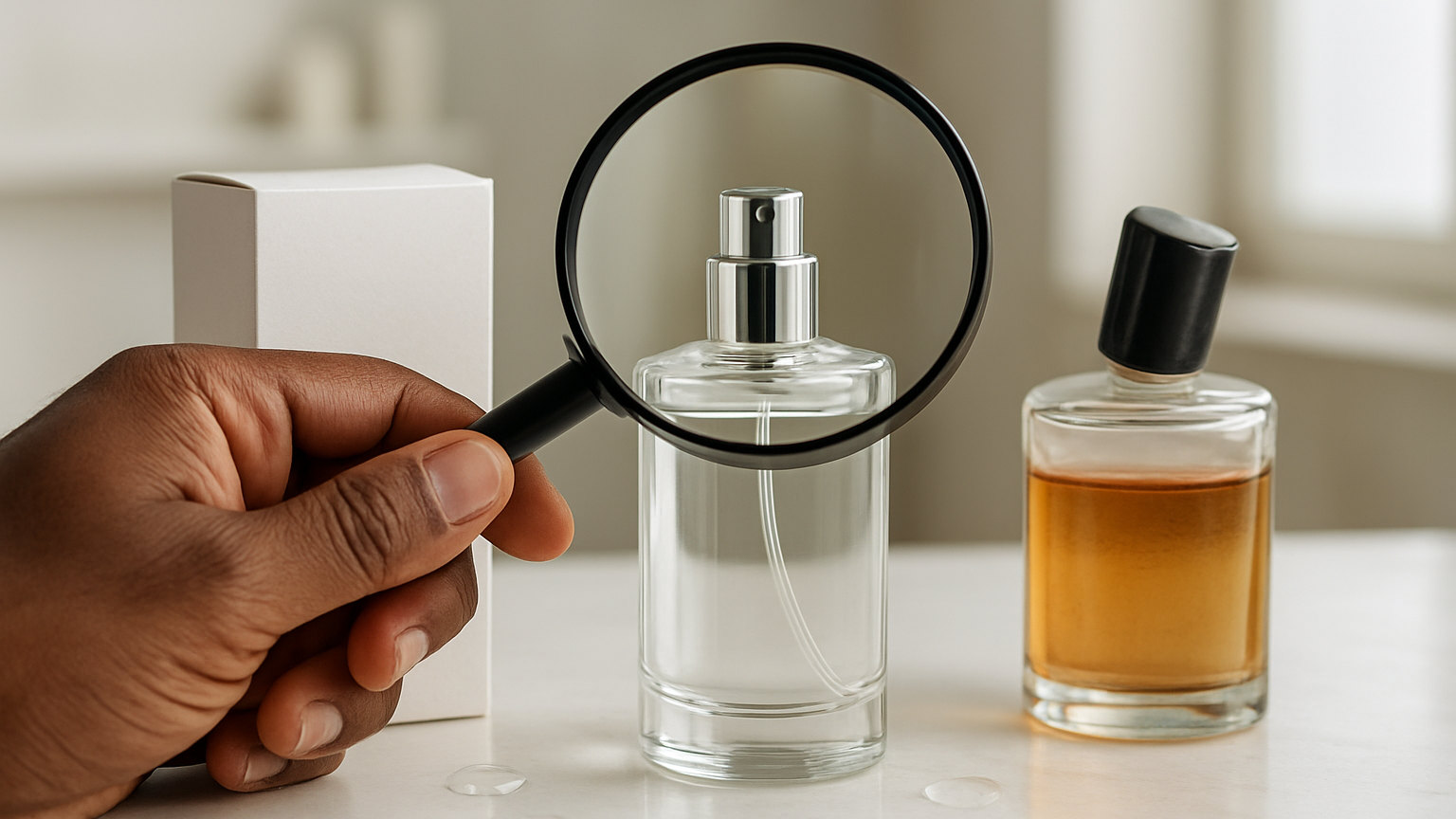
Counterfeit fragrance is one of the most widely faked categories in cosmetics, and the problem is not simply that a fake smells worse. Analyses of seized counterfeits have found substances including unlisted allergens, industrial solvents and, in some cases, urine and bacteria.
Why does it matter beyond quality?
Counterfeits are made outside any regulatory framework, so nothing in them has been assessed for safety.
Trading standards seizures have identified fakes containing methanol, high levels of restricted allergens and contaminants from unsanitary production.
Reactions including chemical burns, rashes and eye irritation have been reported.
Since fragrance is applied directly to skin, frequently to the neck and near the eyes, this is a genuine health matter rather than a consumer annoyance.
What are the warning signs on price?
A current release at a very heavy discount, which is the clearest signal. Fragrance houses control pricing tightly.
Discontinued or older lines are legitimately discounted, so context matters.
Grey market stock, genuine product sold outside authorised channels, is real and legal and frequently the explanation for a moderate discount.
Anything at a fraction of the retail price on a marketplace listing should be assumed counterfeit.
What should you check on the packaging?
Cellophane wrapping, which on genuine product is tight, neatly folded and sealed. Loose, thick or clumsily applied wrapping is a common tell.
Print quality on the box: blurred text, wrong fonts, spelling errors and colour that is slightly off.
The batch code, which should appear both on the box and on the bottle and should match. Missing or mismatched codes indicate a fake.
Barcode and country of origin details, which should be present and legible.
What should you check on the bottle?
Glass quality: genuine bottles are heavier, with clean seams and no bubbles in the glass.
The cap, which should fit precisely and, on many designer bottles, sit with a specific weight and click.
The atomiser, which should spray a fine even mist rather than a jet or a splutter.
The liquid, which should be clear rather than cloudy, and the fill level, which is consistent on genuine product.
Labels applied crookedly or with visible adhesive.
What does a fake smell like?
Strongly alcoholic on opening, since cheap ethanol is used as filler.
Little development, so it smells the same after two hours as at the first spray, because the composition lacks the range of molecules that create the pyramid.
Very short longevity, frequently under an hour.
Close on the opening and wrong on the drydown, which is the most common pattern and the reason people notice only later.
Where should you buy?
Directly from the brand, from department stores, or from established high street retailers.
Authorised online retailers, checked against the brand's own list of stockists where one is published.
Reputable discount perfumeries, which sell genuine grey market and end-of-line stock.
Avoid marketplace listings from unknown sellers, social media sellers and anything sold at a market stall or from a car boot.
What about dupes and inspired-by fragrances?
These are a different thing entirely and are legal. They are original compositions designed to resemble a well-known fragrance, sold under their own name and not pretending to be the original.
They are made under the same safety regulations as any cosmetic, so they carry no contamination risk.
Quality varies and many are decent, and the material costs are lower so they generally lack the complexity and longevity of what they imitate.
The distinction is honesty: a dupe says what it is, and a counterfeit claims to be something it is not.
What should you do if you have bought one?
Stop using it, particularly if you have had any skin reaction.
Contact the seller and the platform for a refund, which marketplaces are generally obliged to provide for counterfeit goods.
Report it to Trading Standards through Citizens Advice, which is the route in the UK.
Keep the packaging as evidence.
Pay by card or through a platform offering buyer protection, since that is the most reliable route to a refund.


