
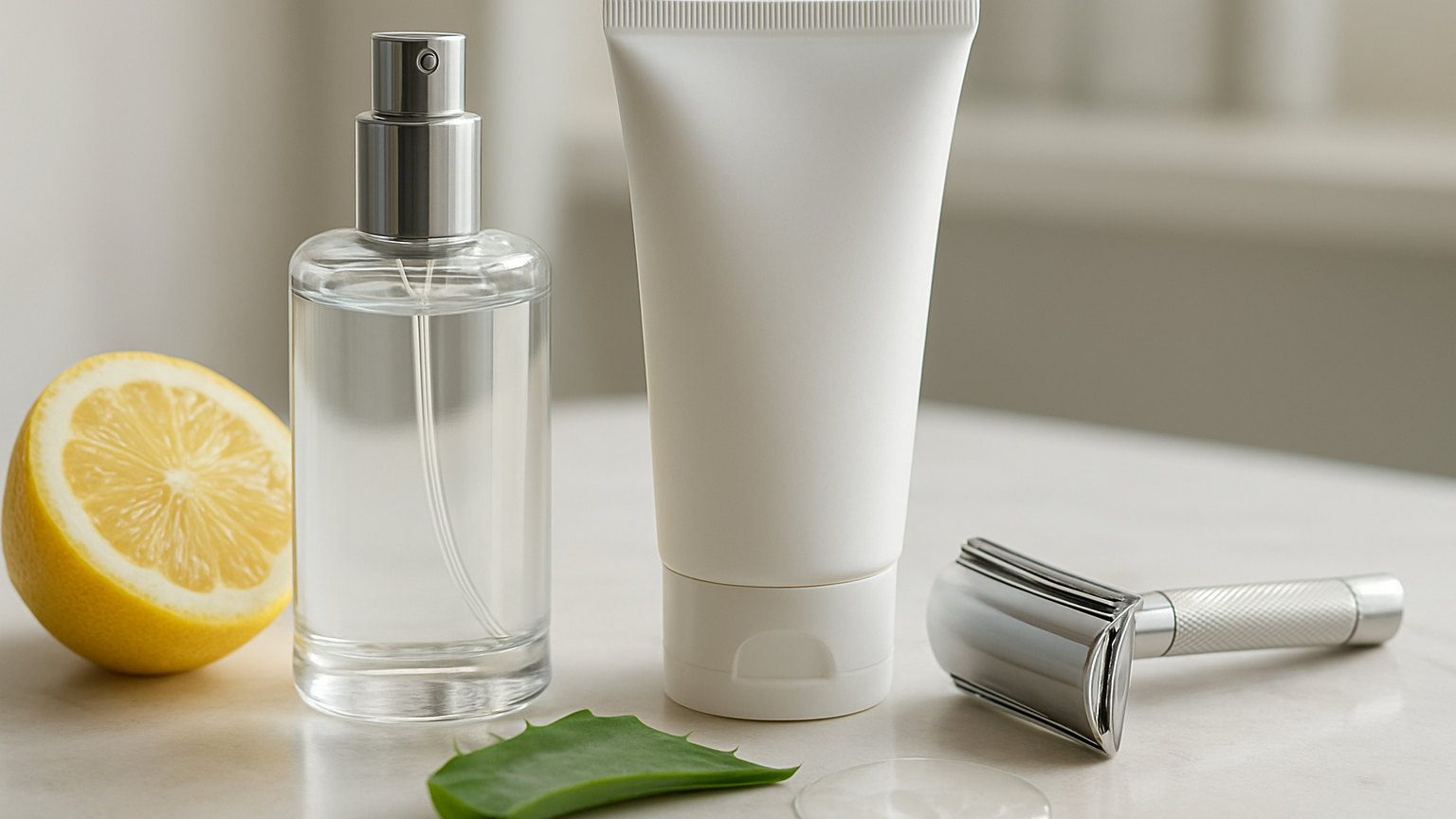
Aftershave has two meanings that have drifted apart. In the strict sense it is a product applied to skin after shaving to disinfect and soothe. Colloquially it means any fragrance marketed to men, which is a different thing entirely.
What is a genuine aftershave?
A liquid applied immediately after shaving, traditionally alcohol-based, intended to disinfect small nicks and close the skin.
Concentration of fragrance is low, typically one to three per cent, so any scent lasts an hour or less.
Modern versions frequently include soothing ingredients such as aloe, glycerin or witch hazel.
It is a skincare product with a scent rather than a fragrance product, which is the distinction that matters.
Why does traditional aftershave sting?
Alcohol on freshly shaved skin, which has just had its top layer scraped and is frequently microscopically damaged.
The sting was historically taken as evidence that it was working, and it is evidence of irritation.
Alcohol does disinfect, and it also strips the barrier and dries the skin, which for many people worsens razor burn rather than relieving it.
For anyone with sensitive skin, eczema or persistent shaving irritation, alcohol-based aftershave is usually the wrong choice.
What should you use instead?
An aftershave balm, which is a moisturising lotion designed for post-shave skin. Usually alcohol-free, with soothing and hydrating ingredients.
An unfragranced emollient, which does the same job for less.
Witch hazel, which is astringent without the alcohol content of traditional splashes.
Nothing at all, which is a legitimate option if your skin does not react to shaving.
Cool water rinse, then a balm, is the routine that suits most people.
What is the fragrance version?
Products marketed as aftershave in shops are usually eau de toilette, at five to fifteen per cent concentration, intended as fragrance rather than skincare.
They are formulated to be worn like any other fragrance, and applying them to freshly shaved skin is what causes the sting people associate with the category.
Check the label: if it says eau de toilette or eau de parfum, it is a fragrance and should be treated as one.
Apply it after shaving has settled, to pulse points rather than to the shaved area.
Is there any difference between men's and women's fragrance?
In composition, no. The molecules are identical, and there is nothing inherently gendered about a wood, a floral or a citrus.
The distinction is a marketing convention that varies by era and country. Lavender was considered feminine in Britain for much of the twentieth century and masculine in France.
Fougere compositions were assigned to men and floral aldehydes to women largely by twentieth-century advertising rather than by anything in the chemistry.
Many houses, particularly niche ones, do not divide their ranges at all, and testing across both counters doubles the field available.
What is the order of a shaving routine?
Warm water and a pre-shave oil or cream to soften the hair.
Shave with the grain, with a sharp blade and minimal pressure.
Rinse with cool water, which closes pores and removes residue.
Pat dry, then apply a balm or emollient while skin is slightly damp.
Apply fragrance separately, to the neck or wrists rather than to the shaved area, and ideally a few minutes later.
What causes razor burn and what helps?
Blunt blades, shaving against the grain, too much pressure and dry shaving, in roughly that order.
Alcohol-based products applied immediately afterwards make it worse.
A balm containing aloe, allantoin or panthenol soothes it, and a cool compress helps immediately.
Persistent irritation is worth changing the routine for rather than treating repeatedly.
What should you actually buy?
A balm or emollient for after shaving, chosen for the skin rather than the scent, and ideally unfragranced.
A fragrance chosen separately, tested properly on skin over several hours.
Treating them as one purchase is why so many people end up with a stinging splash they use out of habit.


