
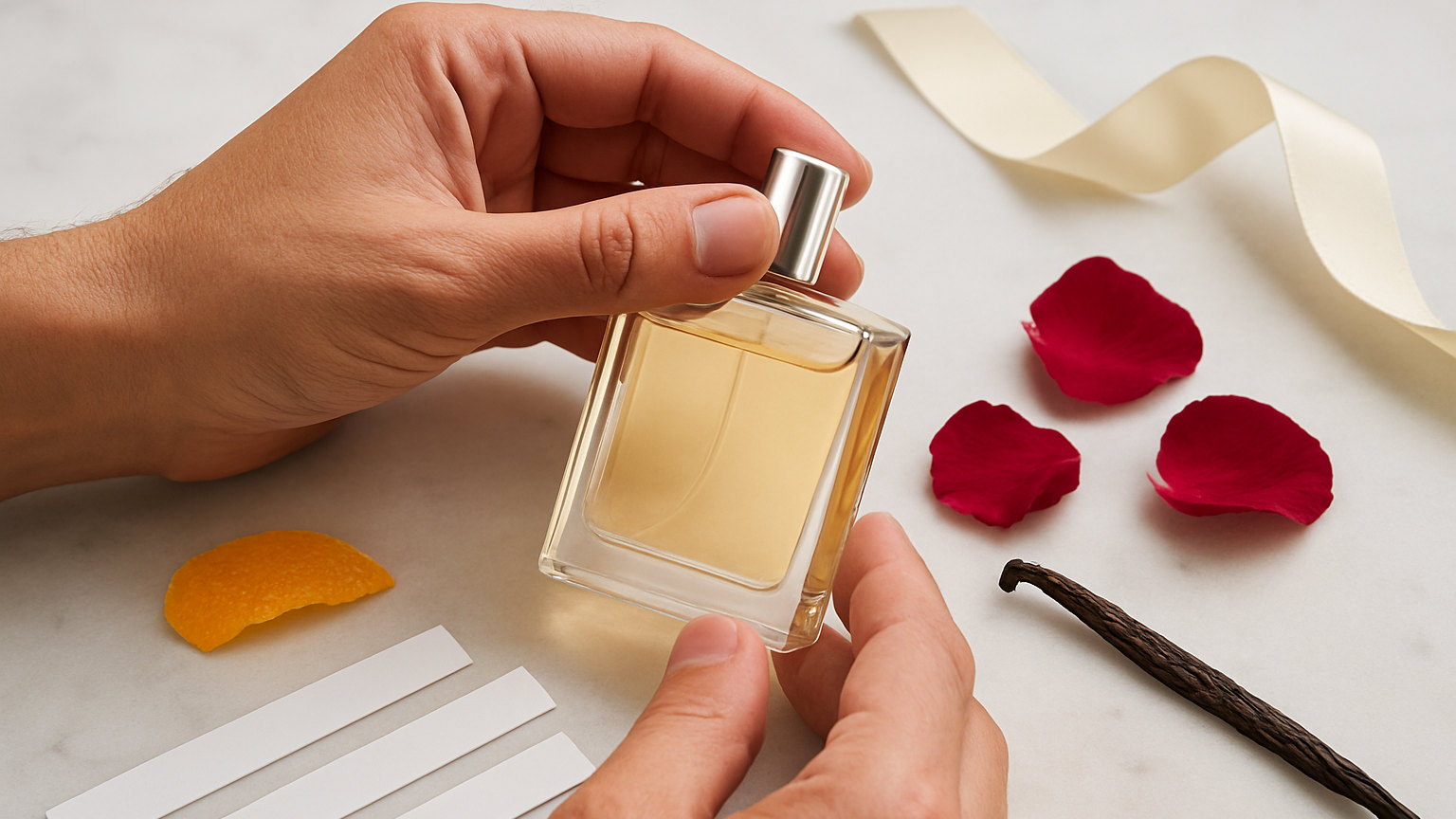
Perfume is a common gift and a difficult one, because it depends on personal taste, individual skin chemistry and associations nobody else can see. There are ways to improve the odds considerably.
Why is it so difficult?
Fragrance smells different on different people, so something you like on yourself may not work on them.
Taste in scent is strongly tied to memory and association, which are invisible from outside.
A fragrance someone dislikes is unusable rather than merely disappointing, unlike most gifts.
And it is expensive enough that a wrong choice is uncomfortable for both people.
What should you find out first?
What they already wear, which is the single most useful piece of information. Photograph the bottle, including the concentration.
What they have worn in the past and stopped, which tells you what to avoid.
Whether they prefer light or heavy, fresh or warm, sweet or dry.
Whether they react to fragrance on skin, since some people can only wear it on clothing.
Looking at their bathroom shelf is more informative than asking, if that is available to you.
How do you use what they already wear?
Take the bottle to a counter and ask for something in the same family, which is what assistants are good at.
Look up the notes of their current fragrance and find the shared ones, then look for other fragrances built around those.
Buying a different concentration of something they already love is a low-risk option, particularly if they own the eau de toilette and would enjoy the parfum.
Replacing a bottle they have nearly finished is unimaginative and almost always welcome.
What are the safer options?
A discovery or sample set, which lets them try several and choose. Many houses sell these and some deduct the cost from a subsequent full bottle.
A gift voucher for a shop with a good fragrance counter, which is less personal and far more likely to be used.
A body product from a range they already wear: a matching lotion or shower gel, which extends something they like.
A smaller bottle of something you have good reason to think they will like, since thirty millilitres of the right thing beats a hundred of the wrong.
What should you avoid?
Buying something because you like it on yourself.
Buying the bestseller or the heavily advertised release, which is what everyone else is wearing.
Anything very unusual or challenging as a first gift, since niche compositions are polarising.
Buying from an online marketplace, where counterfeits are widespread and can contain unlisted allergens.
Buying a very large bottle of something unfamiliar.
What about gift sets?
Sets pairing a fragrance with a matching body lotion or shower gel are good value and extend the scent, since layering improves longevity.
Miniature collections from a single house allow exploration without commitment.
Check the concentrations, since sets sometimes pair a small eau de parfum with body products in a lighter version.
Seasonal sets are frequently discontinued lines, which is fine if the fragrance is good and worth knowing before assuming it can be repurchased.
Does the presentation matter?
More than with most gifts, since a great deal of what people pay for in fragrance is the bottle and the box.
Keep the packaging intact, since the box also protects the fragrance from light and is worth keeping for storage.
Include the receipt discreetly, which makes exchange possible without awkwardness.
Most department stores will exchange unopened fragrance, and once opened it generally cannot be returned, so mentioning where it came from is a kindness.
What if you get it wrong?
It happens frequently, and it is not a failure of thoughtfulness.
A fragrance that does not suit someone can still be worn on clothing or used to scent a drawer.
Saying that you kept the receipt and would rather they had something they love removes the obligation to pretend.
And for the following year, a discovery set or a voucher is a perfectly respectable choice rather than a lazy one.


