
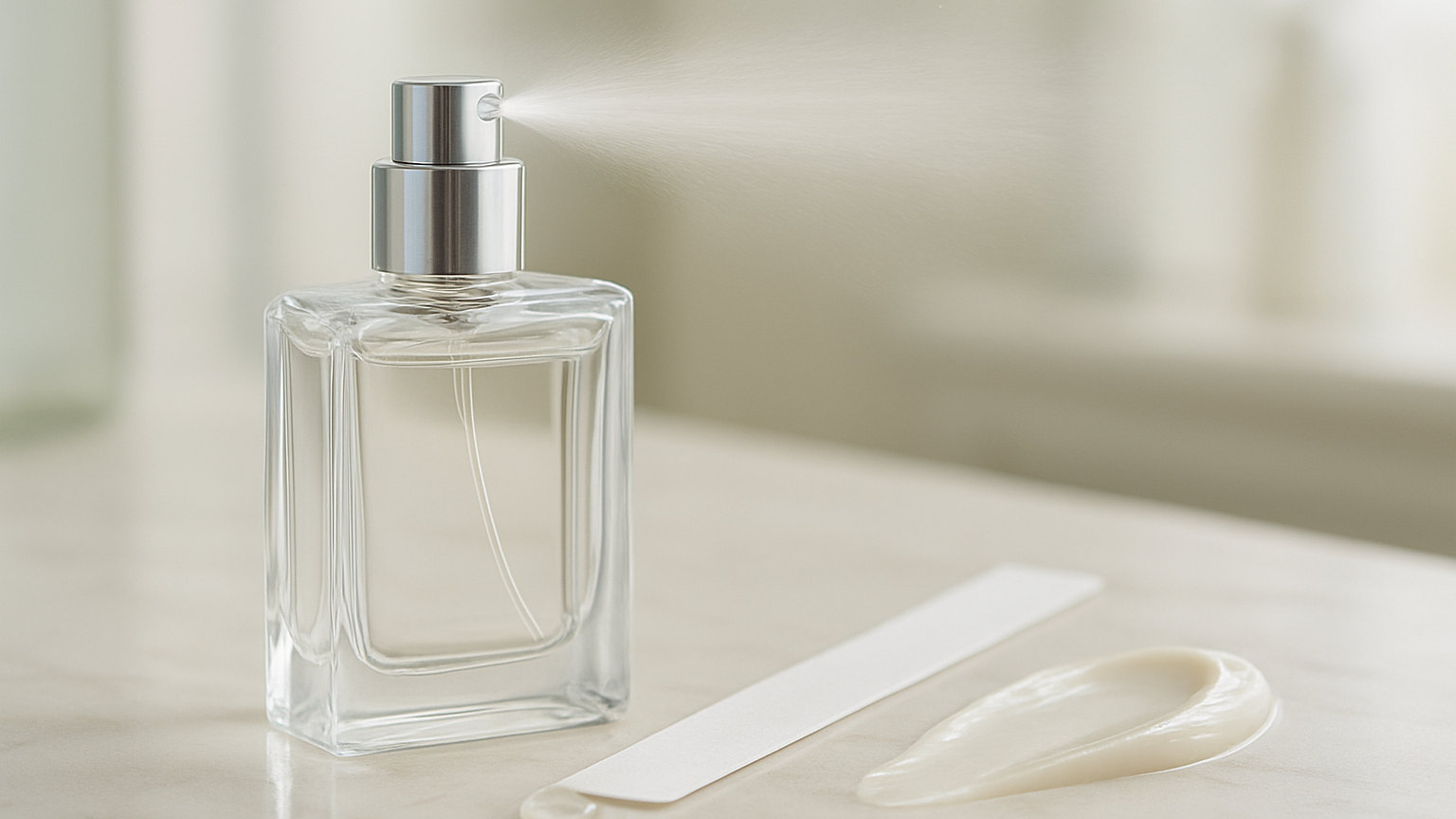
The commonest reason a fragrance seems to vanish is that you have stopped perceiving it while everyone else can still smell it. The genuine causes of poor longevity are fewer and more fixable than the complaint suggests.
What is olfactory fatigue?
The nose adapts to a constant smell within minutes and stops registering it, which is a normal neurological process rather than a fault.
It exists so that new smells, which might matter, stand out against a background you have already assessed.
It is why you cannot smell your own home and why your fragrance disappears after twenty minutes while others notice it clearly.
The practical consequence is that reapplying because you cannot smell it is how people end up wearing considerably too much.
Ask someone else rather than trusting your own nose.
How does skin type affect it?
Fragrance molecules cling to oil, so oily skin holds scent for longer and can amplify base notes.
Dry skin releases fragrance faster and gives shorter wear, which is the most common genuine cause of poor longevity.
Skin pH also affects how molecules behave, which is part of why the same fragrance smells different on different people.
This is not something to fix so much as to work with: dry skin needs a moisturised base and a higher concentration.
What does concentration determine?
How much aromatic material is present, which sets a ceiling on longevity that no technique overcomes.
Eau de cologne lasts up to two hours. Eau de toilette two to four. Eau de parfum four to six. Parfum six to eight or more.
Expecting eight hours from an eau de toilette is expecting something it was not made to do.
If longevity matters, buying the higher concentration of a fragrance you already like is more effective than any application trick.
Does the composition matter?
Considerably. Citrus, aquatic and light green notes are made of small volatile molecules that evaporate quickly regardless of concentration.
A fresh citrus fragrance lasting two hours is behaving normally rather than failing.
Woody, amber, musk and vanilla notes are heavier and last far longer.
If longevity is a priority, choosing from the heavier families does more than anything else.
What genuinely extends it?
Moisturised skin, which is the single most effective step. An unscented moisturiser or plain balm on the pulse points before spraying.
Applying after a shower, while skin is warm and slightly damp.
Layering with a matching body product from the same range.
Applying to clothing as well as skin, which holds fragrance much longer.
Applying to hair or a scarf, with the caveat that alcohol dries hair.
What does not work?
Rubbing the wrists together, which crushes molecules and accelerates the top notes.
Applying more in one spot, which saturates rather than extends.
Spraying into the air and walking through it, which puts most of the product on the floor.
Applying to clothes and expecting the same development as on skin, since skin chemistry is part of how a fragrance unfolds.
Vaseline on pulse points, a common suggestion, which is essentially the moisturiser point stated less usefully.
Does the environment change it?
Heat increases evaporation, so fragrance projects more strongly and lasts less long in summer.
Cold and dry air reduce projection, so a scent that felt correct in July can seem absent in January.
Humidity helps fragrance carry and can make it feel heavier.
Many people keep lighter fragrances for summer and heavier ones for winter for exactly this reason, which is a practical adjustment rather than a rule.
When is the bottle the problem?
Perfume degrades with light, heat and air, and an opened bottle typically lasts three to five years.
A fragrance stored on a sunny windowsill or in a bathroom deteriorates far faster.
Signs are a darker colour, a sour or metallic opening, and top notes that have vanished entirely.
Reformulation is also real: a repurchased bottle may genuinely differ from an older one under the same name, which is a common complaint rather than imagination.


