
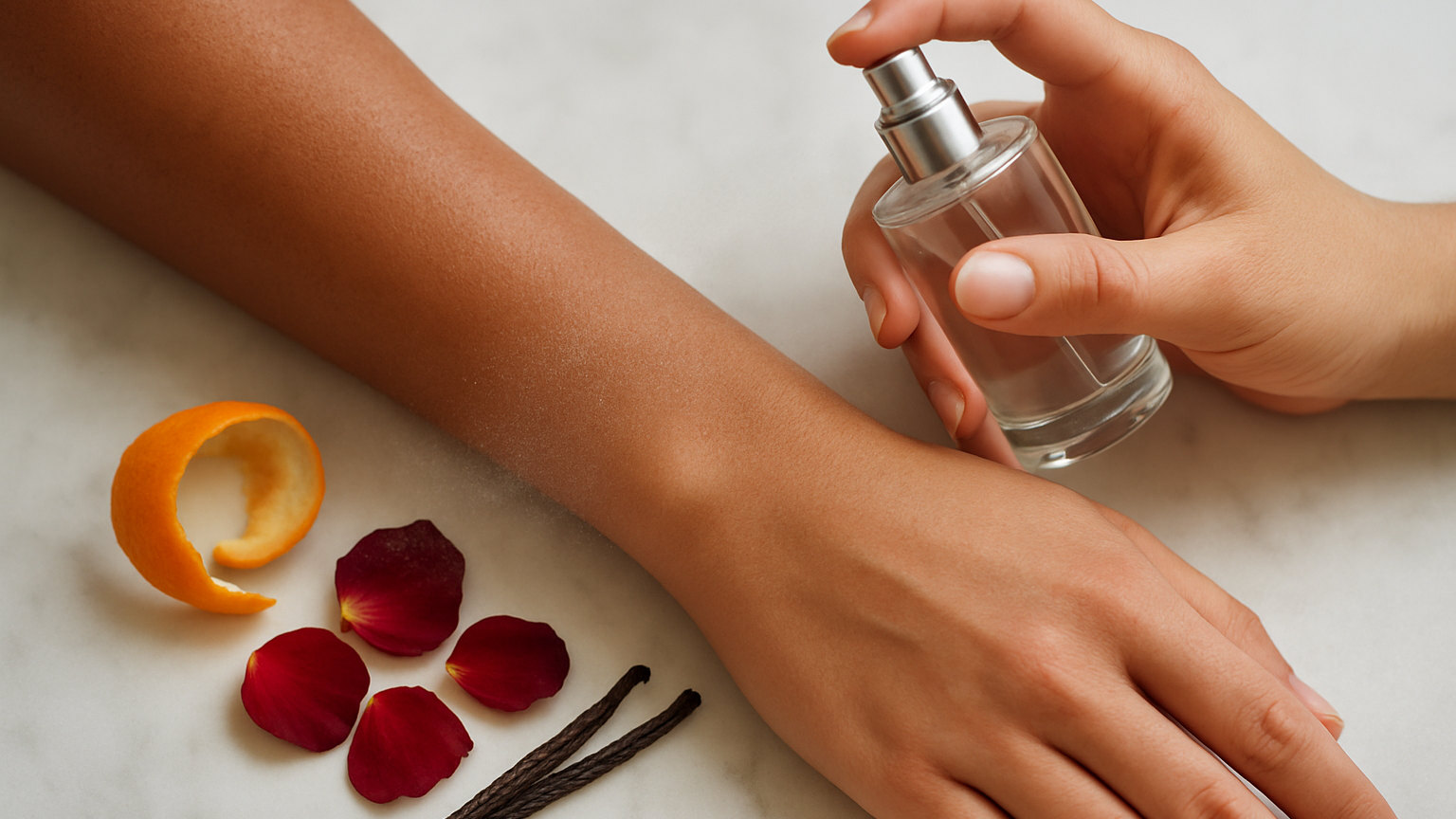
The idea that a fragrance smells different on different people is sometimes dismissed as marketing. It is not. Several measurable factors change how aromatic molecules evaporate and interact, and some of them shift week to week.
What actually causes it?
Sebum, which is the largest factor. Fragrance molecules dissolve in oil, so oilier skin holds them longer and releases them more slowly, emphasising base notes.
Skin pH, which affects the stability of certain molecules.
Skin temperature, since warmth accelerates evaporation and increases projection.
The skin microbiome, the bacteria living on the surface, which produce their own volatile compounds that combine with the fragrance.
Your own natural scent, which is genetically determined and forms the background everything else sits against.
How does skin type change it?
Oily skin holds fragrance longer, projects more, and tends to amplify warm and heavy notes: amber, vanilla, musk and woods.
Dry skin releases fragrance faster and gives shorter wear, so a scent can seem lighter and thinner than intended.
This is why the same eau de parfum lasts eight hours on one person and three on another, with no difference in application.
Moisturising before applying largely closes the gap, since it gives the fragrance oil to cling to.
Does diet make a difference?
Some, and less than folklore suggests.
Garlic, onion, cumin, curry spices and alcohol produce compounds excreted through sweat, which can alter the background against which a fragrance sits.
A very high-fat diet can affect sebum composition over time.
The effect is real and modest, and it is more relevant to body odour than to how a specific perfume develops.
What about hormones and medication?
Hormonal changes alter both sebum production and body scent, so a fragrance can behave differently across the menstrual cycle, during pregnancy and after the menopause.
Pregnancy also changes how you perceive smell, sometimes dramatically, and a favourite fragrance becoming unbearable is a common and temporary experience.
Some medications alter sweat composition or sense of smell, including certain antidepressants, antibiotics and chemotherapy.
Thyroid conditions and diabetes both affect skin and sweat, and can change how fragrance behaves.
Does smoking affect it?
Yes, in two ways. Smoke residue on skin, hair and clothing provides a competing background scent.
Smoking also dulls the sense of smell, which frequently leads to over-application.
Sense of smell recovers substantially after stopping, and many people find fragrances they wore for years smell different afterwards.
Why does it smell different from the blotter?
Paper has no oil, no warmth, no bacteria and no pH, so a blotter shows the composition in isolation.
Skin adds all four, which is why a fragrance can be appealing on paper and unwearable on you, or the reverse.
Blotters are useful for a quick first filter and useless for a decision.
Testing on skin and waiting four hours is the only reliable method.
How should you test properly?
On clean skin without other fragrance, ideally not immediately after showering with a scented product.
One or two fragrances at a time, on separate spots.
Do not rub, which crushes the molecules and distorts the development.
Wait at least four hours, and ideally wear it for a full day.
Test on a normal day rather than an unusually hot or cold one, since temperature changes the result.
What can you control?
Hydration of the skin, which is the largest controllable factor and makes the most difference.
Applying to moisturised skin with an unfragranced product.
Avoiding scented body products that compete underneath.
Applying after a shower, when skin is clean and warm.
And accepting that a fragrance that smells wonderful on someone else may simply not work on you, which is a matter of chemistry rather than of taste.
Does perception change too?
Considerably, and it is separate from what is happening on the skin.
People vary genetically in which molecules they can detect. Some musks are undetectable to a substantial minority, so a fragrance built around them smells almost empty to those people and full to everyone else.
Sense of smell also declines with age, which is why an older person may wear more fragrance without realising.
Temporary loss from a cold, sinus problems or an infection changes everything until it recovers.
What about memory and association?
Smell connects to memory more directly than the other senses, through anatomy rather than metaphor.
This is why a fragrance can be objectively pleasant and personally unwearable because of who wore it, and why a scent can return a memory with unusual force.
It is also why choosing a fragrance for a significant occasion ties it to that occasion permanently, which some people do deliberately.


