
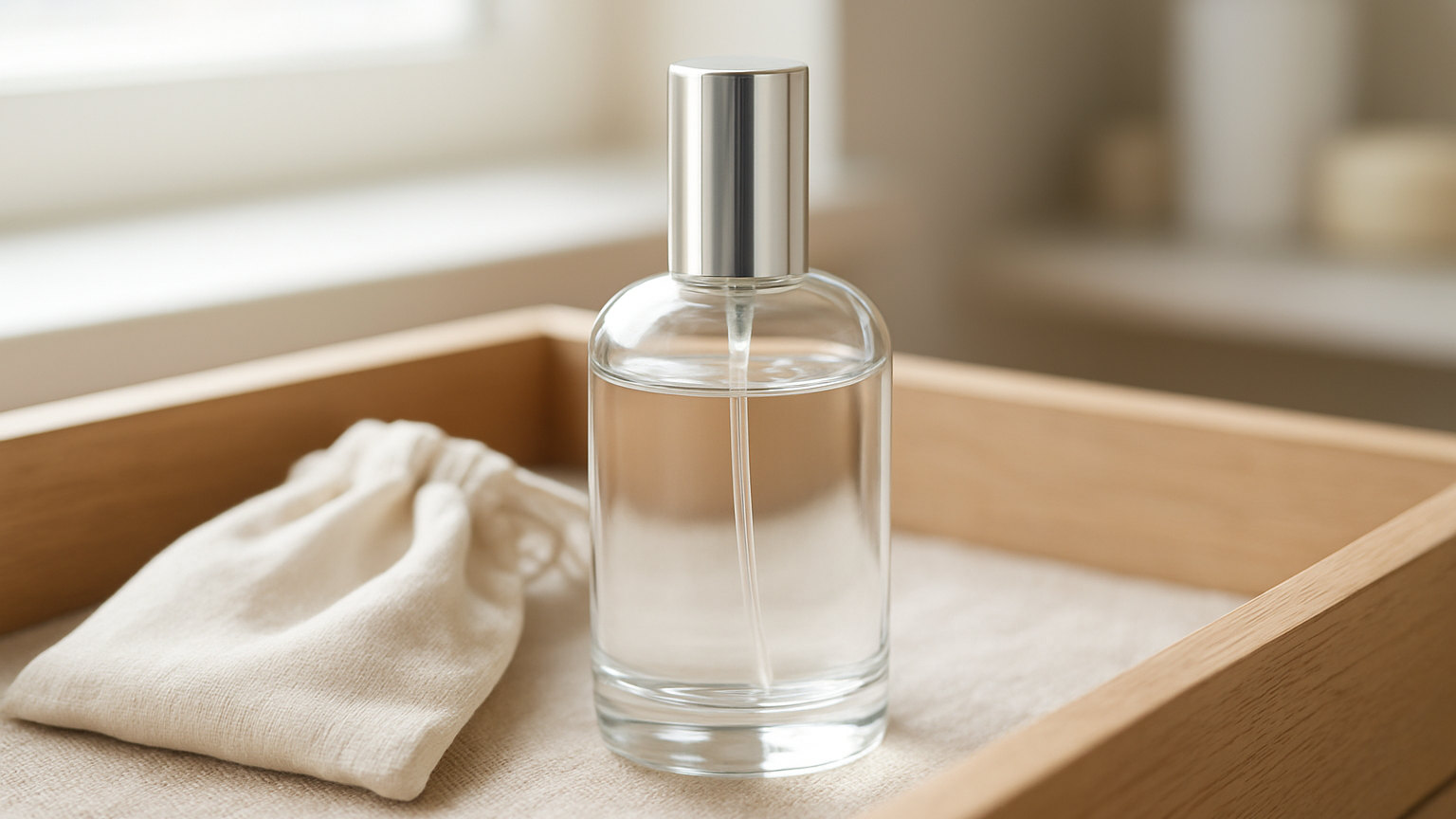
Perfume is a solution of aromatic molecules in alcohol, and three things degrade it: light, heat and oxygen. The two places most people keep it, a bathroom shelf and a bedroom windowsill, are the two that supply all three.
How long does perfume last?
An unopened bottle stored well lasts several years, and frequently longer.
An opened bottle typically lasts three to five years before noticeable degradation.
Cosmetic products carry a period-after-opening symbol, and fragrance is often exempt because the alcohol acts as a preservative, so there is frequently no date on the bottle.
How it is stored matters considerably more than how old it is.
Why is the bathroom the worst place?
Temperature swings from hot showers, which accelerate chemical breakdown.
Humidity, which affects both the composition and the packaging.
Light, in most bathrooms with a window.
Fragrance kept on a bathroom shelf can deteriorate in a year or two rather than five, which surprises people who have always kept it there.
A bedroom drawer or a cupboard is considerably better.
What are the ideal conditions?
Cool, around fifteen to twenty degrees, and stable rather than fluctuating.
Dark, which is what the box is for. Keeping the box and using it is the simplest improvement available.
Upright, so the liquid does not sit against the cap seal.
Cap on, since air exchange oxidises the composition.
A drawer, a wardrobe or a cupboard away from radiators and windows.
Should you keep it in the fridge?
It does no harm and is rarely necessary.
A cool dark drawer achieves almost the same result without dedicating fridge space.
If you do, use a dedicated container rather than storing it beside food, and allow it to reach room temperature before use, since cold fragrance projects poorly.
Avoid the freezer, where repeated freezing and thawing can affect the composition.
How do you tell when it has turned?
The colour darkens, typically toward amber or brown, which is the most visible sign.
The opening smells sour, metallic or vinegary rather than as it should.
The top notes have vanished entirely, so the fragrance opens on its base.
Cloudiness or visible particles.
Some darkening is normal in fragrances containing vanilla, amber and certain naturals, so smell is more reliable than colour alone.
Which fragrances degrade fastest?
Citrus-led compositions, since the small volatile molecules that make them fresh are also the least stable.
Light florals and aquatics.
Fragrances with a high proportion of natural materials, which are less stable than synthetics.
Heavy oriental, amber and woody compositions last longest, and a few genuinely improve with a few years.
What about the bottle itself?
Atomisers are considerably better than splash bottles, since they limit air entering the bottle.
A splash bottle exposes the whole contents to air with every use, so a decanted atomiser is worth using for anything you own in that format.
Dark or opaque glass protects better than clear, which is one reason some houses use it.
Do not decant more than you will use within a few months, since a decant degrades faster than the sealed original.
What about travelling with it?
Small atomisers avoid taking a full bottle, and a decant should be used within a few months rather than kept indefinitely.
Never leave fragrance in a car, where summer temperatures rise far above anything the composition tolerates.
In hold luggage, wrap it and expect pressure changes, which can cause leaking around the collar.
Fragrance counts as a liquid in hand luggage, so under a hundred millilitres in the transparent bag, and it is also flammable, which means airlines limit the total quantity carried.
Does an unused collection deteriorate?
Yes, and this is the practical argument against owning a great many bottles.
An opened bottle degrades whether or not you use it, so a collection of twenty means most of them turning before they are finished.
A bottle used regularly and stored properly will be gone before degradation matters; one opened and left for four years frequently will not.
Buying thirty or fifty millilitre bottles rather than a hundred is the simplest response.
Can you do anything with a bottle that has turned?
Not much for the fragrance itself, since oxidation cannot be reversed.
It can still be used to scent drawers, wardrobes or a handkerchief, where the altered opening matters less.
Perfume is flammable and should not be poured down a drain in quantity or put in general waste, so a household waste recycling centre is the correct route for a large amount.


