
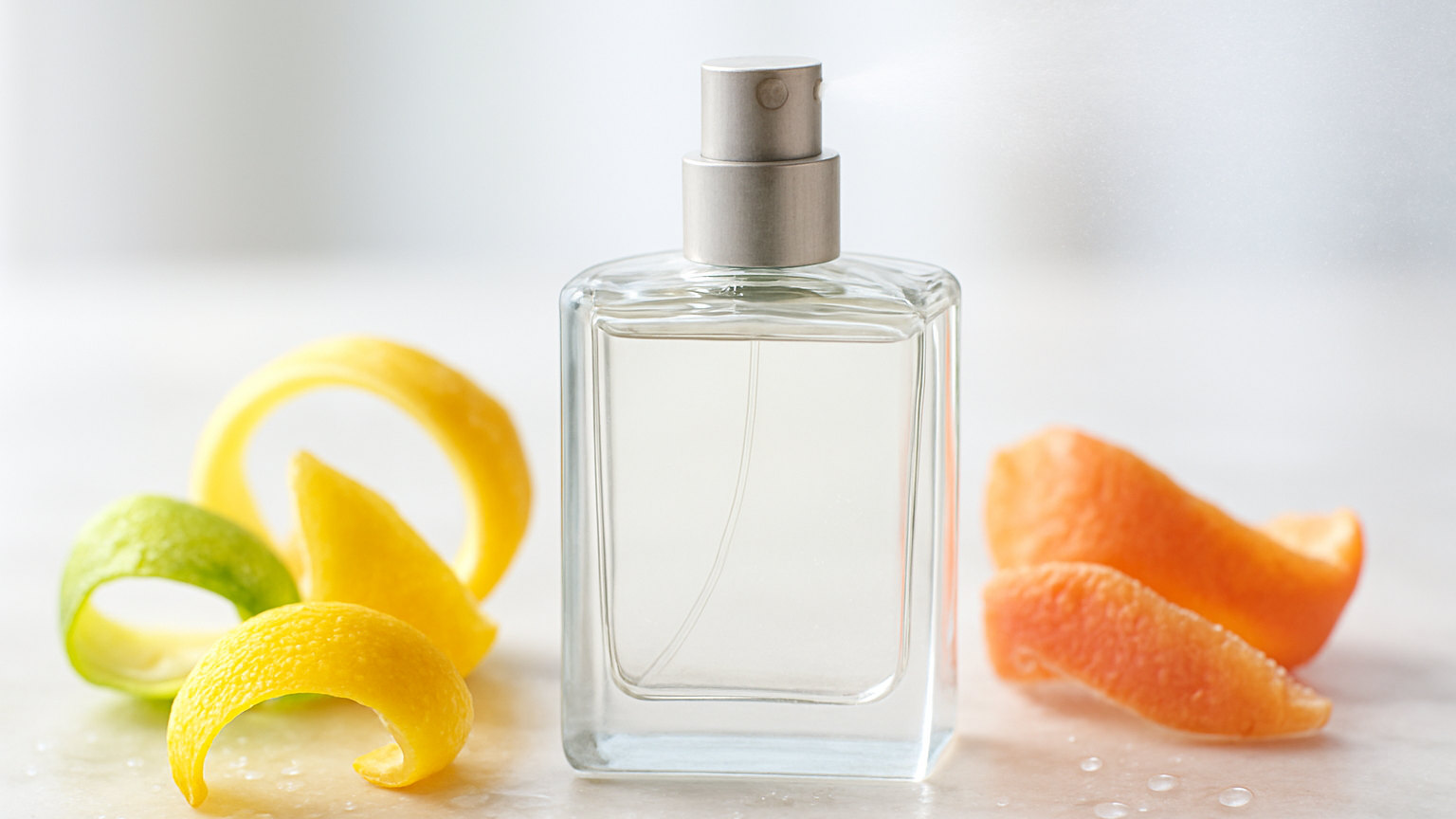
Fresh fragrances are built on small, highly volatile molecules. That is what makes them bright and immediate, and also why they evaporate faster than anything else in perfumery.
What is in the citrus group?
Bergamot, the most used material in perfumery, which is sharper and more bitter than lemon with a floral edge. It opens a vast number of fragrances.
Lemon and lime, sharp and clean.
Orange, sweeter and rounder, and bitter orange, which is drier.
Grapefruit, which adds a slightly sulphurous bitterness that reads as modern.
Neroli, distilled from bitter orange blossom, which is floral and honeyed rather than sharp, and petitgrain from the leaves, which is green and woody.
Why do citrus fragrances fade so quickly?
Because citrus oils are made of small molecules that evaporate within thirty minutes to an hour.
A citrus fragrance lasting two hours is behaving normally rather than failing.
Modern compositions anchor citrus with musks, woods or ambery bases, which extends the impression considerably even as the citrus itself departs.
Eau de cologne, the traditional citrus format, was designed to be splashed liberally and reapplied.
What are green notes?
Cut grass, crushed leaves, stems and sap, which read as sharp, cool and slightly bitter.
Galbanum is the classic green material, intensely bitter and resinous, and defines a whole style of twentieth-century perfumery.
Violet leaf is green and slightly cucumber-like; fig leaf is milky and green.
Green notes read as crisp and slightly austere, and they suit anyone who finds fruity and floral fragrances too sweet.
What are aquatic and marine notes?
The smell of sea air, rain and clean water, which cannot be extracted from anything and is entirely synthetic.
Calone, discovered in the 1960s and used widely from the early 1990s, is the molecule responsible. It smells of melon and sea spray.
The aquatic style dominated the 1990s to the extent that it now dates a fragrance immediately for some people.
Modern marine compositions are subtler, using salt, mineral and ozonic accords rather than the heavy calone of the period.
What are aromatic notes?
Herbs: lavender, rosemary, sage, thyme, basil and mint.
They sit between fresh and woody, adding a clean herbal sharpness.
Lavender is the most important, forming the basis of the fougere family and of a great deal of traditional masculine perfumery.
Mint and basil read as cool and bracing, and are used sparingly since they dominate easily.
Who do fresh fragrances suit?
Anyone wanting something light, clean and uncomplicated.
Hot weather, where heat amplifies projection and heavier compositions become overwhelming.
Offices, gyms, hospitals and any shared space where restraint matters.
Anyone who dislikes sweetness, since fresh compositions are among the driest available.
And anyone new to fragrance, since they are the least demanding place to start.
What are the drawbacks?
Longevity, which is the main one and is inherent rather than a fault.
Similarity, since a great many fresh fragrances smell alike, particularly in the aquatic and clean musk area.
Some citrus materials, particularly bergamot, contain furocoumarins that can cause a photosensitive reaction, though most modern fragrance uses furocoumarin-free versions.
They can read as generic, which is a matter of composition rather than of the family.
How do you get more from them?
Apply to moisturised skin, which extends every fragrance and matters most for the shortest-lived.
Choose a higher concentration, since eau de parfum versions of citrus fragrances last considerably longer.
Look for compositions anchored with woods, vetiver or musk rather than pure citrus.
Reapply during the day, which is what these fragrances were designed for.
And keep the bottle out of the light, since citrus compositions degrade faster than any other family.
What is eau de cologne, historically?
The original citrus format, created in Cologne in the early eighteenth century and built on bergamot, lemon, neroli and rosemary in a light alcohol base.
It was intended to be used generously, splashed rather than sprayed, and reapplied through the day, which suited a period before daily bathing was universal.
Traditional colognes are still made and remain among the most refreshing things in perfumery, particularly in heat.
They also work well for anyone who finds modern fragrance too heavy, since the concentration is low and the character undemanding.


