
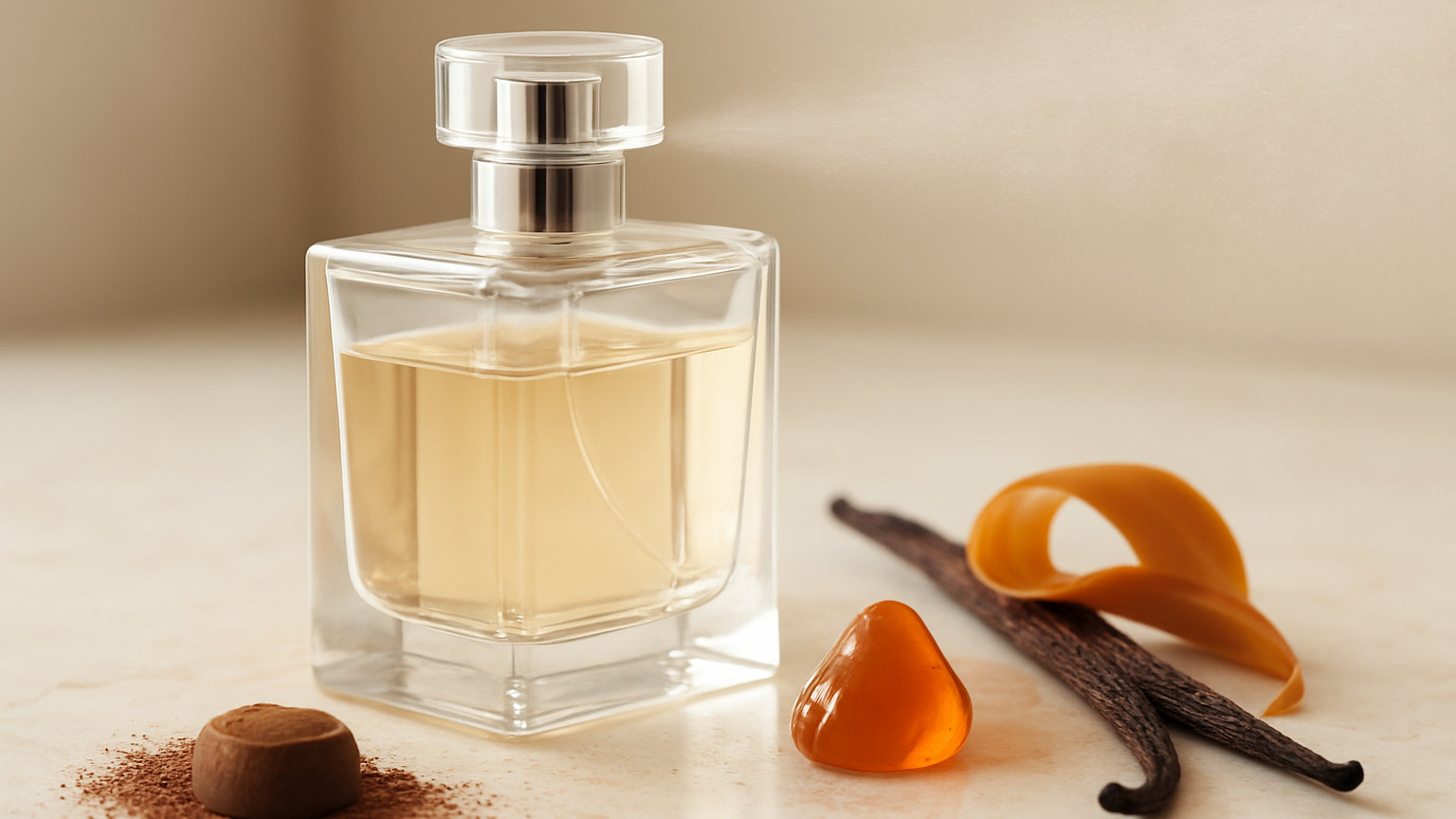
Gourmand fragrances smell of food: vanilla, caramel, chocolate, coffee, almond and sugar. They are the newest major style in perfumery and among the most polarising, and the entire category traces back to a single molecule.
Where did the style come from?
Thierry Mugler's Angel, released in 1992, is generally credited with creating the category.
It combined ethyl maltol, which smells of candyfloss and caramel, with patchouli and chocolate notes, and nothing like it had existed commercially.
It was initially divisive and became extremely successful, and the style it created now dominates a large part of the market.
Ethyl maltol remains the defining molecule of the family.
What are the main notes?
Vanilla, the foundation of most gourmands, warm and sweet.
Caramel and toffee, through ethyl maltol and related molecules.
Chocolate and cocoa, which read as bitter and dusty as much as sweet.
Coffee, which is roasted and slightly bitter and cuts sweetness effectively.
Almond, through benzaldehyde, and tonka bean, which is almond and hay.
Honey, which can turn animalic and slightly sour on skin.
Praline, marshmallow, rum and burnt sugar in more recent releases.
Why are they so divisive?
Because food smells trigger strong and immediate responses, positive or negative, with little middle ground.
They are also sweet and persistent, which is either comforting or cloying depending on the person.
Some people find the association between eating and wearing a scent uncomfortable.
And they are heavily represented in the mainstream market, which produces fatigue for anyone who encounters them constantly.
What are the drier gourmands?
The category is broader than the sweetest examples suggest.
Coffee, cocoa and tobacco notes produce bitter, roasted gourmands that are not sweet at all.
Salt, boozy notes such as rum and whisky, and smoke all cut sweetness.
Nutty gourmands built on pistachio, hazelnut and almond sit between sweet and savoury.
Anyone who dislikes sweet gourmands but likes the idea should look here rather than dismissing the family.
How do they behave on skin?
They are among the most persistent fragrances available, since the base materials are heavy.
Projection is substantial, particularly in warmth, so restraint in application matters.
They can smell different on different people more than most families, since sweetness interacts strongly with skin chemistry.
Honey and some vanillas can turn sour or animalic on some skin, which is worth testing for over several hours.
When do they work?
Cold weather and evening, where the warmth and weight suit the conditions.
They can become overwhelming in heat, since high temperatures amplify sweetness considerably.
They suit shared spaces least of any family, since the projection is significant and the character is distinctive.
One or two sprays is generally sufficient, and these are the fragrances most often over-applied.
Who do they suit?
Anyone who likes warm, sweet, comforting scents.
Anyone wanting longevity, since gourmands last exceptionally well.
They suit anyone who finds fresh fragrances forgettable, since these are the opposite in every respect.
They suit professional settings least, and a light hand and a low concentration is the compromise.
What should you try first?
A vanilla-led fragrance rather than a full caramel or chocolate one, since vanilla is the gentlest entry point.
A coffee or tobacco gourmand if you dislike sweetness but like the warmth.
Test over a full day, since the first ten minutes of a gourmand tell you almost nothing about how it sits after six hours.
And test in the season you intend to wear it, since a gourmand tried in a cool shop in March behaves very differently in August.
Do they make people hungry?
The idea that food-smelling fragrance triggers appetite is repeated frequently and rests on very little.
Food smells do stimulate appetite in the context of eating, and a fragrance on skin is a different context entirely.
The related claim that gourmands are more attractive to others has no support in evidence, and appears in marketing rather than in research.
How have they changed?
Early gourmands were straightforwardly sweet, and the category has broadened considerably.
Recent releases lean on salt, bitterness, smoke and nuts to cut the sugar, producing something closer to a dessert than to a sweet shop.
The style has also spread into other families, so woody and floral fragrances now frequently carry a gourmand accent without being gourmands.


