
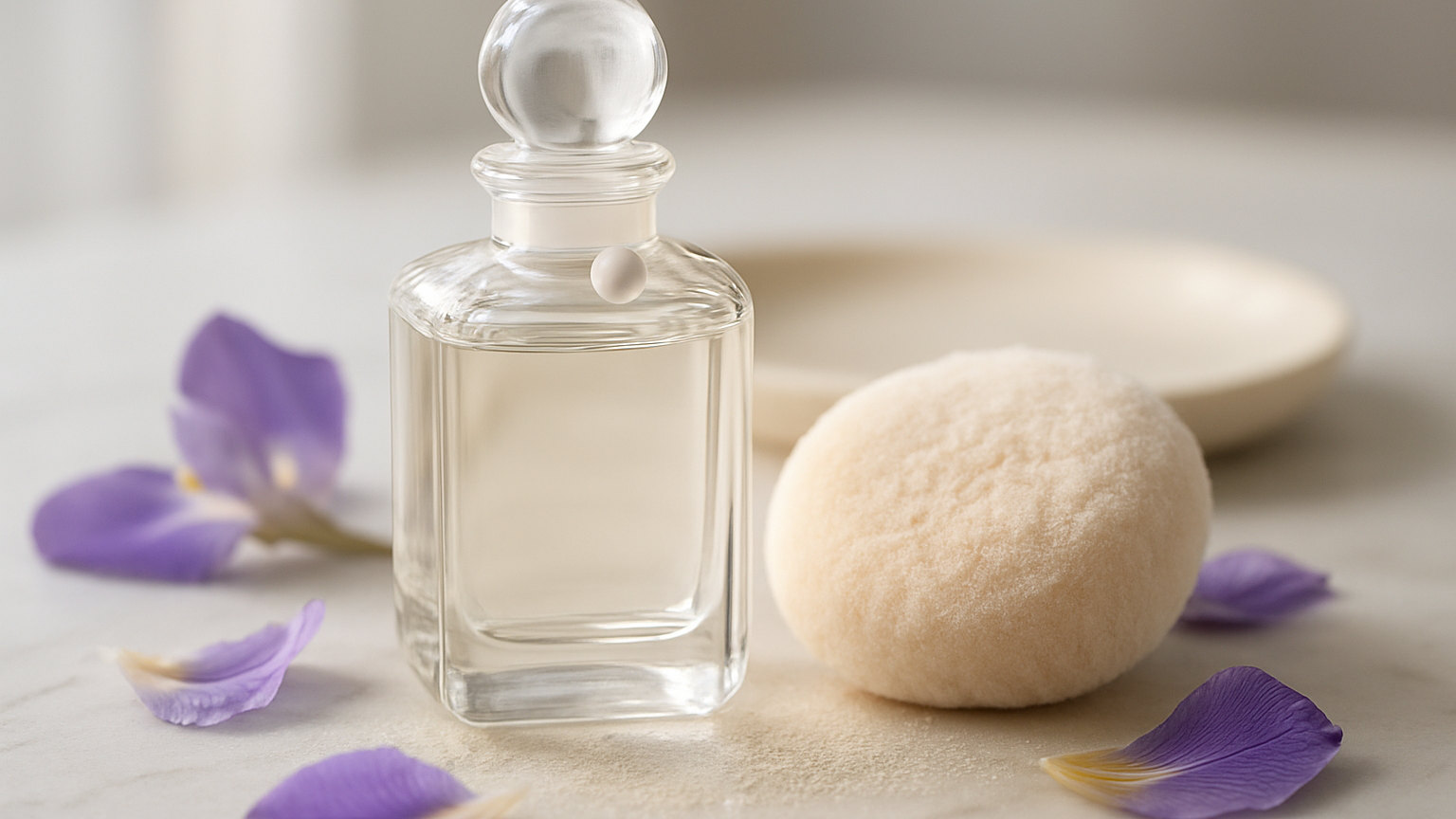
Musk appears in a large majority of modern fragrances, usually in the base, doing work most people never consciously notice. It is also the material most likely to be completely undetectable to the person wearing it.
What is musk?
Originally a secretion from the musk deer, used for centuries and now banned, with the animal protected.
All musk in modern perfumery is synthetic, and there are dozens of different musk molecules with quite different characters.
They range from clean and soapy through powdery and cosmetic to warm, skin-like and slightly animalic.
Musk is used as a fixative as much as a scent, holding lighter materials in place and extending longevity.
What is white musk?
The clean, soft, laundry-like style that dominates modern perfumery and much of the household product market.
It reads as fresh linen, warm skin and cleanliness rather than as anything animal.
It is the reason a great many contemporary fragrances share a similar soft base.
Worn alone it produces the skin scent effect: something that smells like you rather than like perfume.
Why can some people not smell musk?
Specific anosmia, which is a genetic variation in olfactory receptors rather than a general loss of smell.
A substantial minority cannot detect certain musk molecules at all, with estimates varying by molecule and by population.
The consequence is that a fragrance built on musk can smell almost empty to those people and full to everyone else.
It also explains why some people over-apply musky fragrances, since they cannot perceive what others can.
If a widely praised fragrance smells like nothing to you, this is frequently the explanation.
What makes a fragrance powdery?
Iris or orris, made from the dried root rather than the flower, which is cool, powdery and slightly earthy. One of the most expensive materials in perfumery, requiring years of drying.
Violet, through ionones, which are sweet, powdery and slightly woody.
Heliotrope, almond-like and soft.
Aldehydes, which add a waxy, soapy brightness.
Musk and vanilla, which soften everything they touch.
What are aldehydes?
Synthetic molecules that add a sparkling, effervescent, slightly waxy or soapy quality.
Their prominent use from the 1920s defined an entire era of perfumery and produced the classic aldehydic floral style.
They read as bright and abstract rather than resembling anything in nature.
To some people they smell of clean laundry and elegance; to others, of a grandmother's dressing table.
Modern interpretations use them more lightly than the originals, and are worth testing before dismissing the style.
What is a skin scent?
A fragrance that sits close, projects very little and reads as an enhancement of your own smell rather than as an applied perfume.
Usually built on musk, soft woods and light vanilla or iris.
They suit shared spaces, offices and anyone who dislikes announcing their arrival.
The drawback is that you may not smell it at all, both through olfactory fatigue and through musk anosmia.
They are also the fragrances most often described as smelling like nothing by people who cannot detect the base.
Who do they suit?
Anyone wanting something soft, close and undemanding.
Offices, hospitals and shared spaces where projection matters.
Anyone who finds most fragrances too sweet, too sharp or too obvious.
Layering, since musks and soft powders sit beneath almost anything without competing.
Powdery fragrances suit cooler weather better, since they can read as heavy in heat.
What should you know before buying?
Test on skin over several hours, since musk develops slowly and the first ten minutes tell you little.
Ask someone else whether they can smell it, particularly if you cannot, since anosmia is common enough to be worth checking.
Consider that a musk-heavy fragrance may be undetectable to you and clearly present to everyone around you.
And avoid over-applying to compensate, which is the specific risk this family carries.
Why is musk in almost everything?
Because it works as a fixative as well as a scent, slowing the evaporation of lighter materials and holding a composition together.
Without it, most fragrances would lose their structure within an hour or two, so it appears in the base of a large majority of releases regardless of family.
It also softens edges, which is why it is used to round off compositions that would otherwise read as sharp.
Its presence is one reason contemporary fragrances share a family resemblance in their later stages.


