
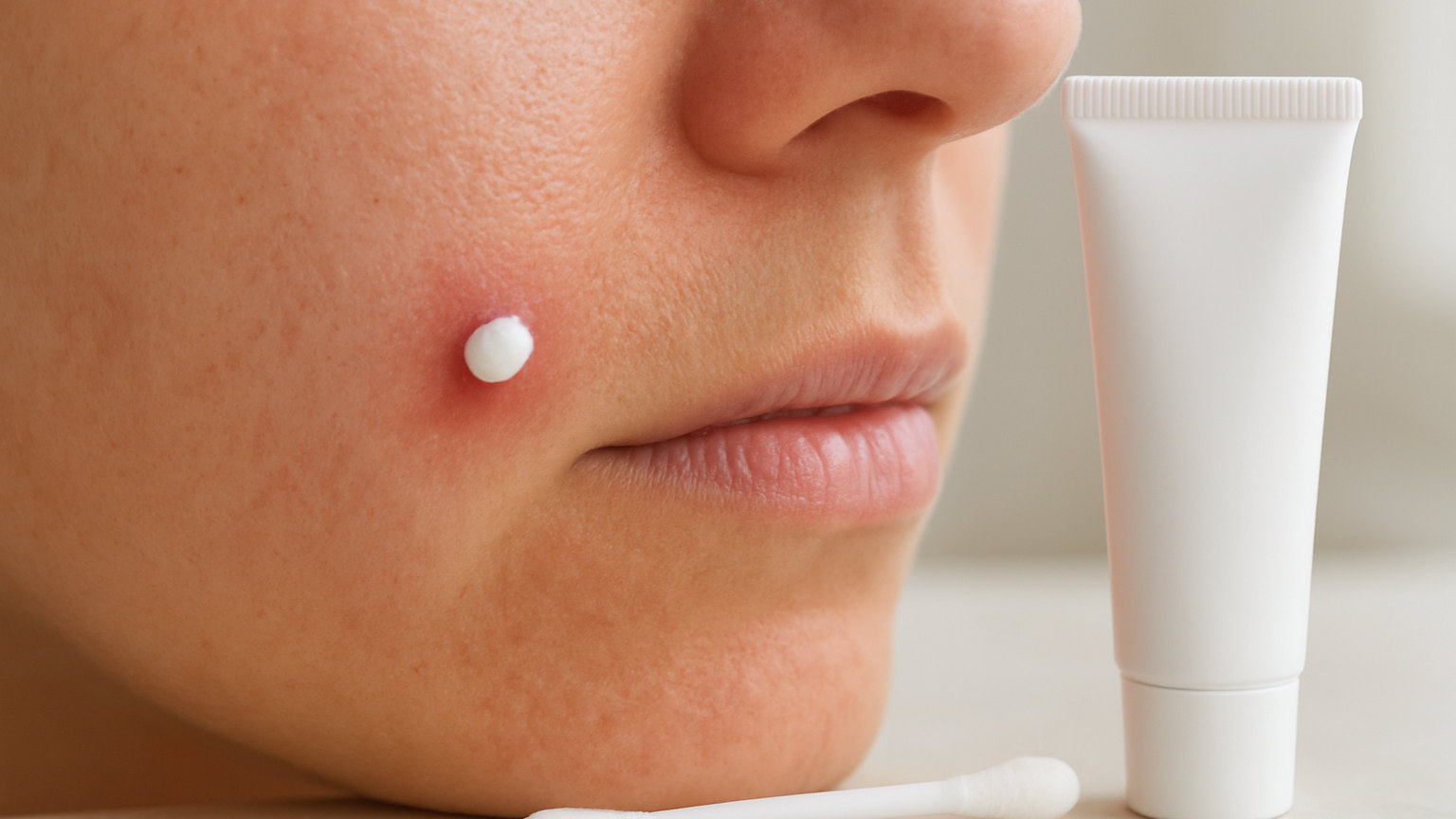
Toothpaste on a spot is one of the most durable pieces of bad advice in skincare, and it survives because it appears to work. The spot is flatter in the morning. What is less obvious is what has happened to the skin around it, and why that leaves you worse off a month later.
Why does it seem to work overnight?
Because it dries the area aggressively, and a dried-out spot is a flatter spot. The reduction you see is dehydration of the surrounding tissue rather than any effect on the blockage, the bacteria or the inflammation inside the follicle.
Nothing in toothpaste is treating acne. The drying comes from sodium lauryl sulfate, alcohol, and in some formulations baking soda, all of which are there to clean teeth and foam pleasantly. Applied to skin they strip lipids indiscriminately.
Was there ever anything in it?
There was a thread of logic, decades ago. Some toothpastes once contained triclosan, an antibacterial agent, which gave the practice a plausible mechanism. Triclosan has since been removed from toothpaste across the UK and EU on safety grounds.
So the ingredient that made the myth semi-defensible has not been in the product for years, while the advice has carried on being passed down unchanged. What remains is the drying, which was never the useful part.
What does it do to the skin around the spot?
Strips the barrier, which is the layer of lipids holding the outermost cells together and keeping water in.
When that barrier is damaged, skin loses water faster, becomes tight and flaky, and responds by producing more oil to compensate. More oil in an area already prone to blockage means more spots over the following weeks. It is a reliable way to turn one spot into a small cluster.
Damaged skin is also more reactive, so the inflammatory part of acne becomes more pronounced. People often notice that the redness around a spot treated this way lasts far longer than the spot itself.
Can it cause a reaction?
Frequently. Menthol, cinnamates and the flavouring compounds in toothpaste are common contact allergens, and the skin on the face is considerably thinner and more permeable than the inside of the mouth.
Contact dermatitis from toothpaste presents as a red, itchy, sometimes weeping patch in the exact shape of where it was applied, which is a distinctive giveaway. Whitening toothpastes are the worst offenders, since hydrogen peroxide and abrasive particles do genuine damage to skin.
What is the actual cost?
A darker mark that lasts longer than the spot would have.
Marks left behind by acne are caused by inflammation, and anything that increases the inflammation increases the mark. Chemical irritation from toothpaste adds a second inflammatory insult on top of the spot, so the post-inflammatory pigmentation is deeper and takes months longer to fade. On deeper skin tones this is a particularly poor trade.
You have therefore swapped a spot that would have cleared in a week for a mark that may take six months.
What should you use instead?
A hydrocolloid patch does what people want toothpaste to do, and does it properly. It draws fluid out of a spot that has come to a head, flattens it overnight, and physically stops you touching it. It costs very little and causes no irritation.
For a red, inflamed spot without a head, benzoyl peroxide at 2.5 per cent dabbed on at night reduces the bacterial load and the inflammation directly. For a blocked spot, salicylic acid is the sensible target.
For a deep, painful cyst, a cold compress reduces swelling and pain, and nothing applied to the surface will reach it.
What about the other home remedies?
Undiluted tea tree oil causes contact dermatitis often enough to be a poor bet, though properly diluted preparations at around 5 per cent have modest evidence behind them. Lemon juice is acidic, unpredictable in strength and photosensitising, which is a genuinely bad combination on facial skin. Baking soda paste disrupts the skin barrier for the same reasons toothpaste does.
The pattern is consistent: remedies that work by irritating or drying skin produce a short-term visual improvement and a longer-term worsening. The products that work do something to the process inside the follicle instead.


