
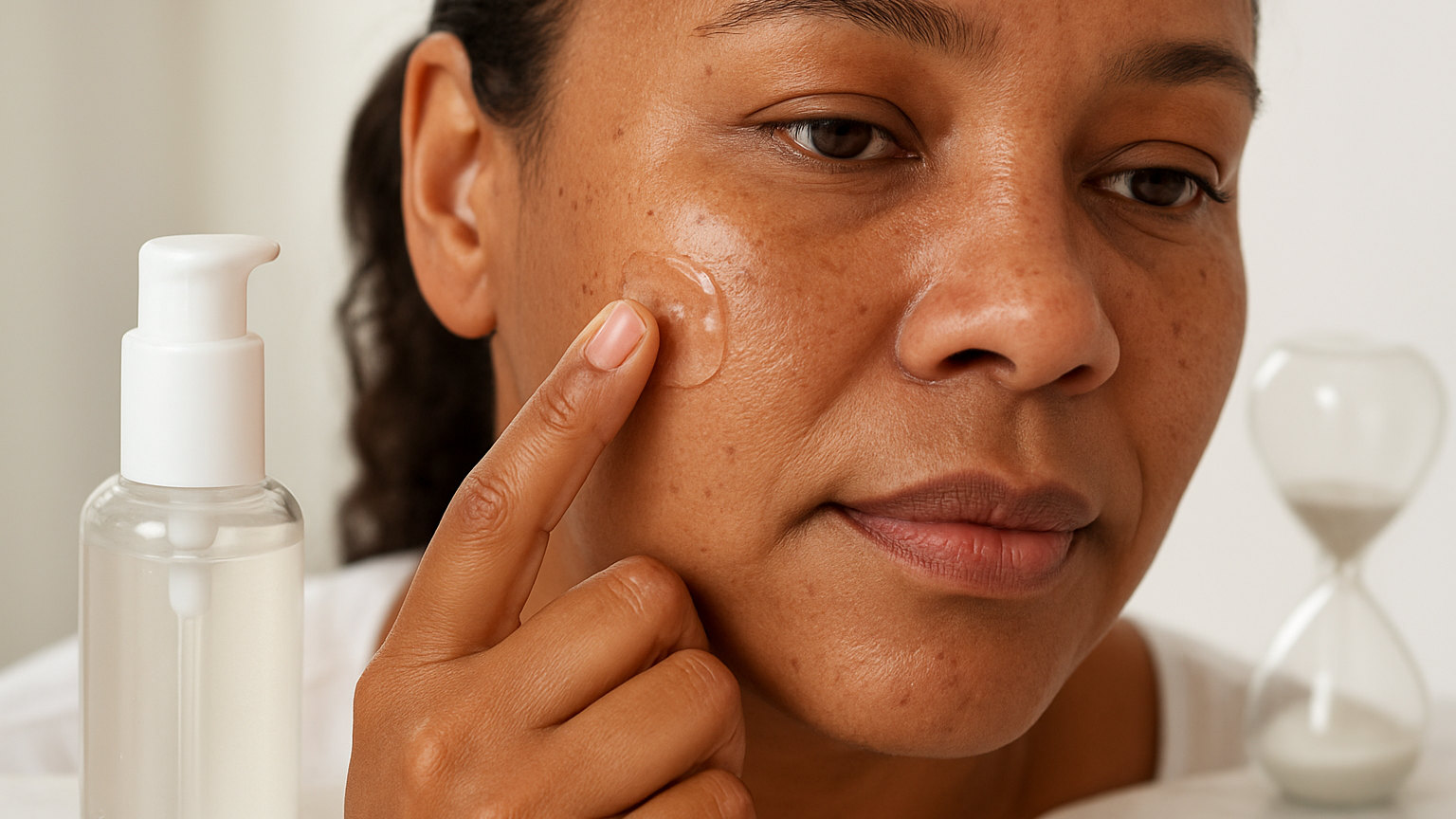
Salicylic acid works on the blockage rather than the spot, which means it clears what is already forming before it clears your face. That gap between doing something and seeing something is where most people give up, usually about three weeks too early.
What is it doing in the meantime?
Salicylic acid is a beta hydroxy acid, and the useful thing about it is that it is oil-soluble. Water-soluble acids such as glycolic work on the surface of the skin. Salicylic acid dissolves into the sebum in the pore and works inside it, loosening the bonds between the dead cells forming the plug.
So on day three, when nothing looks different, it is dismantling plugs you cannot see yet. Pores that were already blocked when you started still have to work through, and the spots that were forming a fortnight ago will still arrive on schedule. Nothing you apply today prevents this week's breakout.
What should you see, and when?
Weeks one and two: very little. Skin may feel slightly smoother. Some people get a mild purge as loosened plugs surface, which shows up as more small spots in the areas you normally break out.
Weeks three and four: blackheads start to look less prominent, particularly around the nose and chin. Texture improves before spot count does.
Weeks four to six: this is where blackheads, whiteheads and general congestion genuinely change. If the main thing bothering you is bumpy, congested skin, this is when you should be able to tell whether it is working.
Weeks eight to twelve: inflamed spots reduce. This lags because you are now measuring spots that never formed, which takes a full cycle of follicle turnover to become obvious.
Twelve weeks is the honest point at which to judge it. Before that, you are judging an incomplete trial.
Which strength should you be using?
For most people, 2 per cent is the ceiling worth bothering with in a leave-on product, and 0.5 to 1 per cent is plenty for daily use. Higher is not proportionally better; it is simply more irritating, and irritation undermines the whole exercise by damaging the barrier.
Formulation matters as much as percentage. A 2 per cent serum left on the skin does considerably more than a 2 per cent cleanser that is rinsed off after thirty seconds, because contact time is doing much of the work. If you are using a salicylic acid wash and nothing else and seeing no result, the strength is probably not the problem.
What stops it working?
Three things, and all of them are common.
Inconsistency is the biggest. Using it for ten days, stopping because nothing happened, then restarting a fortnight later means you never accumulate a full cycle of effect. It has to be routine rather than a response to a breakout.
Stacking is the second. Adding a glycolic toner, a retinol serum and a scrub on top of it does not multiply the effect; it irritates the skin so thoroughly that the resulting redness and flaking look like a treatment failure. Use one exfoliating product and give it room.
Skipping moisturiser is the third. Salicylic acid is drying, dehydrated skin produces more oil, and more oil means more blockage. Moisturising is not undoing the work.
When should you accept it is not for you?
After twelve consistent weeks with no change in blackheads or texture, salicylic acid is not the right tool for your skin, and increasing the strength is unlikely to rescue it.
The usual next step is a retinoid, which works further upstream by changing how the follicle lining sheds in the first place. If the spots that bother you most are red, sore and raised rather than blocked, benzoyl peroxide was probably the better starting point all along.
And if you have been consistent with something reasonable for three months and your skin has not moved, that is exactly the situation a GP appointment is for. Over-the-counter treatment has a ceiling, and reaching it is information rather than failure.
Can you use it every day?
Most skin tolerates a low-strength leave-on product daily. If you are new to acids, start every other day for two weeks and increase if there is no stinging, tightness or flaking.
Signs you are overdoing it are worth learning: tightness after cleansing, stinging from products that never stung before, unusual redness, or shine appearing sooner in the day than it used to. All four mean cut back rather than push on.


