
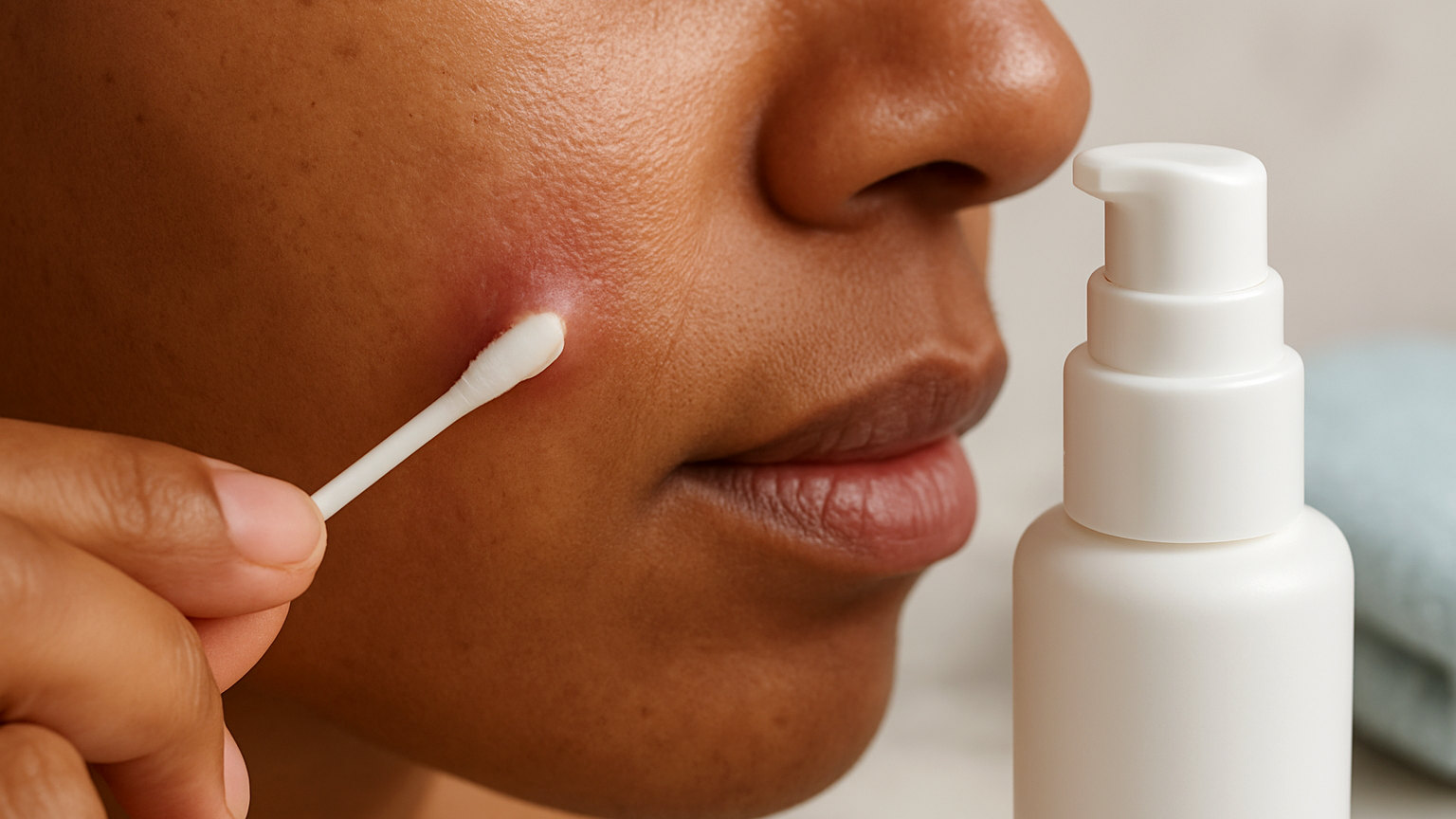
A cystic spot is the one that hurts before it appears, sits under the skin for a week, and never develops anything to squeeze. Almost everything people instinctively do to one makes it worse, so the useful advice is largely about restraint.
What is actually happening under the skin?
The follicle has become blocked and inflamed deep below the surface, and the wall of the follicle has ruptured. The contents, which include sebum, dead cells and bacteria, have spilled into the surrounding tissue.
The immune system treats that spilled material as something to be walled off and destroyed, which is where the swelling, the heat and the pain come from. What you are feeling is not a large spot. It is an inflammatory response to material that has escaped into skin where it does not belong.
That is why there is no head. There is no channel to the surface, because the blockage never made it that far up.
Why can you not squeeze it out?
Because there is nothing positioned to come out, and pressure has to go somewhere.
Squeezing a cyst forces the contents further into the surrounding tissue, widening the area of inflammation and involving follicles that were not affected. A spot that would have resolved in ten to fourteen days becomes a three-week event covering a larger area, and the damage to the deeper layers is what determines whether you are left with a mark or a scar.
The same applies to needles. Piercing the surface does not reach the material, introduces bacteria from the skin, and adds a wound to an inflamed area.
What reduces the swelling?
Cold. A clean cloth around an ice pack, held on for ten minutes, two or three times a day. It constricts blood vessels, reduces the inflammatory response and takes the edge off the pain, which is not nothing when a cyst is genuinely sore.
Do not use heat. Warm compresses are good advice for a spot with a head, where the aim is to encourage it to drain, and actively unhelpful here, where increased blood flow means more swelling.
An over-the-counter anti-inflammatory painkiller is reasonable for a cyst that is keeping you awake, and it addresses the mechanism rather than just the sensation.
Do hydrocolloid patches work?
On a cyst, only indirectly, and that is still worth something.
A hydrocolloid patch absorbs fluid from an open or draining spot, which is why it works so visibly on a whitehead. A cyst is closed, so there is nothing to absorb. What the patch does do is cover the spot, which stops you touching it, and that is the single most useful intervention available.
Patches containing salicylic acid or benzoyl peroxide add a small amount of active treatment, though penetration to that depth is limited.
What should you avoid?
Toothpaste, which burns the surrounding skin without touching the cyst. Undiluted tea tree oil, which frequently causes contact dermatitis. Physical scrubs on inflamed skin. Layering three or four actives on one spot, which irritates the barrier and prolongs the healing.
Also avoid checking it in the mirror repeatedly, which sounds facetious but is the mechanism by which most people end up squeezing something they had decided not to squeeze. Covering it with a patch removes the temptation more reliably than willpower does.
How long will it take to go?
Ten to fourteen days for a cyst left alone, and longer if it has been squeezed. Unlike a surface spot, it will often shrink slowly rather than coming to a head and clearing in a day.
Some cysts never fully resolve and leave a small firm lump under the skin for months, which is scar tissue formed around the walled-off material. Those do sometimes need draining or injecting by a clinician rather than waiting out.
When do repeated cysts need a GP?
As soon as they become a pattern rather than an occasional event.
Cystic acne is the type that scars most reliably, and scarring cannot be reversed once it forms. Nothing sold over a counter treats it adequately, so working through the chemist shelf for six months is time spent accumulating permanent damage.
A GP can prescribe treatment that prevents cysts forming rather than managing them once they arrive, and for a single painful cyst before an important date, a dermatologist can inject it with a corticosteroid, which flattens it within a day or two. That option exists and is worth knowing about.


