
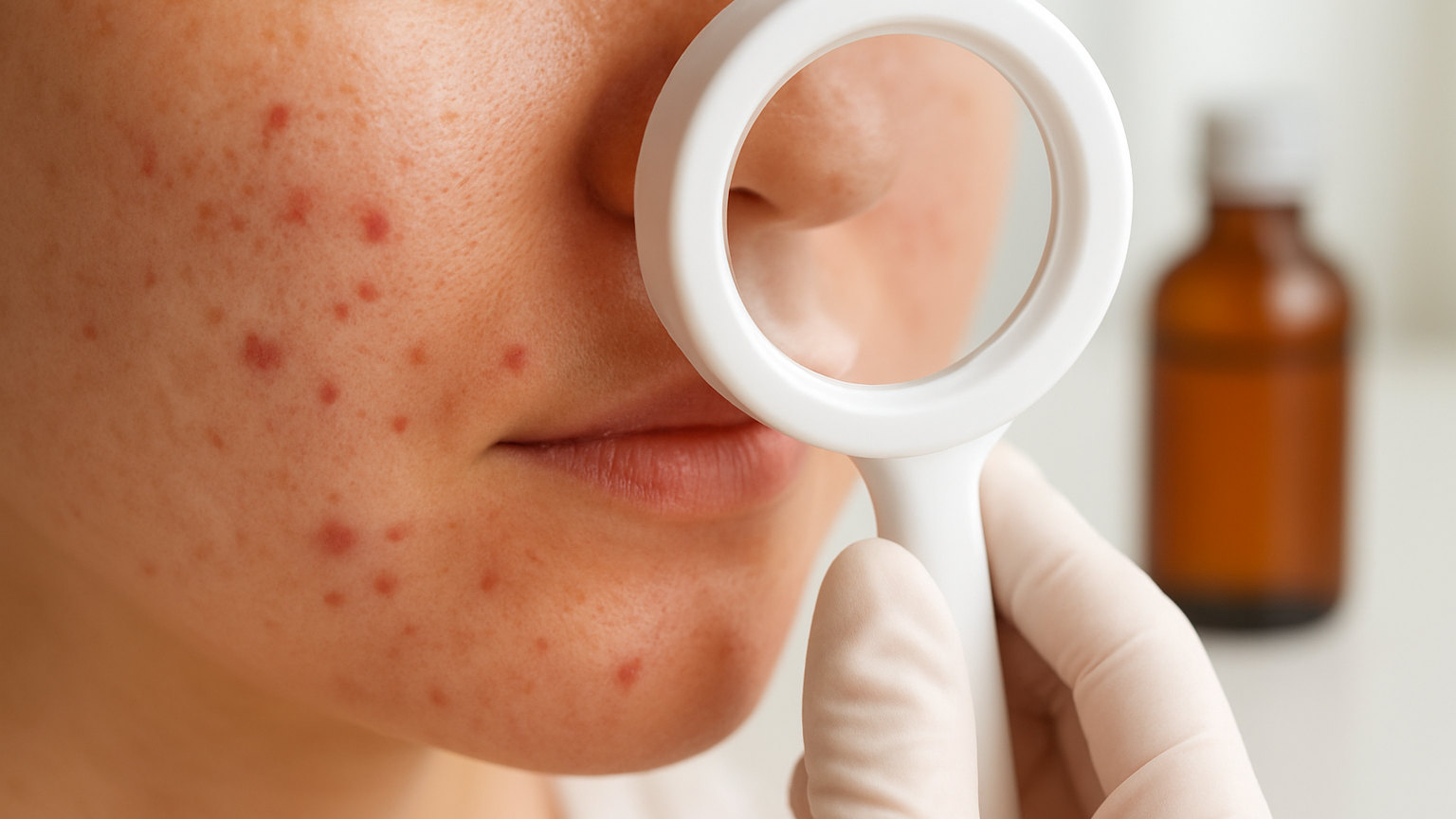
There is a point at which over-the-counter products are not underperforming but are simply being asked to do something they cannot. Recognising that point matters, because the main cost of waiting is not months of frustration but scarring, and scarring is permanent.
What can a GP do that a chemist cannot?
Prescribe at strengths and in combinations that are not sold over a counter, and treat the cause rather than the symptom.
Topical retinoids such as adapalene and tretinoin are considerably more effective than anything on a shop shelf. Topical and oral antibiotics reduce bacterial load and inflammation in a way benzoyl peroxide alone often cannot. Hormonal options, whether a combined pill with an anti-androgenic progestogen or spironolactone, act on the signal driving oil production. And for severe or scarring acne, a dermatologist can prescribe isotretinoin, which is the only treatment that puts most acne into long-term remission.
A GP can also tell you when what you are treating is not acne at all. Rosacea, perioral dermatitis and fungal folliculitis all look like acne to a reasonable person and all get worse with acne treatment.
Which signs mean you should not wait?
Deep, painful lumps under the skin that never come to a head. These are nodules or cysts, they scar reliably, and no topical product reaches them.
Marks or indentations that persist after a spot has gone. A flat brown or red mark is pigmentation and will fade. A dent, a raised lump or an ice-pick pit is a scar, and it means the inflammation is reaching deep enough to damage tissue.
Acne on the chest and back as well as the face, which usually indicates more widespread involvement than topicals alone will manage.
And acne that is affecting your mood, your confidence or how much you want to leave the house. That is a clinically valid reason to be treated, it is recorded as one, and it is worth stating plainly at the appointment rather than apologising for.
How long should you try over-the-counter treatment first?
Three months, used consistently, with one product at a reasonable strength.
Three months is not arbitrary. It is roughly two full cycles of follicle turnover, which is long enough for any effective treatment to show. Less than that and you have not run a fair trial. Considerably more than that and you are losing time.
The exception is the list above. If you are getting cysts or seeing scarring, do not spend three months working through the chemist first.
What will they actually prescribe?
UK guidance recommends starting with a combination rather than a single agent, because using one ingredient alone encourages bacterial resistance. A common first line is a topical retinoid with benzoyl peroxide, or a fixed-dose combination product containing both.
If that is not enough, an oral antibiotic such as lymecycline or doxycycline may be added for up to three months, always alongside a topical rather than on its own.
For acne that follows a hormonal pattern, a combined oral contraceptive or spironolactone may be offered instead, and these take three to six months to show their full effect.
What happens at the appointment?
Less than people expect. The GP will look at your skin, ask how long it has been going on, what you have tried and for how long, whether it scars, and, if relevant, about your cycle and any other symptoms.
It helps to arrive with specifics: the names of what you have used, the strengths, and roughly how long you used each one. Photographs on your phone from a bad week are genuinely useful, since skin has a habit of behaving on the day of an appointment.
When are you referred to a dermatologist?
If acne is severe, if it is scarring, if it has not responded to two courses of different treatments, or if there is any suspicion of an underlying hormonal condition.
Isotretinoin is consultant-prescribed only in the UK, so any conversation about it starts with a referral. Waiting lists vary considerably, which is another argument for going earlier rather than later.


