
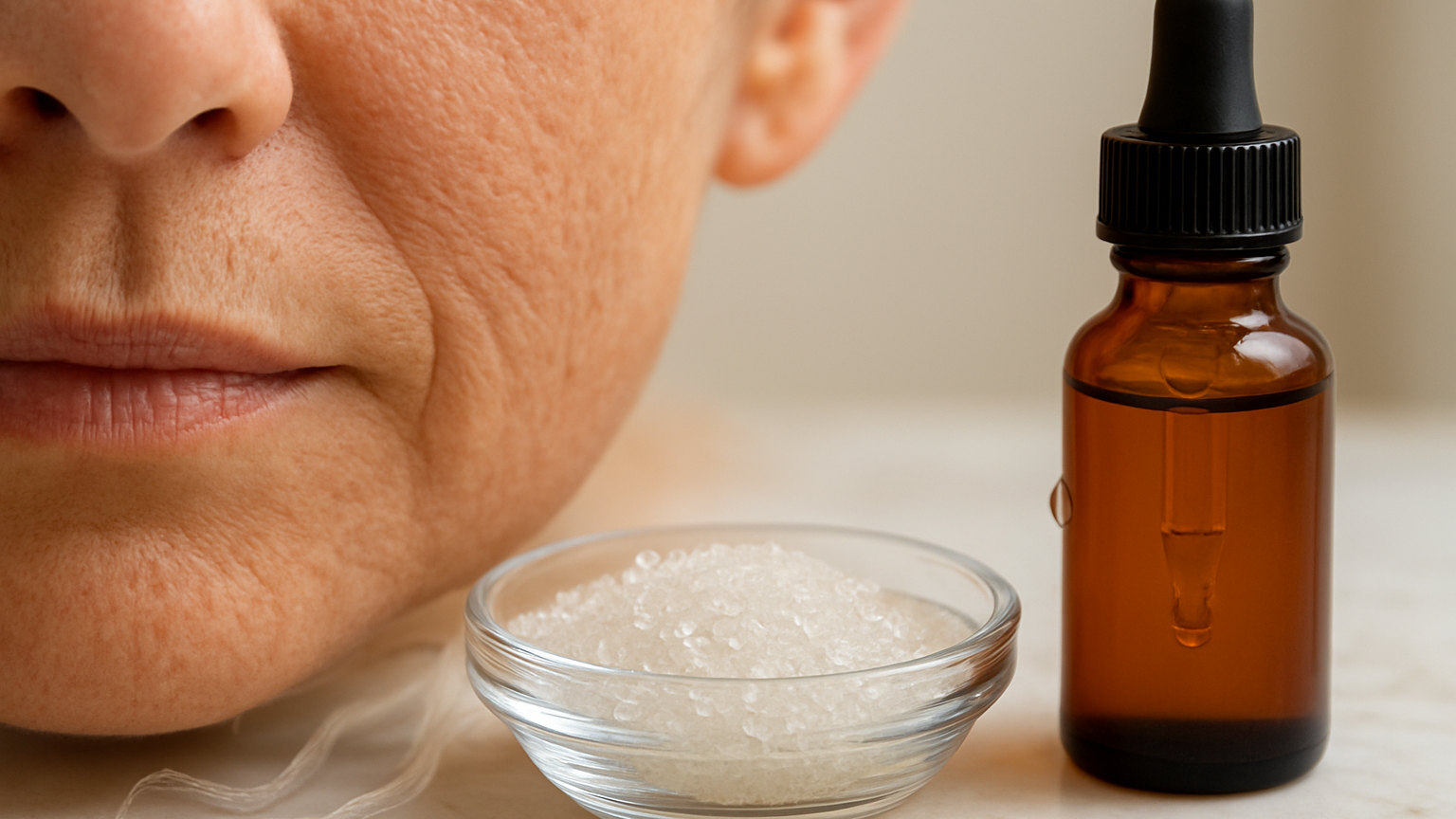
Glycation is real biochemistry with a genuine mechanism, and it has also become one of the most reliably oversold concepts in skincare marketing. Both statements are true, and separating them is worth doing before buying anything described as anti-glycation.
What is glycation?
A chemical reaction in which sugar molecules attach to proteins without the involvement of an enzyme, altering the protein's structure and function.
Over time these modified proteins form advanced glycation end products, which is where the unfortunate acronym AGEs comes from. The reaction happens constantly in everyone, and its rate depends on how much sugar is circulating and for how long.
It is not a fringe idea. Glycation is well established in diabetes research, where the HbA1c test used to monitor blood glucose control measures exactly this process happening to haemoglobin.
What does it do to skin specifically?
Collagen and elastin are long-lived proteins, which makes them unusually vulnerable. Collagen in the dermis has a half-life measured in years, so it sits there accumulating modifications rather than being replaced quickly.
When collagen becomes glycated, adjacent fibres cross-link. Cross-linked collagen is stiffer, more brittle and less able to flex, and it is also more resistant to the enzymes that would normally break down and replace damaged fibres. Elastin loses recoil in the same way.
The visible consequence is skin that is less supple and less able to recover from folding, which contributes to fine lines and loss of firmness.
How strong is the evidence?
Strong for the mechanism, weaker for the practical claims made about it.
That glycation occurs, that AGEs accumulate in skin with age, and that people with poorly controlled diabetes show accelerated skin changes are all well supported. Studies have also found that skin AGE levels correlate with perceived age.
What is much less established is the size of the effect attributable to dietary sugar in someone with normal blood glucose, and whether reducing sugar produces measurable improvement in skin over a realistic timeframe. Those trials largely have not been done.
Does cooking method matter?
More than most sugar-focused advice acknowledges. AGEs are not only formed inside the body, they are also present in food, and dry high-heat cooking produces far more of them.
Grilling, roasting, frying and barbecuing generate substantially more AGEs than boiling, steaming, poaching or stewing. The browning that makes food taste good is the same reaction, which is a genuinely interesting piece of chemistry.
How much dietary AGEs contribute to tissue levels compared with those formed internally is still debated, so this is a reasonable adjustment rather than an urgent one.
Do anti-glycation products work?
The evidence is thin, and this is where marketing outruns data most obviously.
Some ingredients, including carnosine, aminoguanidine and certain plant extracts, inhibit glycation in laboratory conditions. Whether a topical product achieves a meaningful concentration in the dermis and measurably reduces cross-linking in living skin is largely unestablished.
Existing cross-links are also very difficult to reverse, which means prevention is far more plausible than repair. A product promising to undo glycation is promising something not clearly achievable.
What is worth doing about it?
Broadly sensible things, none of them exotic. Keeping blood glucose stable by moderating refined carbohydrate and sugar. Favouring gentler cooking methods some of the time. Not smoking, since smoking accelerates AGE formation independently.
And, once again, sunscreen, because ultraviolet exposure accelerates glycation in skin as well as damaging collagen directly. The intervention with the best evidence in this category turns out to be the same one as in every other category, which is either reassuring or tedious depending on your temperament.
Is there such a thing as sugar face?
The term circulates widely and has no clinical basis. It describes a supposed pattern of puffiness, shadowing under the eyes and lines around the mouth said to identify someone who eats too much sugar.
No dermatological literature supports the idea that diet produces a recognisable facial signature of this kind, and the features described are common and have many causes, including poor sleep, alcohol, allergy and simply being tired. Diagnosing a diet from a face is not something that can be done reliably.
How quickly would any change show?
Slowly, which is worth knowing before expecting results from a fortnight without sugar. Dermal collagen turns over across a period of years, so reducing the rate at which new cross-links form does not remove the ones already present.
Any benefit is therefore preventive and cumulative, measured across years rather than weeks. That makes it a reasonable long-term habit and a poor short-term intervention, which is the opposite of how it is usually marketed.


