
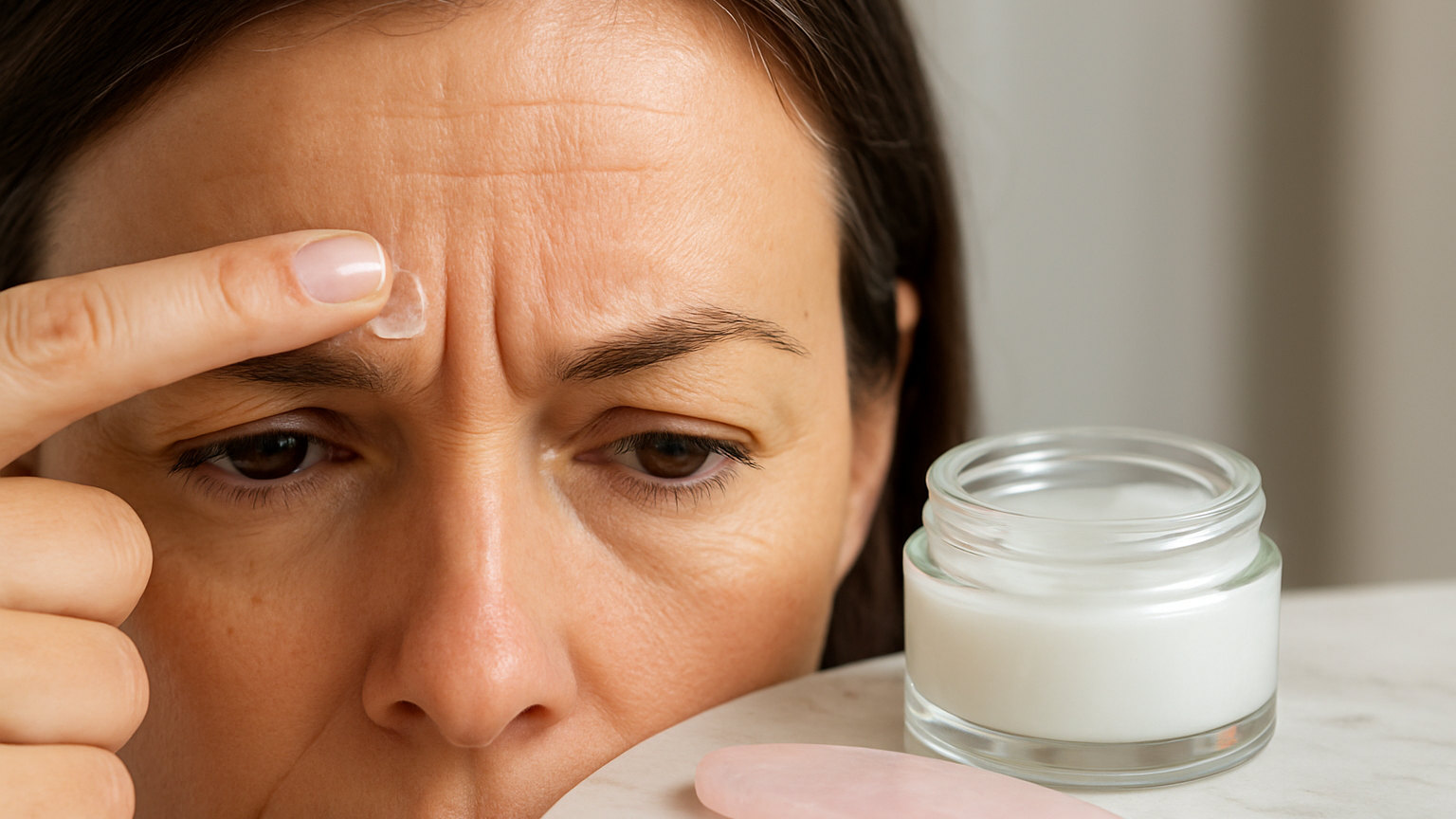
Forehead lines and the vertical furrows between the brows are the wrinkles people most want to remove and the ones least responsive to anything in a bottle. That is not a failure of skincare, it is a consequence of what causes them, and understanding the difference sets realistic expectations before you spend anything.
Why are expression lines different?
Because the cause is underneath the skin rather than in it. Every time you raise your eyebrows or frown, the frontalis and corrugator muscles contract and the skin above them folds along the same path.
While skin is elastic, it unfolds completely afterwards. As elastin fragments and collagen thins, recovery becomes incomplete, and the fold gradually becomes etched. By the time a line is visible at rest, the crease has been reinforced tens of thousands of times.
So the line is a record of movement. Treating the skin without addressing the movement is working on the symptom.
How do you tell a dynamic line from a static one?
Relax your face completely in front of a mirror. If the line disappears, it is dynamic and only appears with movement. If it remains, it has become static and is etched into the skin.
The distinction matters because it predicts what will work. Dynamic lines respond to anything that reduces the movement. Static lines need the skin itself rebuilt or the crease physically filled, and topicals do only a limited amount of the former.
What can topical treatment realistically do?
Soften rather than remove, and more for shallow lines than deep ones.
A retinoid used nightly for six to twelve months thickens the dermis and stimulates collagen, which makes shallow etched lines less pronounced. Peptides marketed for this purpose have modest supporting data. Hydration plumps the surrounding skin, which reduces contrast and genuinely improves appearance, though it washes off.
What none of them do is stop the muscle contracting. A deep glabellar furrow in someone who frowns habitually will improve slightly with excellent skincare and will not disappear.
Do the products marketed as topical alternatives work?
Not in the way the packaging implies. Products described as an alternative to injectables typically contain peptides said to interfere with nerve signalling at the muscle.
The problem is delivery. These molecules would have to penetrate the epidermis, cross the dermis and reach the neuromuscular junction in sufficient concentration to have an effect. There is little evidence they do. If a cream genuinely paralysed muscle to a meaningful degree, it would be regulated as a medicine and sold with a warning leaflet.
What these products often do achieve is a temporary tightening effect from film-forming polymers, which looks convincing in a photograph taken twenty minutes after application.
What non-injectable options are there?
Behavioural changes have more effect than people expect. A great deal of frowning is squinting, and squinting is usually a response to light or to uncorrected vision. Sunglasses and an up-to-date prescription remove a substantial share of the daily contractions.
Silicone patches worn overnight hold the skin flat and hydrated, and there is reasonable evidence for improvement in appearance with consistent use, though the effect fades once you stop.
Microneedling and fractional laser stimulate collagen and improve static lines over a course of treatments, without touching the muscle.
Is prevention actually possible?
To a degree, and starting early matters more than any product. Protecting elastin with daily sunscreen means skin recovers from folding for longer. Not smoking preserves the microcirculation that supports repair.
Beyond that, noticing when you frown is genuinely useful. Many people hold tension in the brow while concentrating, reading a screen at the wrong distance, or in poor light, and none of that is expressive.
When are injections the honest answer?
When the lines bother you enough to spend money on them and topicals have not delivered, which for deep glabellar lines is most of the time.
Botulinum toxin reduces the contraction, which lets the etched crease soften over months as skin recovers without being refolded daily. It is a prescription medicine in the UK and should be administered by a qualified practitioner who can prescribe it, not by whoever is cheapest.
There is no shame in the answer being that skincare cannot do this. Knowing where the limit sits is worth more than another cream.


