
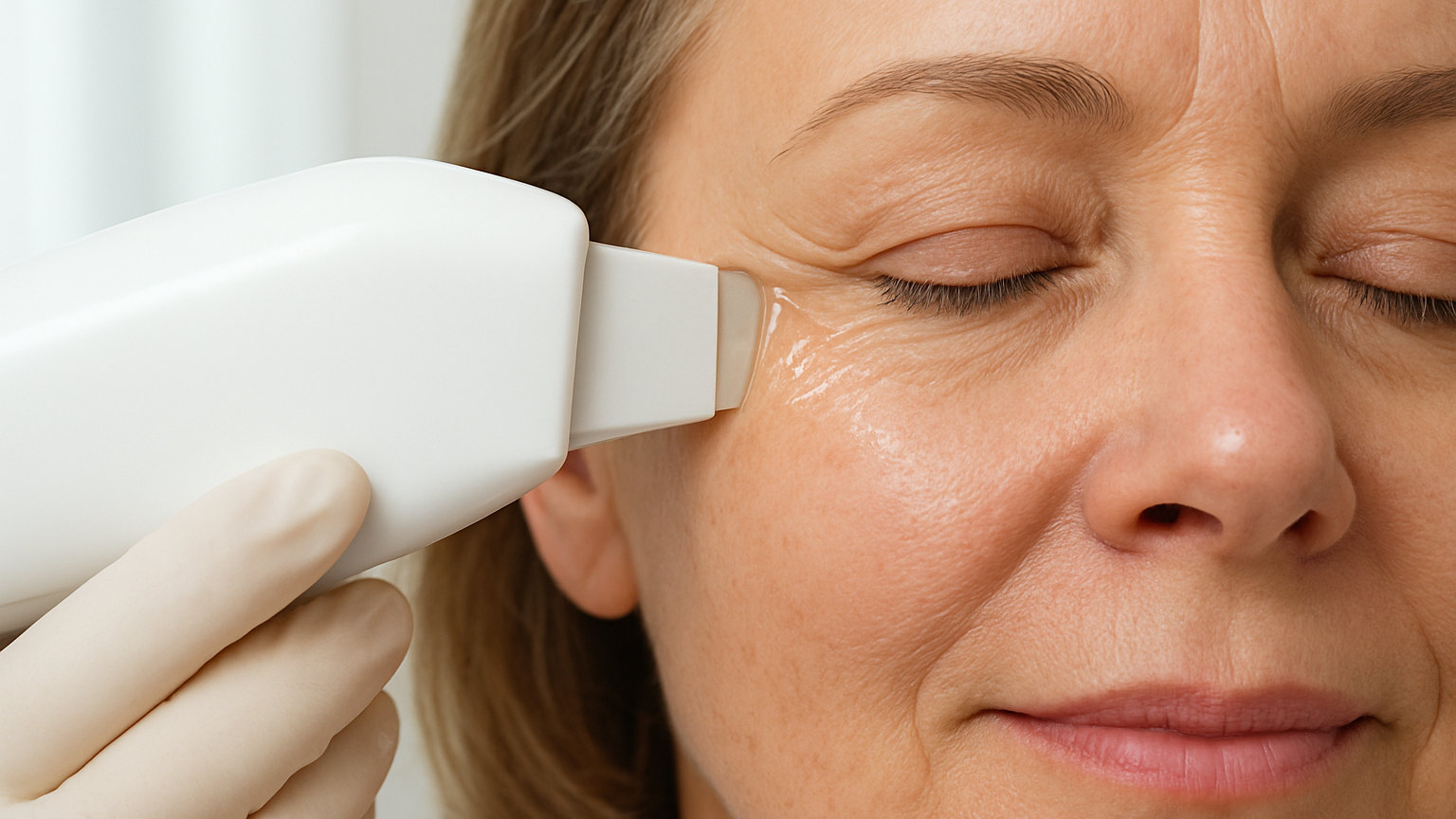
Clinical treatments are where the results topicals cannot deliver become available, and also where the most money is wasted, because each one addresses a specific problem and none of them addresses all of them. Matching treatment to cause is the whole exercise.
What does microneedling do?
Creates thousands of controlled micro-injuries in the dermis, which triggers a wound-healing response and lays down new collagen.
It works best for texture, fine lines, enlarged pores and certain kinds of acne scarring. Results build over months and a course of three to six sessions is normal. It does nothing for laxity and nothing for lines caused by muscle movement.
Home dermarollers are not the same treatment. Needle length is shorter, sterility is harder to maintain, and the main risks are infection and dragging the skin. The clinical benefit largely disappears below a certain depth.
Are chemical peels worth it?
For pigmentation, dullness and fine surface lines, yes, and they are usually the cheapest clinical option.
Superficial peels using glycolic or salicylic acid affect the epidermis only, need repeating, and have essentially no downtime. Medium-depth peels reach the upper dermis, produce more substantial improvement in fine lines and pigmentation, and involve several days of visible peeling. Deep peels are rarely performed now, having largely been replaced by laser.
Peels carry a genuine risk of post-inflammatory pigmentation in deeper skin tones, so practitioner experience with your skin type matters more than the brand of peel.
What does laser resurfacing do differently?
Delivers heat energy to a controlled depth, removing damaged tissue and stimulating collagen over months.
Ablative fractional laser produces the most significant improvement in wrinkles, texture and pigmentation of any non-surgical treatment, at the cost of a week or more of visible healing. Non-ablative laser is gentler with far less downtime and correspondingly smaller results, requiring several sessions.
Intense pulsed light is not a laser and is best for pigmentation and broken capillaries rather than wrinkles.
When is botulinum toxin the right answer?
For dynamic lines caused by muscle movement, which is essentially forehead lines, frown lines and crow's feet. It is the only treatment that addresses the cause of those directly.
It does nothing for static lines from sun damage, nothing for volume loss, and nothing for laxity. Effects last three to four months. In the UK it is a prescription-only medicine, and it must be prescribed by a qualified prescriber after a face-to-face consultation.
What is filler actually for?
Replacing volume, not smoothing skin. As fat pads shrink and descend, filler restores structure to the mid-face, temples and jaw, and fills deep static creases such as nasolabial folds.
Hyaluronic acid fillers are the most common and are reversible with an enzyme, which is a genuine safety advantage. Results last six to eighteen months depending on product and site.
The risks are real and worth knowing: vascular occlusion, where filler blocks a blood vessel, can cause tissue death or blindness. That is why practitioner qualification matters far more than price.
What about radiofrequency and ultrasound?
These heat the deeper layers to stimulate collagen and tighten tissue, and they are the main non-surgical answer to mild laxity.
Results are modest, build over three to six months and are temporary, requiring maintenance. They are worth considering for early jowling and neck laxity, and they are not a substitute for surgery when laxity is significant. Expectations are the main determinant of satisfaction here.
How do you choose a practitioner in the UK?
The regulatory position is weaker than most people assume, and for non-surgical treatments much of the field is not restricted to medical professionals.
Look for a doctor, dentist, nurse or pharmacist prescriber, registered with their professional body, working from premises with proper facilities, offering a consultation before treatment and able to explain what they would do if something went wrong. Anyone treating you in a hotel room, at a party or without a consultation is not the right choice at any price.


