
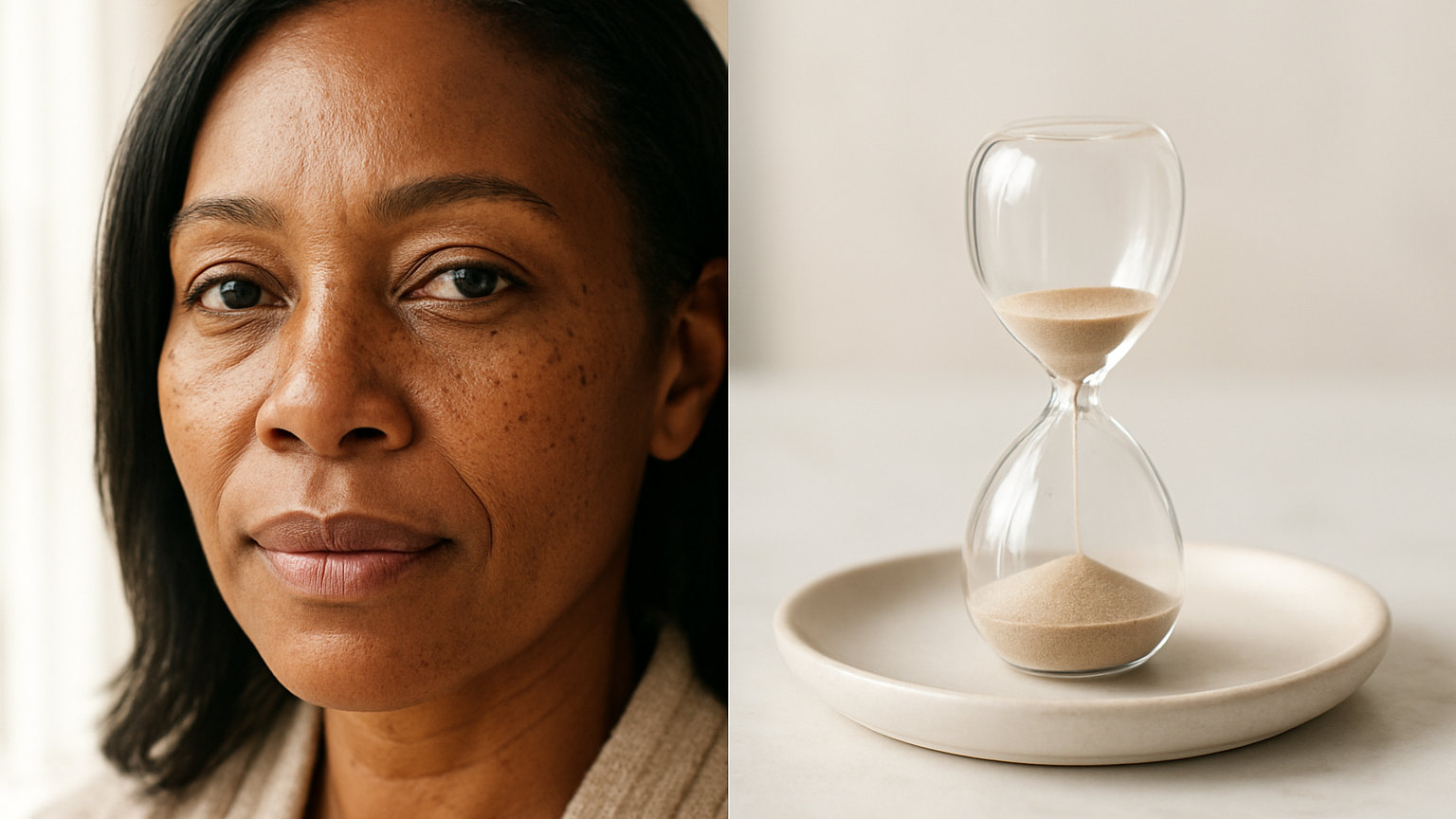
Skin ages in two distinct ways, driven by different things and responding to different interventions. Most people treat them as one process, which is why so much money gets spent on the part that cannot be changed and so little on the part that can.
What is intrinsic ageing?
The part that happens simply because time passes. Collagen production falls by roughly one per cent a year from the mid-twenties. Elastin, which lets skin spring back, degrades and is barely replaced. Cell turnover slows, so the surface looks duller. Fat pads in the face shrink and shift downward, and the bone underneath them remodels.
This is genetically programmed and universal. It produces fine lines, gradual thinning, and a general loss of firmness, and it happens on skin that has never seen daylight. If you compare the skin on the inside of your upper arm to the skin on your face, the difference between the two is not intrinsic ageing.
What is photoageing?
Damage caused by ultraviolet light, and it accounts for the large majority of what people actually mean when they say their skin looks older.
UVA penetrates deep into the dermis, generating free radicals that break collagen fibres and cause abnormal elastin to accumulate in clumps. The result is deep wrinkles rather than fine lines, a leathery texture, uneven pigmentation, visible capillaries and enlarged pores.
The proportion is worth stating plainly, because it drives every sensible decision that follows: research consistently attributes around eighty per cent of visible facial ageing to sun exposure rather than to chronological age.
How can you tell which you are seeing?
Compare exposed skin with protected skin on the same person. Face, neck, chest and the backs of the hands against the inner upper arm or the buttock.
If the difference is dramatic, most of what you are looking at is photoageing, which means it was largely preventable and is partly treatable. If the two areas look similar, you are seeing intrinsic ageing, which is a much slower and gentler process.
The classic demonstration is a delivery driver photographed after decades of sun through a side window, with one half of the face visibly older than the other. Same person, same age, same genes.
Does smoking really make a difference?
A large one, and independent of sun exposure. Smoking constricts the small blood vessels supplying the dermis, reduces oxygen delivery, and activates enzymes that break down collagen. It also depletes vitamin C, which is required to build collagen in the first place.
The effect is measurable enough that studies of identical twins can reliably identify the smoker from photographs alone. Repeated pursing of the lips adds a characteristic pattern of vertical lines that is difficult to treat.
What about expression lines?
Dynamic lines are formed by muscle movement rather than by damage. Every time you frown, smile or raise your eyebrows, the skin folds along the same path.
While skin is young and elastic, it recovers each time. As collagen and elastin decline, those repeated folds stop springing back and become etched in, which is why forehead lines and crow's feet tend to appear before other wrinkles.
This is the category that responds to botulinum toxin, because the treatment addresses the movement rather than the skin. It is also the reason that lines are usually deepest where your face is most expressive, which is not a flaw to correct so much as a record of use.
What can you genuinely change?
Photoageing, substantially, and mostly through prevention. Daily broad-spectrum sunscreen is the single most effective anti-ageing product available, and it is not close. It prevents further damage and, over years, allows some repair of what is already there.
Retinoids are the only topical ingredient with strong evidence for stimulating new collagen. Antioxidants such as vitamin C reduce free radical damage. Not smoking matters more than any serum.
Intrinsic ageing you can slow at the margins and not stop. That is worth knowing before buying anything that promises otherwise, because a product working against a genetically programmed process is being asked to do something no cream has ever done.


