
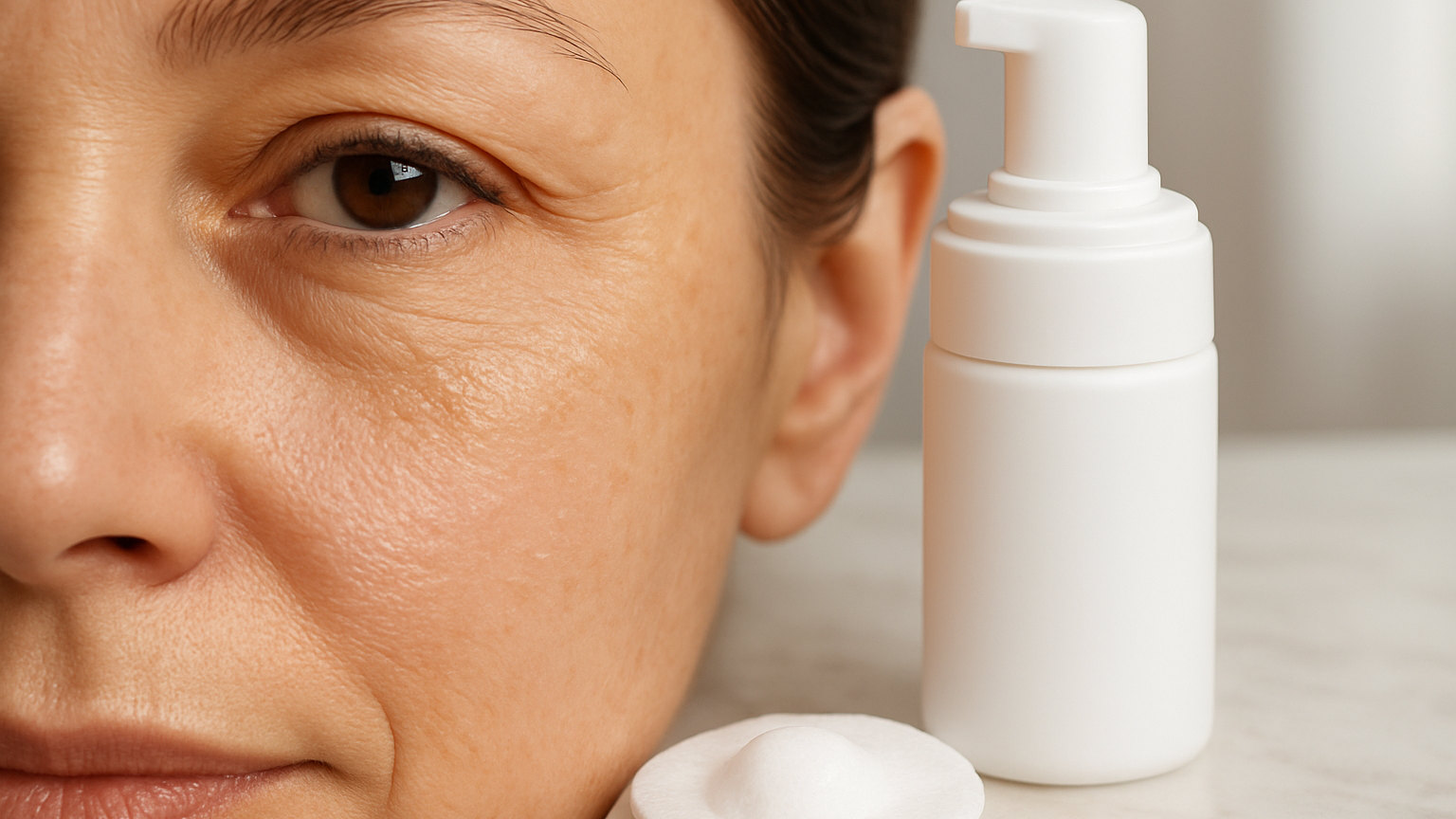
The skin around the eyes dries out more readily than anywhere else on the face, and it also reacts to things the rest of the face tolerates without complaint. Some of that is anatomy and some is exposure, and one of the more common causes is a product you never intentionally put near your eyes.
Why is this area so vulnerable?
The eyelid has the thinnest skin on the body, at roughly half a millimetre against about two millimetres elsewhere on the face. It has very few sebaceous glands, so it produces almost no oil of its own.
It also moves constantly, blinking upwards of ten thousand times a day, and it sits over loose tissue with little support. Anything that reaches it penetrates more readily and irritates more easily.
What are the usual causes?
Simple dryness, particularly in winter or in heated and air-conditioned environments. Over-cleansing, or removing eye makeup by rubbing.
Irritation from active ingredients migrating upward, since products applied to the cheek and forehead travel with body heat and blinking. Retinoids and acids applied close to the orbital bone routinely cause flaking on the lid itself.
Allergic contact dermatitis, which is disproportionately common here. And eyelid eczema, which is one of the most frequent sites for facial eczema in adults.
Why is it often caused by something else entirely?
Because the eyelids react to substances transferred by the hands, and to anything used on the hair and face that runs down.
Nail varnish and gel polish are a classic and frequently missed cause: the resins can transfer from fingertips to eyelids and produce dermatitis while the nails themselves look fine. Shampoo, conditioner and hair dye run past the eyes in the shower. Fragrance from a face cream applied lower down migrates upward.
So when eyelid dermatitis appears, the useful question is not only what you are putting on your eyes but what you are putting on your hands and hair.
How do you tell dryness from dermatitis?
Simple dryness produces fine flaking and tightness without much redness, affects both eyes roughly equally, and improves within days of gentle moisturising.
Dermatitis itches, often intensely. It produces redness, swelling and sometimes weeping or crusting. It may affect one eye more than the other, which points toward something transferred by hand. It does not improve with moisturiser alone and frequently worsens with richer creams.
Seborrhoeic dermatitis can also affect the lid margins and brows, producing greasy flaking and redness along the lash line.
What should you use?
Something simple, fragrance-free and bland. A plain barrier cream containing ceramides, glycerin and petrolatum is more useful here than any eye-specific serum.
Apply a small amount along the orbital bone rather than up against the lash line, patting rather than rubbing, using the ring finger. Product migrates inward on its own, so applying it close to the eye is a reliable route to stinging.
Stop all actives in the area entirely while it settles. That includes keeping retinoids and acids a clear distance from the orbital bone, since they will travel.
How should you remove eye makeup?
By dissolving rather than by force. Micellar water or a gentle bi-phase remover on a cotton pad, held in place for twenty seconds so it can work, then wiped away in one direction without scrubbing.
Repeated rubbing to remove mascara does mechanical damage to skin this thin and contributes to laxity over years. Waterproof formulas are the main offender, since they require more effort, and reserving them for occasions when they are genuinely needed is a reasonable compromise.
When should you see a GP?
If it itches persistently, weeps or crusts, if it is not improving after a week or two of gentle care, or if it affects vision or the eye itself rather than only the skin.
A GP can prescribe a mild topical steroid suitable for eyelid skin, used for a short defined period, and treat any associated blepharitis. Do not use a steroid cream intended for the body here, and do not use anything left over from a previous prescription without asking, because prolonged steroid use on eyelid skin causes thinning and can raise pressure within the eye.


