
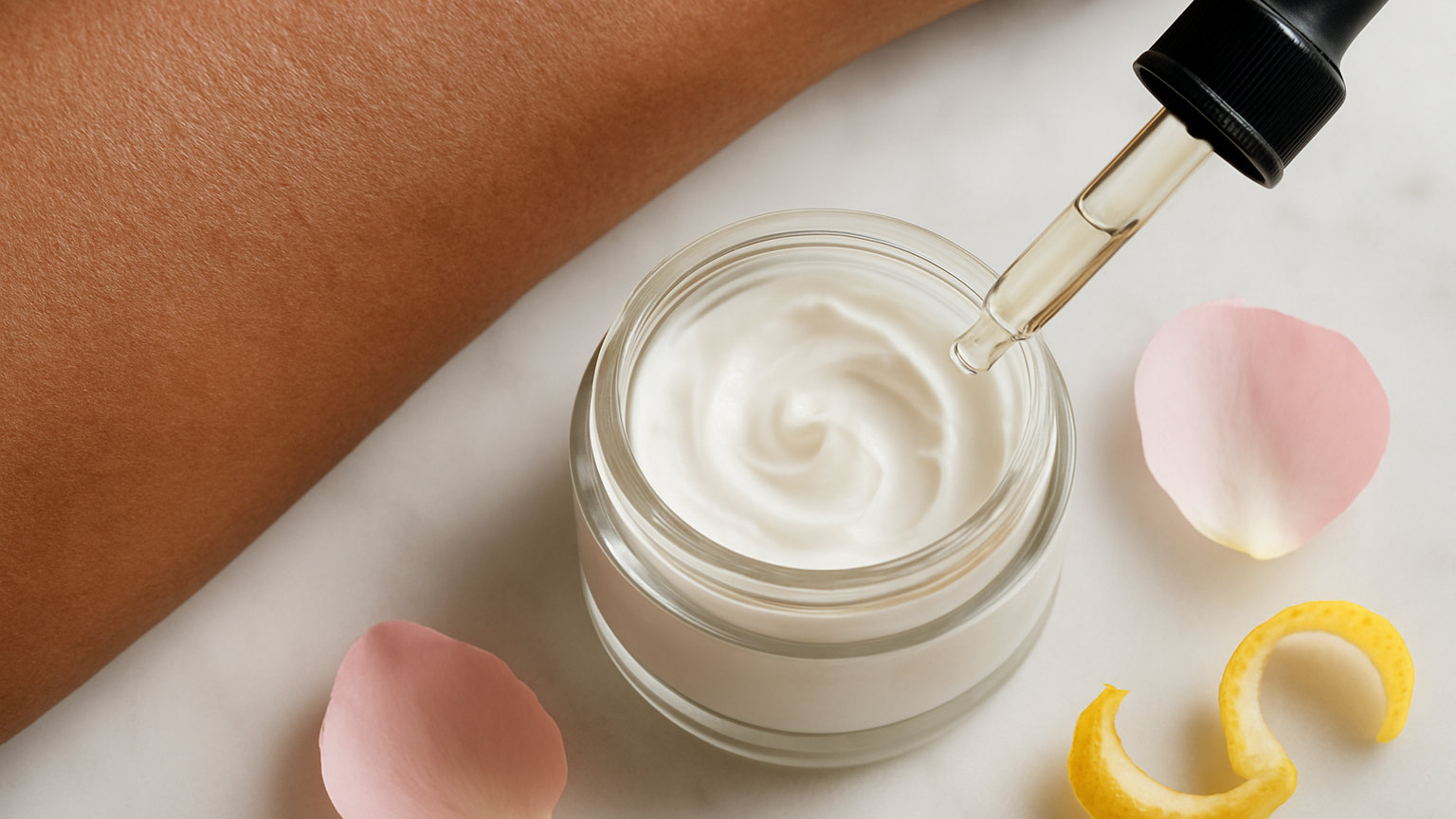
Fragrance is the most common cause of allergic contact dermatitis from cosmetics, which is a strong claim with good evidence behind it. It is also present in a large proportion of products, including many marketed for sensitive skin, and the natural alternatives are not safer.
Why does fragrance cause so many reactions?
Partly chemistry and partly numbers. Fragrance compounds are small, reactive molecules, many of which oxidise on contact with air into forms more likely to provoke an immune response.
And there are a great many of them. A single fragrance can contain dozens of individual components, all listed under one word, so exposure is broad and identifying the culprit is difficult.
The reaction is usually allergic rather than irritant, which means it is delayed by a day or two, itches rather than stings, and once established, occurs at any concentration.
Are essential oils any safer?
No, and frequently the opposite. Several of the most common fragrance allergens are plant-derived: linalool from lavender, limonene from citrus, citral from lemongrass, eugenol from clove, geraniol from rose.
Essential oils are also unstandardised, so concentration varies between batches, and they oxidise readily. Lavender and tea tree oil in particular have been associated with contact allergy often enough to appear regularly in dermatology literature.
The word natural carries no implication of gentleness. Poison ivy is natural, and the comparison is not entirely flippant, since the same chemical family is involved in both.
How do you read a label?
Look for parfum or fragrance, which covers the undeclared blend. Then look further down for the individual allergens the EU and UK require to be named when present above a threshold: linalool, limonene, citronellol, geraniol, citral, eugenol, coumarin, benzyl salicylate and around a dozen others.
Seeing several of those at the end of an ingredient list tells you the product is fragranced even if the word fragrance does not appear.
Essential oils are listed under their botanical names, so lavandula angustifolia oil is lavender and citrus limon peel oil is lemon.
What is the difference between unscented and fragrance-free?
A genuinely important one. Fragrance-free means no fragrance has been added. Unscented means the product does not smell of anything, which can be achieved by adding a masking fragrance to cover the base odour.
So an unscented product may contain more fragrance than a scented one. If you are avoiding it, fragrance-free is the phrase to look for, and the ingredient list is the only reliable confirmation.
Does everyone need to avoid it?
No. Most people use fragranced products for decades without a problem, and the pleasure of a product that smells good is a legitimate reason to keep using it. Consistency matters in skincare, and enjoying the routine helps with that.
The people who should avoid it are those with eczema, rosacea or a damaged barrier, since compromised skin lets more through and reacts more readily. Anyone who has already reacted to a product should treat it as a likely culprit, and anyone with several sensitivities is at higher risk of developing more.
Where does it matter most?
Leave-on products above rinse-off ones, because contact time is longer. A fragranced cleanser is on the skin for thirty seconds; a fragranced moisturiser is on it for hours.
Around the eyes, where the skin is thinnest. On broken, cracked or actively inflamed skin. And on anything applied to a large area of the body daily, since total exposure is what drives sensitisation.
If you want to keep fragrance somewhere, a body wash is a far lower-risk choice than a face cream.
What if you have already reacted?
Stop the product and avoid the whole category for a few weeks while skin settles, using a short fragrance-free routine.
Keep the packaging rather than throwing it away, because the ingredient list is the evidence. If reactions recur across several products, ask a GP about referral for clinical patch testing, which uses a standard fragrance mix panel and can identify the specific compound. Knowing that you react to linalool rather than to fragrance in general makes shopping considerably easier.


