
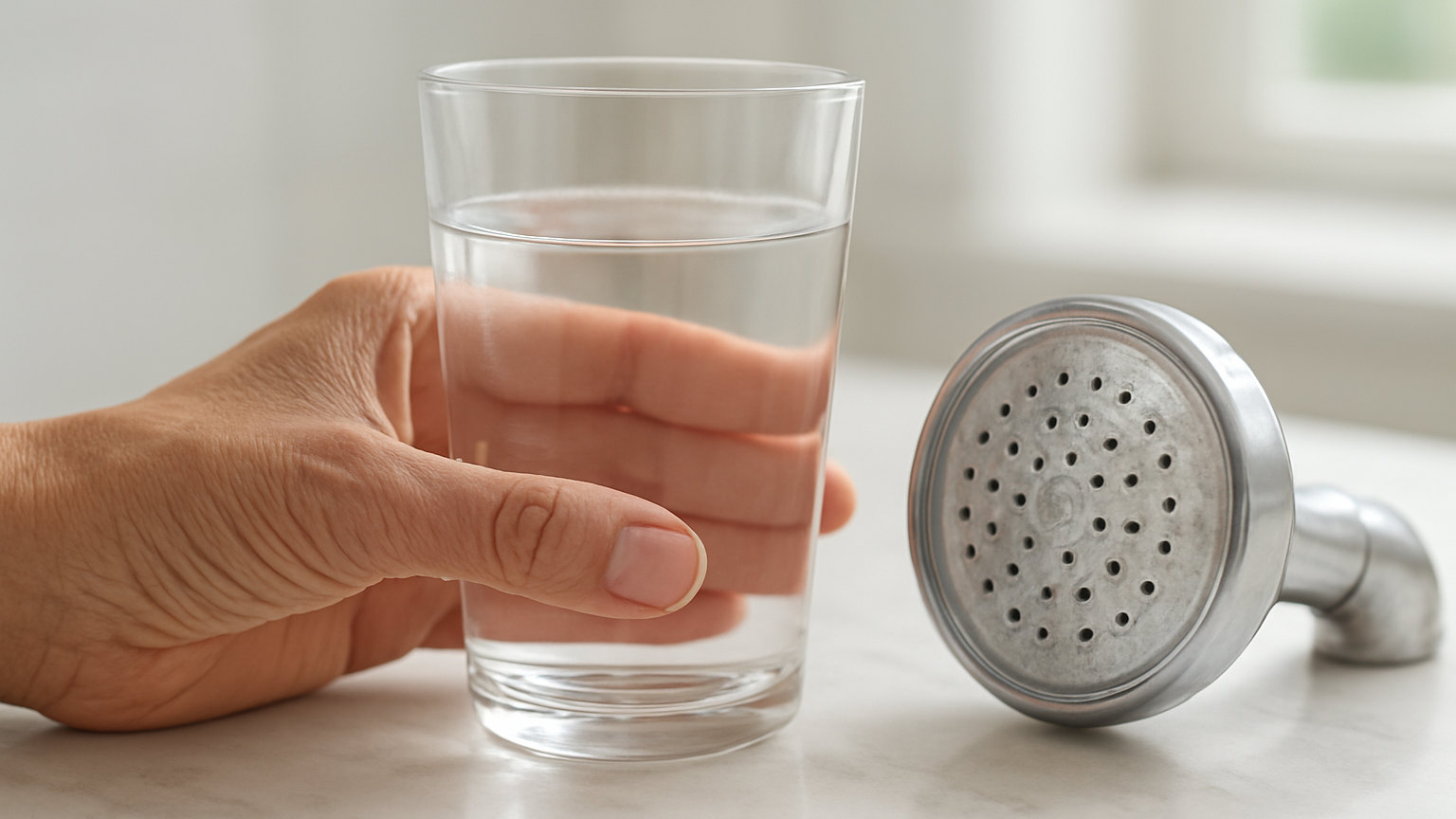
Hard water is often dismissed as a marketing angle for shower filters, and the evidence is rather better than that suggests. Much of it comes from eczema research rather than from the beauty industry, which makes it more interesting.
What makes water hard?
Dissolved minerals, principally calcium and magnesium carbonates, picked up as water passes through chalk and limestone.
In the UK the distribution is stark. Much of the south and east, including London, sits on chalk and has very hard water. Scotland, Wales, the south-west and much of the north have soft water. Your water company publishes the hardness for your postcode, which is worth checking before spending anything.
What does the evidence actually show?
The strongest findings concern eczema. Multiple epidemiological studies have found higher rates of atopic dermatitis in children living in hard water areas, and the association holds after adjusting for other factors.
Experimental work supports a mechanism. Hard water has been shown to increase the deposition of surfactant residue on skin, raise skin pH, and increase transepidermal water loss in people with a compromised barrier.
A large trial installing water softeners in the homes of children with eczema did not, however, find a significant improvement in existing disease. So the reasonable reading is that hard water may contribute to developing problems and to daily irritation, while softening it is not a treatment for established eczema.
Why does soap behave differently in hard water?
Calcium and magnesium ions react with the fatty acids in soap to form insoluble compounds, the same scum that leaves a ring around a bath.
That residue is deposited on the skin as well as on the bath. It is difficult to rinse away, it sits on the surface disrupting the barrier, and it may act as a physical irritant. It also means soap lathers poorly, so people use more of it, which compounds the problem.
This is why the effect is largely about the interaction between hard water and what you wash with, rather than about the water alone.
What are the signs it is affecting you?
Skin that feels tight and filmy after washing rather than simply clean. Hair that feels coated, dull and difficult to rinse. Products lathering poorly. Persistent dryness on the face and hands that does not match how much moisturiser you use.
A useful test is what happens on holiday. If your skin and hair behave noticeably better in a soft water area within a few days, hardness is likely playing a part.
What can you do without spending much?
Change what you wash with first, since that is where most of the interaction happens. Syndet cleansers, meaning synthetic detergent bars and washes rather than true soap, do not form scum with hard water minerals.
Reduce water contact time and temperature. Rinse thoroughly. Moisturise within three minutes of washing, while skin is damp, which matters more in a hard water area than a soft one.
For the face specifically, cleansing with micellar water or a cream cleanser and removing it with a soft cloth avoids tap water contact almost entirely, which is a cheap experiment worth a fortnight.
Are shower filters and softeners worth it?
Shower head filters are inexpensive and the evidence for them is weak. Most use media that address chlorine more effectively than calcium and magnesium, and cartridge capacity is small relative to shower flow. Some people report improvement; controlled evidence is thin.
A whole-house softener genuinely removes hardness by ion exchange, and the effect on how water feels is unmistakable. It is a substantial installation cost with ongoing salt and maintenance, and given that the softener trial for eczema did not show benefit, it is difficult to recommend on skin grounds alone. If you are installing one for limescale and appliances anyway, better skin may be a welcome side effect rather than the justification.
Does it affect hair as well?
Yes, and often more noticeably than skin. Mineral deposits build up on the hair shaft, leaving it dull, rough and harder to manage, and they interfere with colour, causing brassiness and uneven fading.
A chelating or clarifying shampoo used occasionally removes the build-up, and rinsing with filtered or bottled water after washing is a low-cost approach for anyone with coloured hair in a very hard area.


