
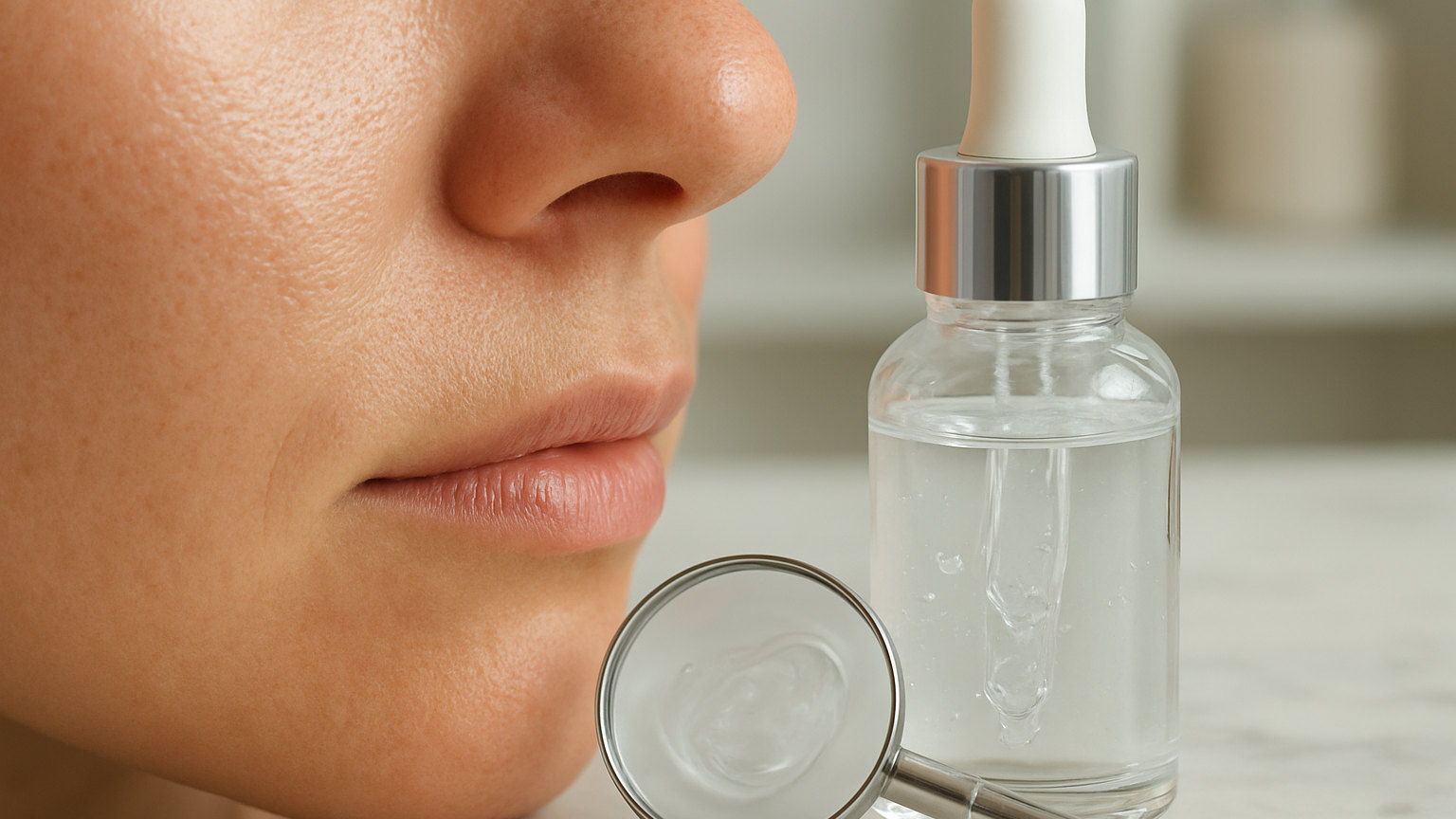
The short answer is no, and the longer answer is considerably more encouraging than that sounds. Pore size is fixed, but how visible a pore appears depends on several things that are not fixed at all, and those are what every effective treatment works on.
Why can pore size not be changed?
A pore is the opening of a hair follicle, and it is an anatomical structure with a diameter determined largely by genetics and by the size of the sebaceous gland beneath it.
It has no muscle around it. That matters, because it means the common idea of pores opening and closing is not describing anything real. Nothing you apply can contract an opening that has no mechanism for contracting.
So why do they look bigger sometimes?
Three things change how visible a pore is, and all three are worth addressing.
Content. A pore filled with sebum and dead cells is stretched slightly and reflects light differently, so it reads as a dark, wide opening. Empty it and it appears smaller within days.
Support. The pore wall is held taut by the collagen and elastin around it. As that degrades, principally through sun damage, the wall slackens and the opening spreads. This is why pores tend to look larger with age and worse on sun-exposed areas.
Light. Pores are shadows as much as openings, so anything that flattens surface texture or diffuses light reduces their visibility immediately.
Does hot water open pores?
No. Steam does not open anything, because there is nothing to open. What heat does is soften the sebum inside the pore, making the contents easier to loosen, which is why extractions are more comfortable after a warm compress.
Cold water likewise does not close pores. It constricts blood vessels and reduces mild swelling, which can make skin look temporarily smoother, and that is the whole of the effect.
Neither idea is harmful, but both lead people to use water hotter than is good for their barrier in pursuit of something that is not happening.
What genuinely reduces their appearance?
Salicylic acid, used consistently. It is oil-soluble, so it works inside the pore, keeping contents loose and reducing the stretching that makes them prominent. Two or three times a week is enough for most skin.
Niacinamide has reasonable evidence for reducing pore appearance over eight to twelve weeks, working partly by regulating sebum and partly by supporting the surrounding structure.
Retinoids do the most over the longest period, by normalising how the follicle lining sheds and by thickening the dermis, which supports the pore wall. Expect six months.
Sunscreen belongs on this list and is usually left off. Protecting the collagen around the pore is the only thing that prevents the slackening that makes them worse each decade.
What about pore strips and extractions?
Pore strips remove the top of whatever is in the pore, which looks dramatic and lasts a few days. They also remove the surface layer of skin and, used regularly, stretch the pore wall, which makes the opening wider over time.
Professional extraction by a facialist is gentler and more thorough, and reasonable occasionally. Squeezing at home tends to damage the wall and, if inflammation follows, can leave a mark that outlasts the blockage by months.
Do clay masks help?
Temporarily and modestly. Clay absorbs surface oil, which reduces shine and makes pores look less prominent for a day.
Used more than once or twice a week, they dry the skin enough to trigger compensatory oil production, which is the opposite of the intended effect. They are a maintenance tool rather than a treatment.
What can be done professionally?
Microneedling stimulates collagen around the pore and has reasonable evidence for improving appearance over a course of sessions. Chemical peels improve surface texture and clear content. Fractional laser produces the most substantial change and involves genuine downtime.
All of them improve appearance rather than diameter, which is the same thing every treatment in this article does. Anyone promising to shrink a pore is describing a result they cannot deliver.


