
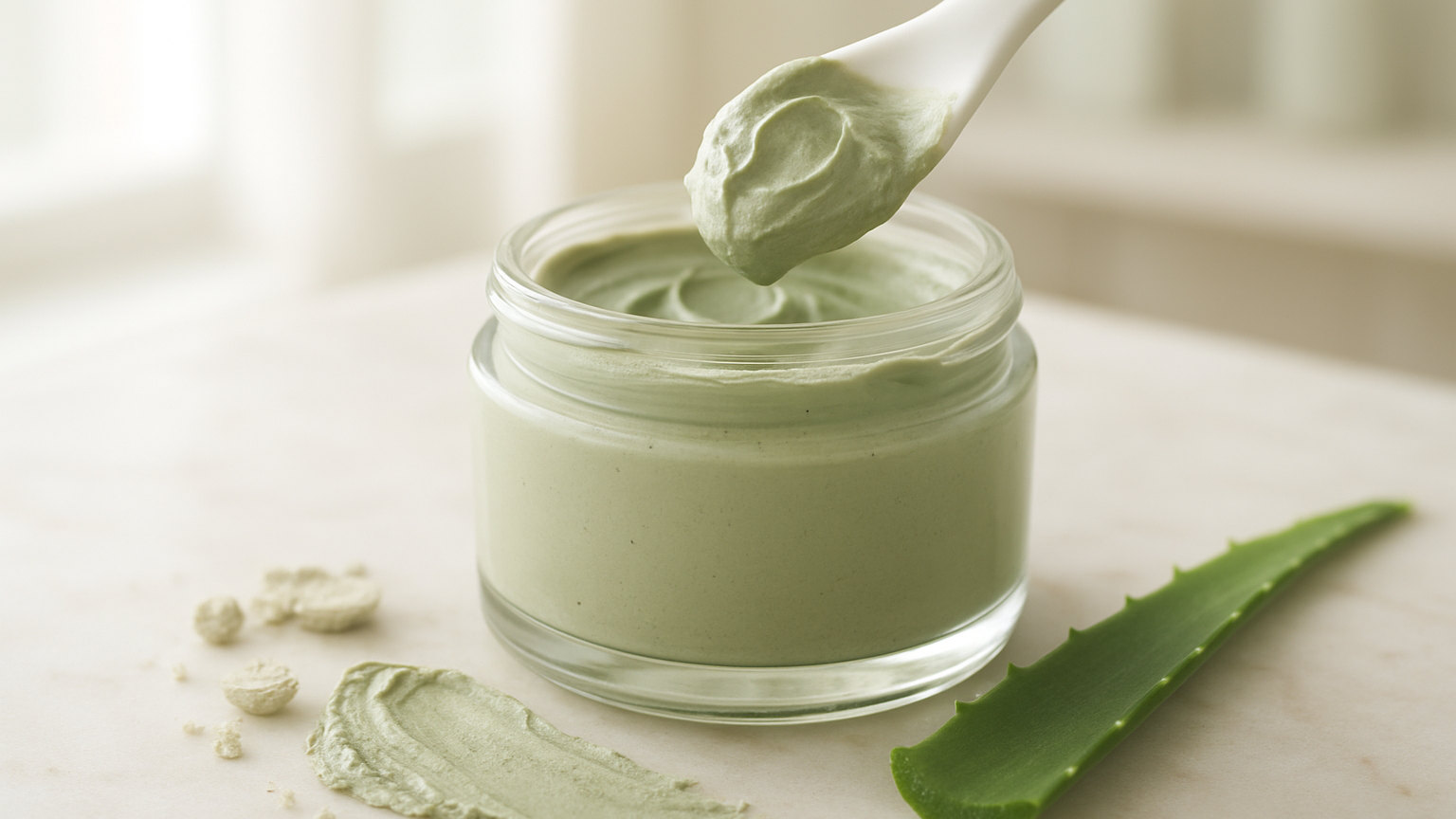
Clay masks are among the oldest cosmetic products still in use, and the reason they persist is that they do something genuine. The disappointment people report almost always comes from expecting a treatment where there is only maintenance.
What does clay actually do?
It absorbs. Clay minerals carry a negative surface charge and a large surface area, which lets them bind oil and loose debris on the skin and hold them until the mask is removed.
That is the whole mechanism. It does not draw impurities from deep within the skin, because nothing applied to the surface reaches that far, and there is no toxin in a pore to be drawn out. Sebum and dead cells are not impurities; they are ordinary skin products in the wrong quantity.
Removing surface and near-surface oil reduces shine for a day and makes pores look temporarily smaller, because a pore with less in it reflects light differently.
Which clay should you use?
Kaolin is the mildest and the most widely used. White kaolin is the gentlest, suiting sensitive or combination skin, while pink and red varieties are slightly more absorbent.
Bentonite absorbs considerably more and swells when wet, making it better suited to genuinely oily skin and too drying for most others. Rhassoul sits between the two and is often better tolerated than bentonite.
Charcoal is not clay. It is adsorbent, meaning substances bind to its surface, and in a mask it usually accompanies clay rather than doing the work alone. The dramatic peel-off charcoal masks are best avoided entirely, since they remove surface skin and fine hair along with anything else.
How often should you use one?
Once or twice a week for oily skin, and once a fortnight or on the T-zone only for combination skin.
Beyond that, you are removing more lipid than the skin can replace, which triggers compensatory oil production. People who use a clay mask three or four times a week frequently report that their skin became oilier, and they are describing exactly what happened.
Should you let it dry and crack?
No, and this is the most common error. The tight, cracking finish feels like evidence of something working, and it is the point at which the mask has stopped absorbing sebum and started drawing water out of the skin.
Remove it while it is still slightly tacky, generally five to ten minutes rather than the twenty people often leave it. If it has dried hard, rehydrate it with a damp cloth before removing rather than scrubbing it off, since dried clay is abrasive.
What should you do afterwards?
Moisturise immediately, on damp skin. A mask has just removed a portion of your barrier lipids, and leaving skin bare afterwards is what turns a useful maintenance step into a cause of dryness.
Avoid using a clay mask on the same evening as an exfoliating acid or a retinoid. Each one alone is manageable; together they strip more than most skin tolerates.
Are they worth the money?
The cheap ones are as good as the expensive ones, and unusually so in this category. Clay is an inexpensive mineral, and the difference between a five-pound tub and a fifty-pound one is texture, fragrance and packaging rather than performance.
Check the ingredient list for added fragrance and essential oils, which are common in this category and are a poor idea on a product left on the face for ten minutes.
When is a clay mask the wrong choice?
If your skin is dry, sensitive, or currently reactive. If you have rosacea or eczema. If you are in the adjustment phase of a retinoid.
Also if your skin is oily and tight at the same time, which usually means it is dehydrated rather than simply oily. In that case a hydrating mask does considerably more, and clay makes the underlying problem worse while briefly improving the symptom.
Can you use one on part of the face only?
Yes, and for combination skin that is the sensible approach. Clay on the T-zone, where the oil is, and either nothing or a hydrating mask on the cheeks.
This is what multi-masking means, and it is one of the few beauty trends that reflects how faces actually behave. Applying an absorbent mask across cheeks that produce very little oil is how people end up with tight, flaking skin from a product aimed at a problem they do not have there.


