
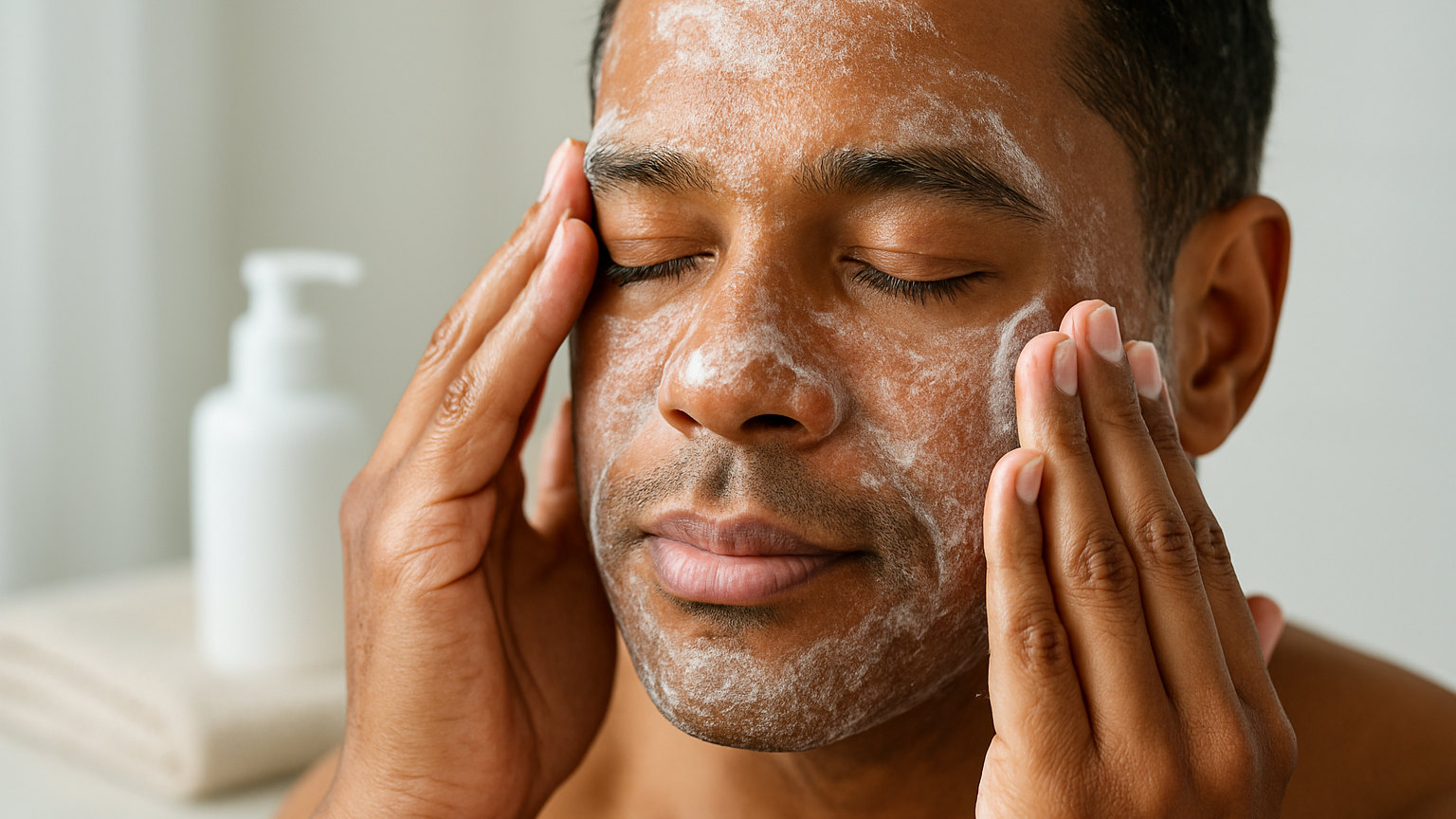
This is the one question in skincare where the intuitive answer is reliably wrong. Oil on the surface looks like something to be removed, and removing it more often produces more of it.
What is the right frequency?
Twice a day at most. Once in the evening is the cleanse that matters, and for some people a morning rinse with water is sufficient.
Anything beyond twice is counterproductive rather than merely unnecessary. There is no version of oily skin that benefits from four cleanses a day, however greasy it feels by mid-afternoon.
Why does washing more produce more oil?
Because sebaceous glands do not respond to how much oil sits on the surface. They respond to hormonal signals and, importantly, to how fast the skin is losing water.
Cleansing removes the barrier lipids along with the sebum. Water then escapes more quickly, and the glands increase output to compensate. Within a couple of hours the face is shinier than it would have been if left alone.
This is why the pattern is so consistent: matte for an hour, greasier by lunchtime, and the conclusion that something stronger is needed.
Do you need to cleanse in the morning?
It depends on what happened overnight, and the honest answer is that many people do not.
Nothing accumulates on your face while you sleep except the products you applied and the oil you produced. If you cleansed properly the night before and used a light moisturiser, water alone in the morning is often enough.
A morning cleanse is more useful if you use rich night creams, sweat overnight, have very oily skin that wakes up visibly greasy, or apply a treatment you want removed before sunscreen.
Which cleanser suits oily skin?
A mild gel or a low-foaming formula using gentle surfactants. Look for something formulated near skin pH, which is roughly 4.7 to 5.5.
Avoid sodium lauryl sulfate, traditional soap and anything containing a high proportion of denatured alcohol. Avoid physical scrub particles in a daily cleanser entirely.
Salicylic acid cleansers are reasonable two or three times a week, though contact time is short, so a leave-on product does considerably more.
Does the evening cleanse need two steps?
If you wear sunscreen or makeup, yes, and this is the one context in which double cleansing earns its reputation.
An oil or balm dissolves sunscreen and makeup far more effectively than a water-based cleanser, which then handles sweat and sebum. The alternative is scrubbing with a foaming cleanser to shift what an oil would have lifted in seconds.
If you wear neither, one gentle cleanse is complete.
What about washing after exercise?
Rinse rather than cleanse. Sweat itself does not block pores, but sweat left to dry with sunscreen and dust in it is worth removing.
Water and a soft cloth is enough in most cases. If you have cleansed in the morning and exercise at lunchtime, a third full cleanse is more disruption than the situation needs.
What are the signs you are over-cleansing?
Tightness immediately afterwards. Stinging when you apply moisturiser. Redness that takes a while to fade. Fine flaking despite oily skin. And oiliness that arrives earlier in the day than it used to.
That last one is the most useful and the least noticed, because it looks like the problem getting worse rather than the treatment causing it. If your skin was greasy by three and is now greasy by eleven, the cleanser is a more likely culprit than your glands.
Does water temperature matter?
More than the cleanser in some cases. Hot water dissolves barrier lipids far more effectively than warm water, so a hot face wash removes considerably more than intended even with a mild product.
Lukewarm is the sensible default, and the difference is noticeable within a fortnight. Cold water does not close pores, since pores have no muscle to contract, though it does constrict blood vessels and reduce mild puffiness, which is a real if modest effect.


