
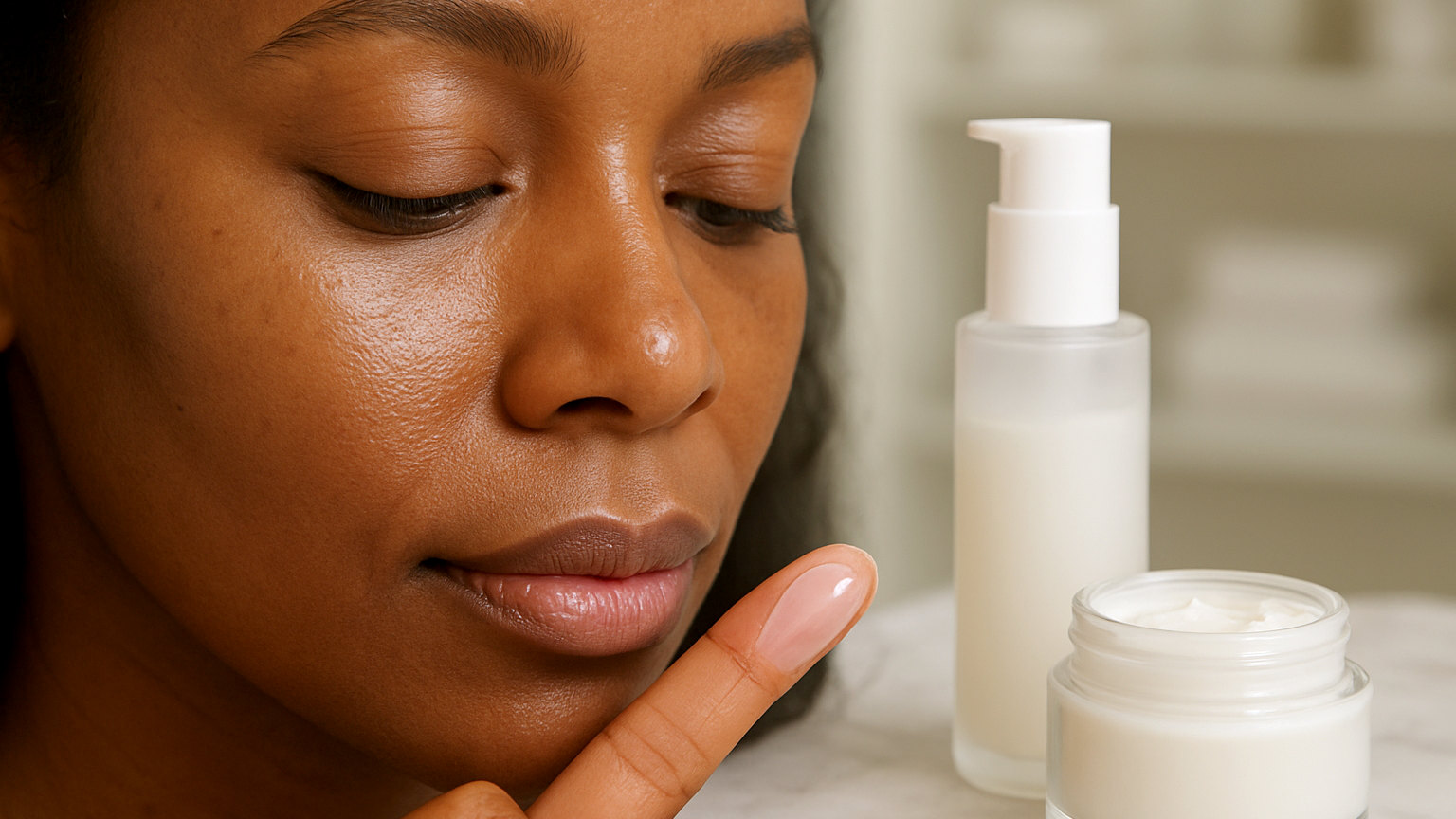
Combination skin is the most common type and the least well served by an industry that sells products for a single condition. An oily T-zone with drier cheeks is not a disorder or an imbalance; it is the ordinary consequence of how sebaceous glands are distributed across a face.
Why is the T-zone oilier?
Sebaceous glands are not spread evenly. The forehead, nose and chin carry considerably more of them, and larger ones, than the cheeks and the area around the eyes.
So the same hormonal signal produces more oil in the centre of the face than at the edges. Almost everyone has some version of this, and calling it combination simply means the difference is pronounced enough to notice.
The cheeks are also more exposed to wind and cold and have thinner skin, so they lose water faster while producing less oil to seal it.
Is it really a skin type?
Partly, and partly a consequence of how skin is being treated.
Genuine combination skin has been that way consistently, in all seasons, since adolescence. What is frequently mistaken for it is a stripped barrier: harsh cleansing dries the cheeks while triggering compensatory oil in the T-zone, producing a more extreme version of the pattern.
If your combination skin appeared or worsened after changing products, it is worth spending a fortnight on a gentle routine before concluding it is your type.
Should you use different products on different areas?
Sometimes, and less often than the multi-masking trend implies.
What genuinely benefits from zoning: a salicylic acid product on the T-zone only, a richer moisturiser on the cheeks only, and clay masks applied to the centre of the face while a hydrating mask goes on the cheeks.
What does not need zoning: cleanser, sunscreen or a basic moisturiser. Using two cleansers on one face is more complexity than benefit, and a lightweight moisturiser applied everywhere with an extra layer on dry areas achieves the same as two products.
What should the base routine be?
A gentle non-foaming or mild gel cleanser, used across the whole face. Foaming sulfate cleansers are the main cause of the cheeks becoming drier while the T-zone gets oilier.
A lightweight moisturiser with glycerin and niacinamide everywhere, then a second layer or a richer cream on the cheeks if they need it. Niacinamide is well suited here because it reduces oil where there is too much and supports the barrier where there is too little.
A gel or fluid sunscreen, which is more comfortable across an oily centre panel than a rich cream.
How should you exfoliate it?
By area and by frequency rather than by strength. Salicylic acid on the T-zone two or three times a week, and either nothing on the cheeks or a gentler lactic acid once a week.
Applying a strong exfoliant across the whole face is how combination skin becomes irritated skin. The cheeks cannot tolerate what the nose can, and treating them the same is the most common error in this category.
Does it change with the seasons?
More than most types. In summer, higher temperature and humidity increase sebum output, so the T-zone becomes more prominent and the cheeks often need less. In winter, the cheeks dry considerably while the T-zone reduces only slightly.
The practical answer is that combination skin usually needs two moisturisers across the year rather than two at once: something light in summer, something richer in winter, with the zoning adjusted rather than fixed.
What should you avoid?
Products marketed for oily skin used across the whole face, which strip the cheeks. Mattifying cleansers containing alcohol. Physical scrubs, which irritate the dry areas without reaching the congested ones.
And treating the oily areas as the problem to be solved. Reducing shine at the cost of drying the rest of the face usually produces skin that is both oilier and more irritated within a month.
Does makeup need zoning too?
It often helps more than skincare does, because the difference in surface texture is what makes foundation sit unevenly.
A mattifying primer on the T-zone and a hydrating one on the cheeks addresses the two problems separately. Powder only where shine appears, rather than across the whole face, prevents the dry areas looking flat and emphasised.
If foundation clings to dry patches on the cheeks and slides off the nose by lunchtime, that is a texture problem rather than a foundation problem, and it responds better to adjusting the skincare underneath.


