
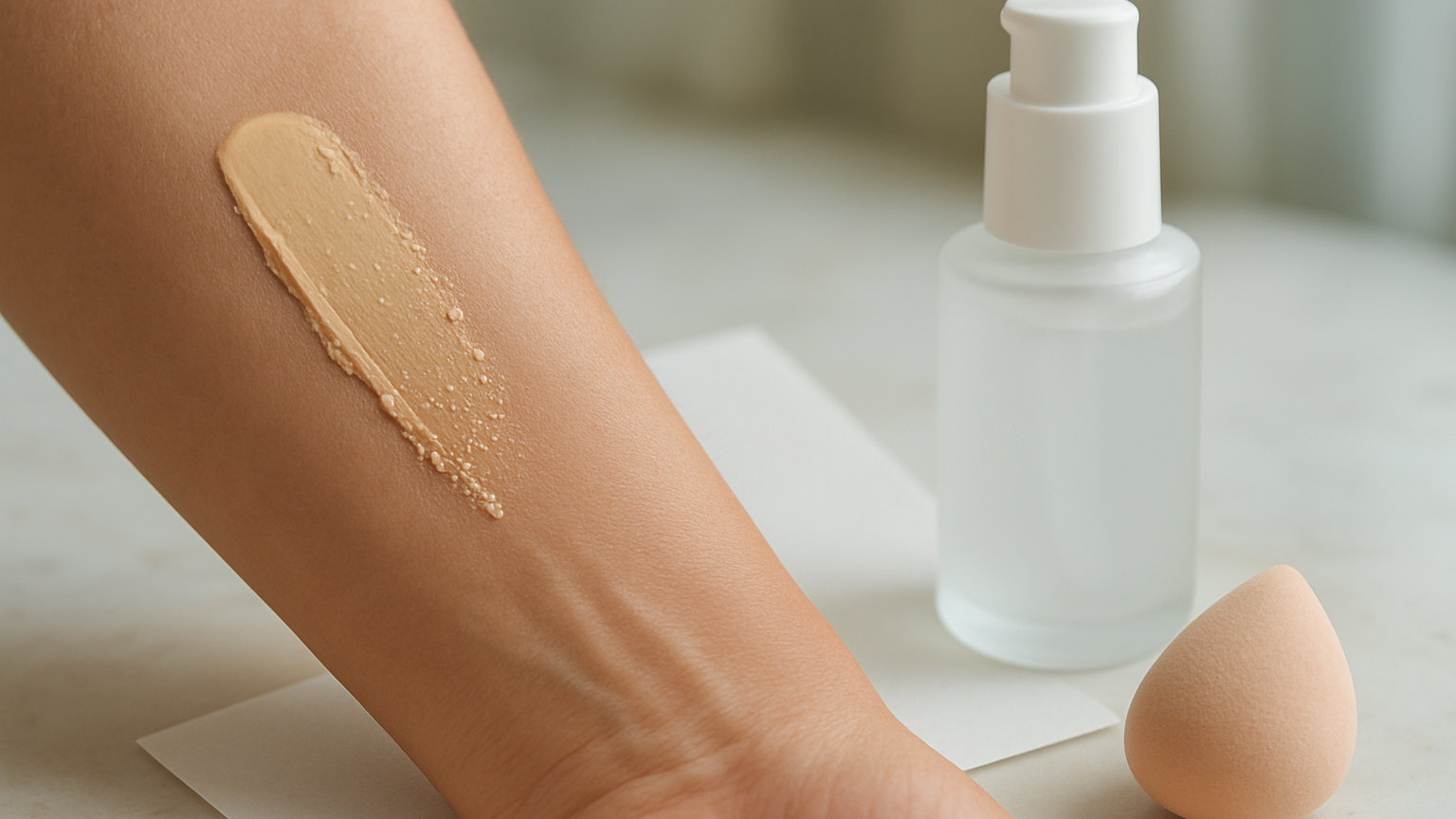
Foundation that has separated and slid into the creases by early afternoon is one of the more frustrating consequences of oily skin, and it is usually treated as a makeup problem. Most of the fix is in the skincare underneath.
What is actually happening?
Sebum is continuously secreted onto the surface, and it does not respect the layer of foundation sitting on top. Oil emerges through and around the product, dissolving the binders that hold pigment in place.
The result is separation, where the base breaks into patches, and migration, where the product settles into pores and expression lines. Warmth accelerates it, which is why it is worse in summer, in a heated office, and after a stressful meeting.
Does skincare underneath matter more than foundation?
Generally yes, and this is the part people skip.
Skin that is dehydrated produces more oil, so a base applied over stripped skin breaks down faster than one applied over a well-hydrated barrier. Counterintuitively, adding a light moisturiser often improves makeup longevity on oily skin.
Heavy or greasy skincare has the opposite effect. Rich creams and facial oils under makeup provide a slip layer that the base then slides across, so texture matters as much as quantity.
How long should you wait before applying?
Longer than most people allow. Sunscreen in particular needs time to form an even film, and applying foundation over a wet layer is a reliable route to pilling and patchiness.
Five to ten minutes between skincare and makeup makes a visible difference. If you are short of time, the sequence matters more than the wait: let sunscreen settle while you do something else rather than applying everything in ninety seconds.
Do primers help?
Mattifying primers containing silica, dimethicone or starches absorb surface oil and fill uneven texture, and they genuinely extend wear.
They work physically and temporarily, which means they manage a day rather than change anything about the skin. Applying them over the areas that break down first, usually the T-zone, is more effective than applying them everywhere.
Silicone-heavy primers can pill under water-based foundations, so the two need to be compatible.
How should you set it?
Thinly, and only where it is needed. A light translucent powder pressed rather than swept over the T-zone sets the base without the flat, heavy finish that comes from powdering the whole face.
Baking, meaning a thick layer left to sit before being brushed away, does extend wear and tends to emphasise dry patches and texture, so it suits some skin and not others.
Setting spray after powder helps the layers meld and reduces the powdery finish.
What should you do during the day?
Blot before you add anything. Pressing a blotting paper or tissue against the skin removes surface oil without disturbing the makeup underneath.
Applying powder over unblotted oil is what produces the thick, cakey appearance people associate with touch-ups. Blot first, then a small amount of powder, and only on the areas that need it.
Is it worth changing foundation?
After the rest, not before. Oil-free and long-wear formulas do last better on oily skin, and matte finishes hold up more predictably than dewy ones.
But a long-wear foundation over dehydrated skin and a heavy moisturiser will still break down by two o'clock. Sorting the skincare, the waiting time and the setting usually delivers more than the fourth foundation purchase does.
Why is it worse in summer?
Sebum output rises measurably with skin temperature, and humidity slows the evaporation that would otherwise help a base set. So the same routine that held until six in February fails by one in July.
Treating that as a seasonal adjustment rather than a failure is more productive: a lighter base, more blotting, less powder applied at once, and a mattifying primer used only where shine appears. Reverting in autumn matters too, since a summer routine on winter skin emphasises every dry patch.


