
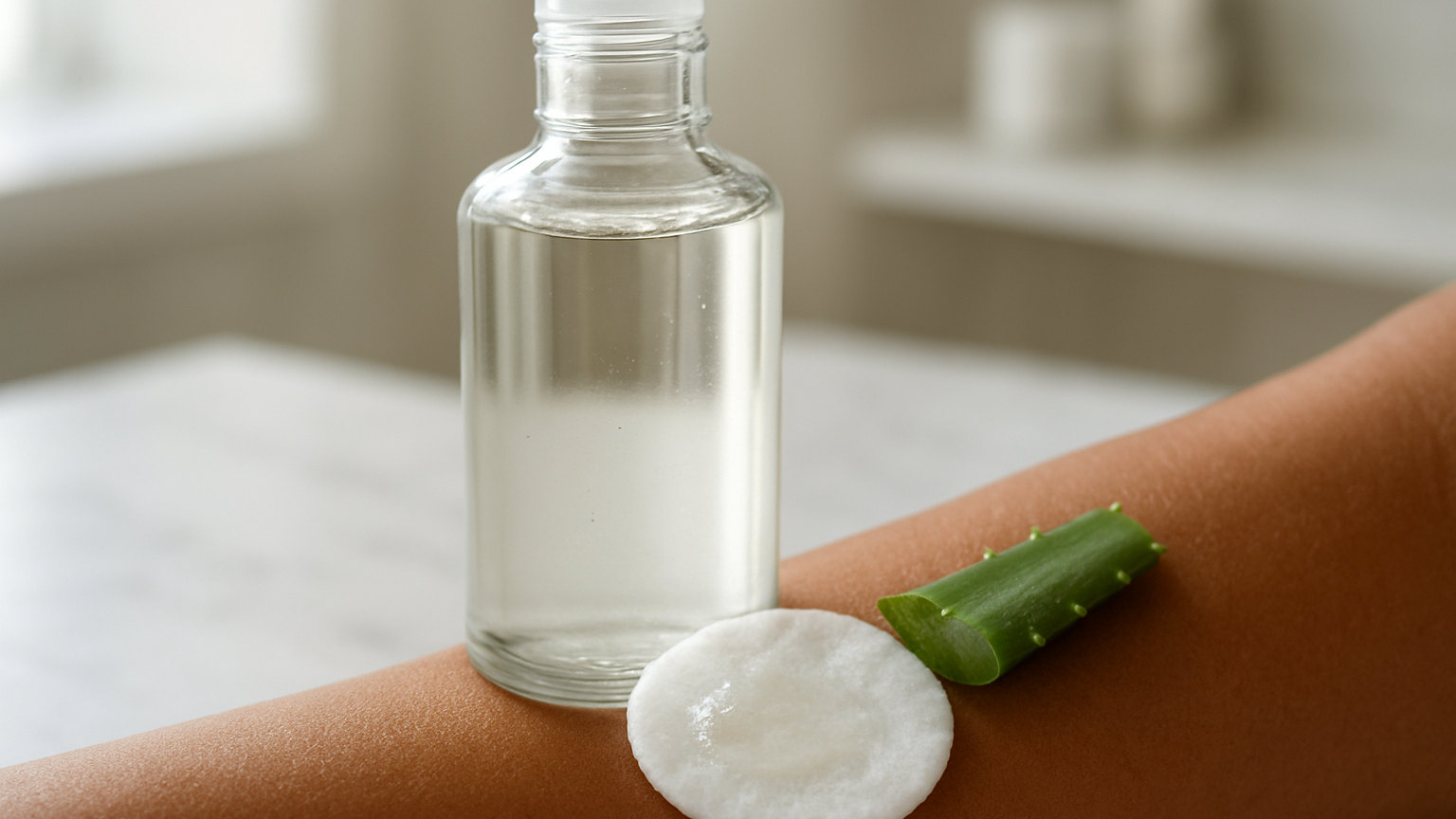
Toner is one of the more confusing categories in skincare, because the word covers several quite different products that share a bottle shape and nothing else. The version most strongly associated with oily skin is the one worth avoiding.
What was toner originally for?
Restoring skin pH after washing. When soap was the standard cleanser, it left skin at a strongly alkaline pH, and an acidic toner brought it back toward its natural range of roughly 4.7 to 5.5.
Modern cleansers are largely formulated close to skin pH already, which removes the original justification. Toner survived the change and acquired several new jobs, some useful and some not.
What do toners do now?
Four different things, sold under one name.
Astringent toners contain alcohol or witch hazel and remove surface oil. Hydrating toners contain humectants such as glycerin and are essentially light serums. Exfoliating toners contain acids and are a genuine treatment step. Balancing toners are largely marketing.
Reading the ingredient list tells you which one you have bought, and the front of the bottle frequently does not.
Why do astringents backfire?
Because they treat surface oil as the problem when production is set elsewhere.
Denatured alcohol strips lipids quickly and leaves skin feeling clean and matte for an hour or two. The barrier then loses water faster, and the glands increase output to compensate. The result is more oil by afternoon than there would have been.
Repeated daily, this produces skin that is simultaneously oily, tight and sensitive, which is the most common presentation among people who have been treating oiliness aggressively for years.
Is witch hazel any better?
Partially, and it depends on the formulation. Witch hazel itself contains tannins with mild astringent and anti-inflammatory properties, and there is a reasonable case for it.
The difficulty is that most commercial witch hazel is distilled with a substantial proportion of alcohol as a preservative, often fourteen per cent or more, and the alcohol does most of the drying. Alcohol-free preparations exist and are a more sensible choice.
Used occasionally on a genuinely oily T-zone it is unlikely to cause problems. Used twice daily across the whole face it usually does.
Which toner is worth using?
An exfoliating toner containing salicylic acid, two or three times a week, is the version with the clearest benefit for oily and congested skin. It works inside the pore rather than on the surface.
A hydrating toner with glycerin or panthenol is useful if your skin is oily and dehydrated, applied to damp skin before moisturiser. It is not doing anything a serum could not, so it is a preference rather than a necessity.
Anything that leaves your skin feeling tight has done the wrong thing regardless of what it is called.
Do you need one at all?
No. Toner is an optional step, and a routine of gentle cleanser, moisturiser and sunscreen with a salicylic acid product a few times a week is complete without one.
This matters because extra steps have a cost beyond money. Each additional product is another chance to irritate the skin, and for oily skin specifically, the most common route to worse skin is doing more rather than less.
How should you use one if you do?
On clean skin, before heavier products. Apply with clean hands rather than a cotton pad, which absorbs a good deal of the product and drags on the skin.
Use an exfoliating toner at night rather than in the morning, and not on the same night as a retinoid. Follow a hydrating toner immediately with moisturiser while the skin is still damp, since a humectant left unsealed can lose water rather than hold it.
How do you tell what you have bought?
Read the first five ingredients. Alcohol denat high in the list means an astringent, whatever the front of the bottle says. Glycerin, butylene glycol or panthenol near the top means a hydrating formula. Salicylic, glycolic or lactic acid means an exfoliant.
Words such as balancing, purifying, clarifying and refreshing describe nothing measurable and appear on all four types. They are the least informative part of the label, and treating them as a guide is how people end up stripping skin they intended to hydrate.


