
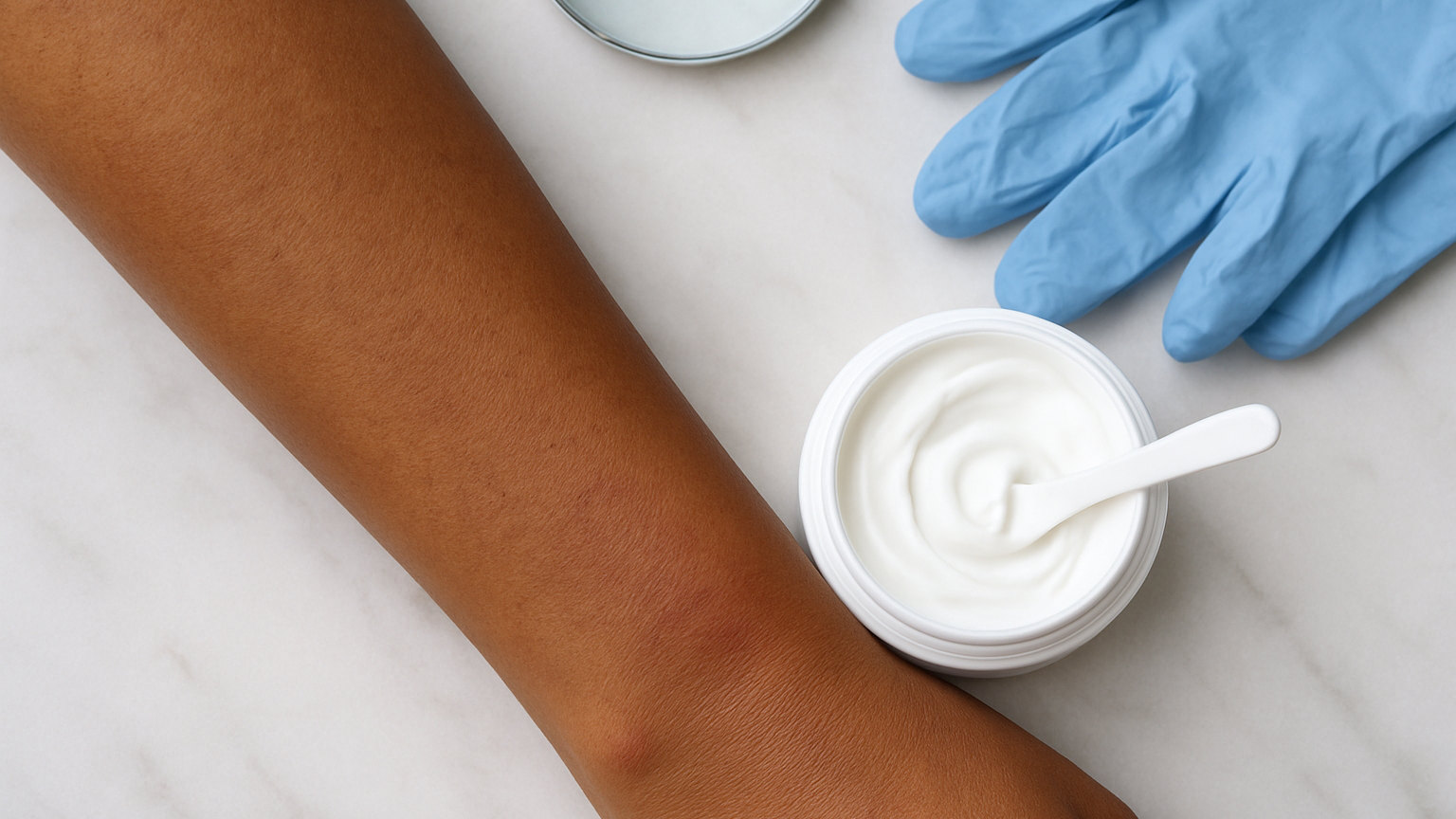
Skin lightening is a large global market, and a significant part of it is unregulated. Products containing ingredients banned in the UK are widely available from market stalls, small shops and online sellers, and the packaging almost never discloses what is in them.
What is legal in the UK?
Cosmetic products containing hydroquinone have been banned from general sale in the UK and EU since 2001. It remains available on prescription, where it is used under supervision for a limited period.
Corticosteroids are prescription-only medicines and cannot legally be sold in a cosmetic cream. Mercury compounds are prohibited in cosmetics entirely.
Anything sold over a counter that produces dramatic lightening within a few weeks is very likely to contain one of these, because nothing legally available works that quickly.
What does mercury do?
It inhibits melanin production effectively and accumulates in the body, which is why it was used and why it is banned.
Chronic exposure causes kidney damage, neurological symptoms including tremor and memory problems, anxiety and depression, and skin rashes. It is absorbed through the skin and can affect other people in the household, including through contaminated towels and bedding, and it crosses the placenta.
Labels frequently do not list it. It may appear as mercurous chloride, calomel, mercuric or mercurio, and it is often simply absent from the ingredients entirely.
What about steroid creams?
Potent topical steroids do lighten skin, and they do a great deal else besides.
Prolonged use on the face causes irreversible thinning, permanent visible blood vessels, stretch marks, and steroid-induced rosacea or perioral dermatitis. Stopping produces a severe rebound, so people continue in order to avoid the withdrawal, which is how the pattern becomes entrenched.
Absorbed over large areas and long periods, potent steroids can suppress the body's own cortisol production, which is a systemic risk rather than a cosmetic one.
How can you tell if a product is unsafe?
Several signals. No full ingredient list, or one only in a language you cannot read. No manufacturer address or responsible person in the UK or EU. Claims of results within days or weeks. Instructions to use it all over the body.
Words such as bleaching, whitening or fairness in the marketing, particularly on products from unregulated markets. A price and availability that do not match what a prescription-strength ingredient would cost.
If a cream is producing a rapid, dramatic change, that is a reason for concern rather than reassurance.
What happens if you have been using one?
Stop, and see a GP rather than simply switching products. Steroid withdrawal from the face can be severe and is better managed with medical support, and mercury exposure can be tested for.
Bring the product or a photograph of the packaging to the appointment. Trading Standards is interested in unsafe cosmetics, and reporting the seller is worth doing.
What works legally and safely?
The same ingredients that appear throughout this section, none of which act within a fortnight. Azelaic acid, niacinamide, vitamin C, alpha arbutin, tranexamic acid and retinoids all have evidence and reasonable safety records.
A GP or dermatologist can prescribe hydroquinone or a combination preparation where it is genuinely warranted, used for a defined period with monitoring, which is a completely different proposition from buying it unlabelled.
Is there a wider point here?
Worth saying plainly: treating a specific patch of pigmentation is a reasonable thing to want, and lightening overall skin tone is a different aim shaped by pressures that have nothing to do with skin health.
The products that cause the most harm are almost always sold for the second purpose, at strengths and over areas that no clinician would sanction. Anyone considering one deserves to know what is in it rather than to be judged for wanting it.
What about products bought abroad?
Regulation varies enormously, and a product legal where it was bought may contain ingredients banned here. Hydroquinone remains available over the counter in several countries at strengths that would be prescription-only in the UK.
The greater risk is with unbranded or repackaged creams, which have been repeatedly found to contain mercury and potent steroids not listed anywhere on the packaging. Testing by UK councils has found illegal ingredients in a substantial proportion of samples seized from shops.


