
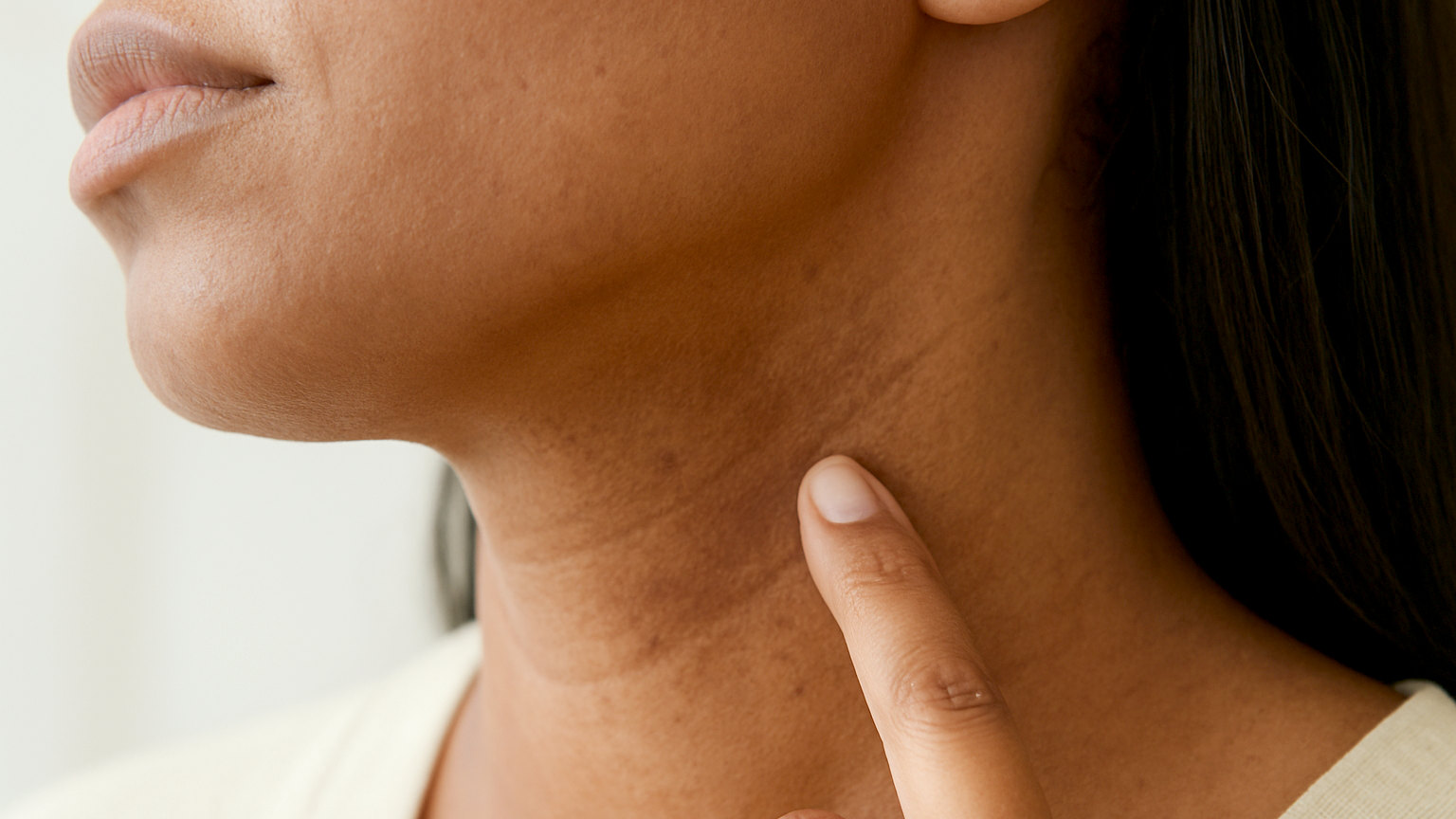
Darkening on the neck has several causes, and one of them is a medical sign rather than a cosmetic problem. It is worth knowing how to tell them apart, because the most important one is treated by addressing something else entirely.
What does acanthosis nigricans look like?
Symmetrical patches of darker skin with a velvety or slightly thickened texture, usually at the back and sides of the neck, and often in the armpits, groin and under the breasts.
The texture is the key feature. It is not simply a colour change; the skin feels thicker and softer than the surrounding area, and the skin lines within the patch look more pronounced. It does not wash off, which is a distressing thing many people try before seeking advice.
What does it indicate?
Most commonly insulin resistance. High circulating insulin stimulates receptors on skin cells, causing them to multiply and produce more pigment, which is why the change appears in the folds where friction is highest.
It is strongly associated with type 2 diabetes and prediabetes, and with polycystic ovary syndrome. It frequently appears before a diagnosis, which makes it genuinely useful as an early sign.
Less commonly it relates to certain medications, including some hormonal treatments and steroids, and rarely to other underlying conditions.
Should you see a GP?
Yes, and reasonably promptly. This is one of the few skin changes in this section that warrants an appointment rather than a product.
A GP can check blood glucose and HbA1c, and investigate hormonal causes where relevant. The skin change itself is harmless; what it may be pointing at is worth identifying early, when it responds best to treatment.
Sudden onset, rapid spread, or appearance in someone who is not overweight and has no obvious risk factors warrants more thorough investigation.
Does treating the skin help?
Only modestly, and it is the wrong target. The patches typically improve when the underlying cause is addressed, particularly with weight loss, improved insulin sensitivity or treatment of the hormonal condition involved.
Topical retinoids, urea and alpha hydroxy acids can improve texture and lighten the appearance somewhat, and they are worth using alongside rather than instead of addressing the cause.
Scrubbing does not help and makes it worse, since friction is part of what drives it.
What else causes a dark neck?
Friction and irritation from collars, chains and repeated rubbing, which produces a similar but usually less velvety darkening.
Post-inflammatory pigmentation from eczema, shaving irritation or a reaction to a product. Fragrance dermatitis from perfume applied to the neck is a classic cause, and photosensitive reactions to fragrance produce a characteristic pattern on the sides of the neck.
Sun damage, which affects the exposed front and sides while sparing the shaded area under the chin. That sparing distinguishes it clearly from acanthosis nigricans, which favours the back and folds.
What about poikiloderma?
Mottled red-brown discolouration with visible small vessels on the sides of the neck and upper chest, characteristically sparing the shaded area directly under the chin.
It is cumulative sun damage, common from middle age, and responds to intense pulsed light more readily than to topical treatment. Daily sunscreen on the neck prevents further progression, which most people never think to apply there.
How do you avoid the friction kind?
Varying necklace length and position, avoiding tight collars where you can, and using a gentle rather than a foaming cleanser on the neck.
Apply perfume to clothing rather than to the sides of the neck, particularly before sun exposure, since that combination is a common and easily avoided cause of lasting discolouration.
Can it be reversed?
The friction and post-inflammatory kinds usually fade once the cause is removed, over three to twelve months, helped by the same ingredients used elsewhere on the face.
Acanthosis nigricans often improves substantially when insulin resistance is addressed, which is one of the more encouraging aspects of it. Sun-related damage on the neck responds partially, and the texture change generally improves more readily than the colour. In all cases, daily sunscreen on the neck is what prevents the next round.


