
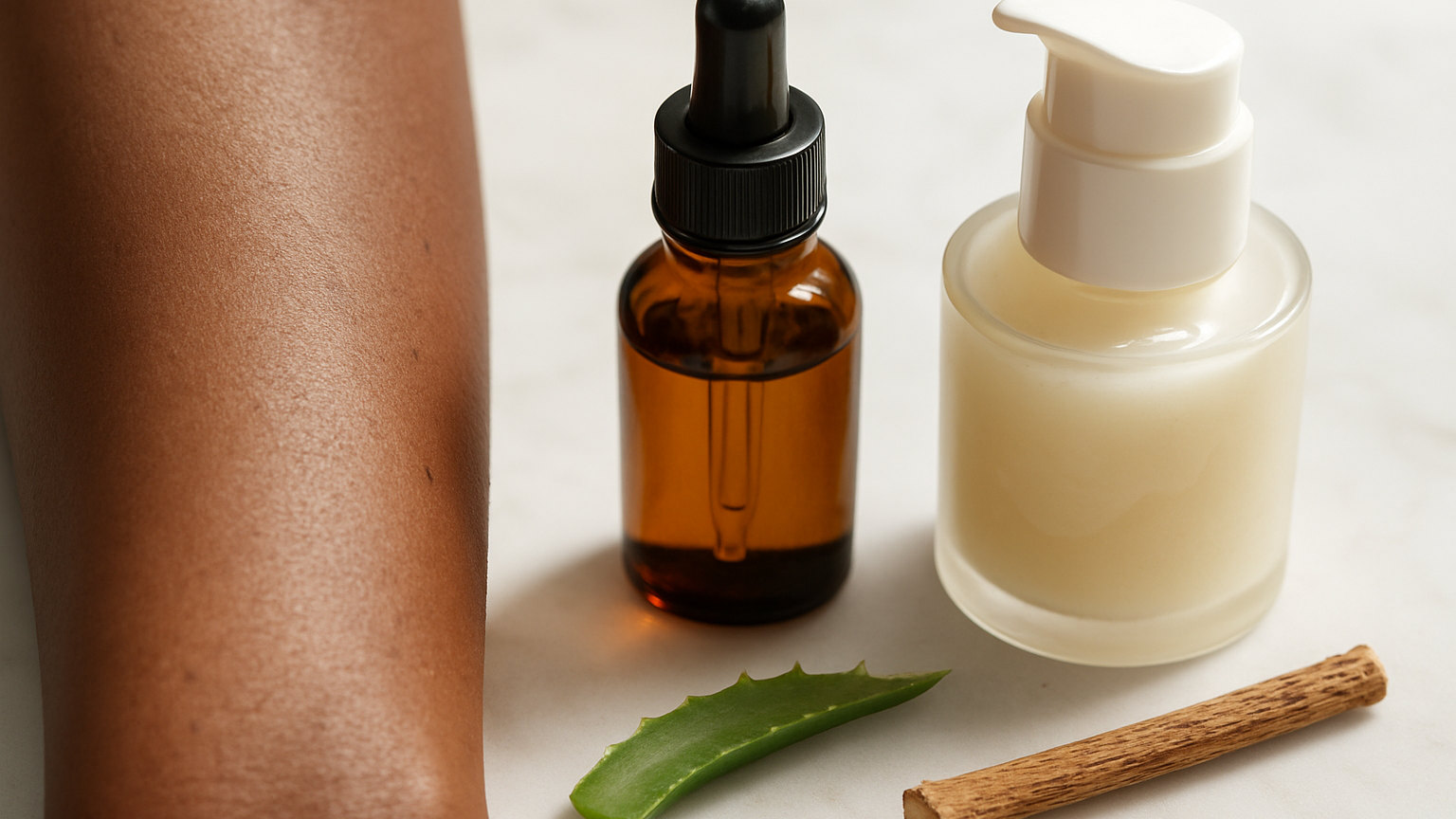
The ingredients that fade pigmentation interrupt the same process at different points, which is the useful thing to know when choosing between them. Combining two that act at different stages generally does more than doubling the strength of one.
What are the stages of pigment production?
Melanocytes are stimulated, usually by ultraviolet light or inflammation. An enzyme called tyrosinase converts tyrosine into melanin. The melanin is packaged and transferred to surrounding skin cells. Those cells migrate to the surface and eventually shed.
Treatments work at one of those four points: reducing the stimulus, inhibiting tyrosinase, blocking transfer, or accelerating shedding.
Which inhibit the enzyme?
Vitamin C, in the form of L-ascorbic acid at ten to twenty per cent, inhibits tyrosinase and provides antioxidant protection. It is unstable, so a serum that has turned orange has stopped working.
Alpha arbutin is a gentler tyrosinase inhibitor with reasonable evidence and few tolerance problems. Kojic acid works similarly and irritates more readily.
Hydroquinone is the most effective of this group and is prescription-only in the UK. It is genuinely powerful and carries a risk of paradoxical darkening with prolonged use, which is exactly why it should not be bought from unregulated sources online.
Which block transfer?
Niacinamide, principally. It interferes with the transfer of pigment packages from melanocytes to skin cells, and it has the advantage of being extremely well tolerated at two to five per cent.
It is a sensible foundation for anyone whose skin reacts to stronger actives, and it combines well with almost everything.
Which accelerate shedding?
Retinoids, by increasing cell turnover so pigmented cells reach the surface and shed sooner. They also improve the delivery of other actives.
Alpha hydroxy acids, particularly glycolic and lactic, exfoliate the surface layer where pigment sits. They are useful for superficial pigmentation and do little for deeper melasma.
What about azelaic acid and tranexamic acid?
Azelaic acid is the most useful all-rounder here. It inhibits tyrosinase selectively in overactive melanocytes, reduces inflammation, and treats acne at the same time. It is well tolerated and safe in pregnancy, which matters because melasma frequently appears then and most alternatives are contraindicated.
Tranexamic acid is the more recent addition and has good evidence for melasma specifically, working on the pathway linking ultraviolet exposure to melanocyte stimulation. It is available topically over the counter and orally on prescription.
How long does any of it take?
Longer than people expect, and the timescale depends on depth.
Superficial pigmentation in the epidermis responds in eight to twelve weeks. Post-inflammatory marks take three to twelve months. Melasma, which often has a dermal component, may take a year and recurs.
Judging a product after four weeks is judging an incomplete trial, and switching products every month is the most common reason people conclude nothing works.
What matters more than any of them?
Sunscreen, and it is not close. Every one of these ingredients is working against ultraviolet exposure that restimulates the melanocytes daily.
Broad-spectrum SPF 30 or higher, applied properly and reapplied, is the treatment. For melasma specifically, a tinted mineral sunscreen containing iron oxides is measurably better, because it blocks visible light as well as ultraviolet.
Without that, the rest of the routine is bailing out a boat without plugging the hole.
Can you use several at once?
Yes, and combining ingredients that act at different stages is more effective than stacking two that do the same job.
A workable arrangement is vitamin C and sunscreen in the morning, and azelaic acid or a retinoid at night, with niacinamide at either point since it combines with everything. What is not worth doing is layering four actives simultaneously, because irritation causes inflammation and inflammation causes exactly the pigmentation you are treating.
Introduce them one at a time with a fortnight between additions. If a reaction follows four simultaneous changes, you have no way of identifying which one caused it and usually end up abandoning all four.


