
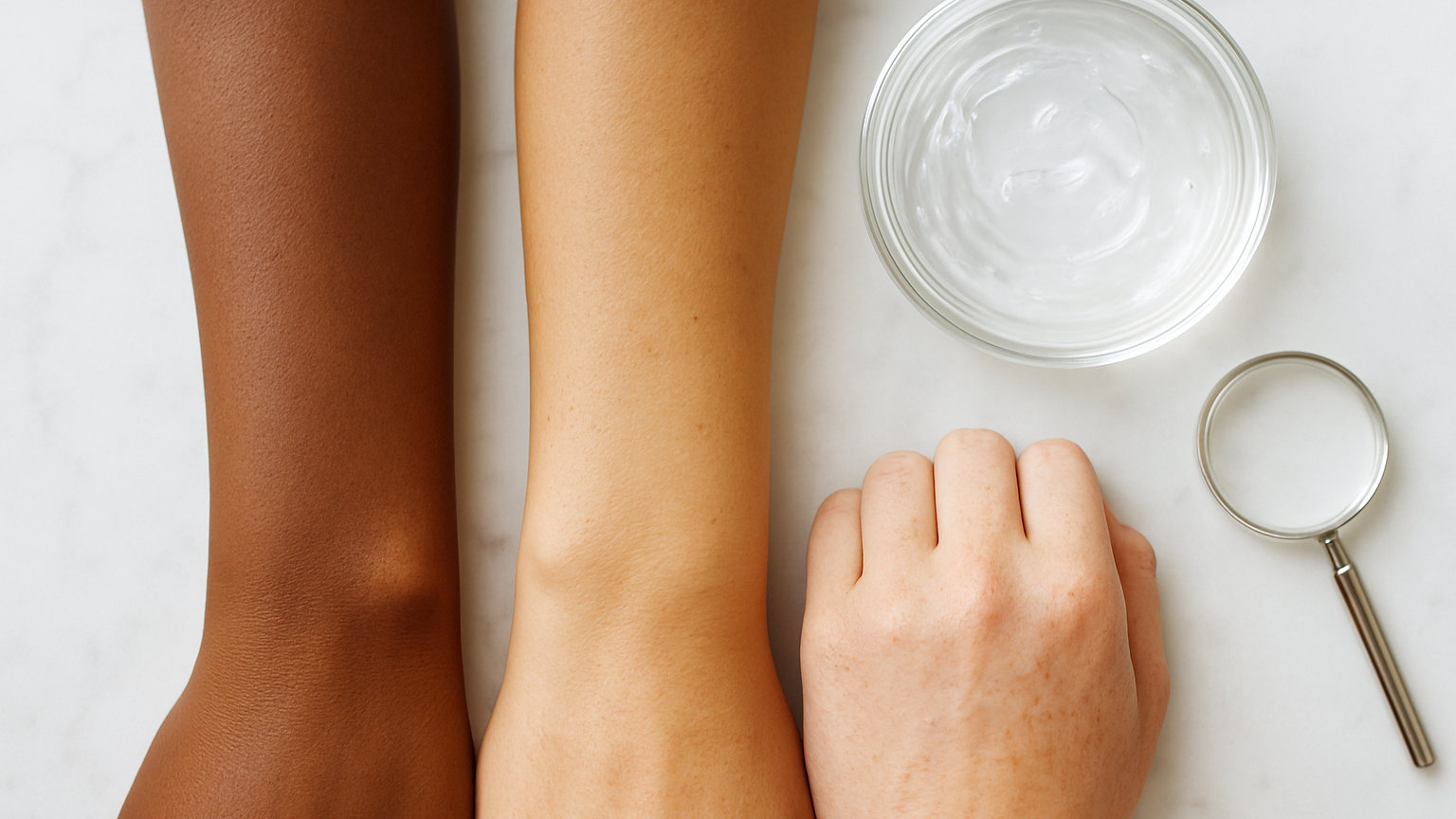
A great deal of pigmentation advice is written with lighter skin in mind, and applying it unmodified to deeper skin is one of the more reliable ways to make the problem worse. The differences are biological rather than cosmetic, and they change what is sensible at almost every step.
What actually differs?
Not the number of melanocytes, which is broadly similar across skin tones. What differs is their activity, the size of the melanin packages they produce, and how those packages are distributed within skin cells.
In deeper skin, melanosomes are larger, more numerous per cell and more widely dispersed, and they persist further up through the epidermis. That produces better natural protection against ultraviolet damage and a much stronger pigment response to any stimulus.
Why does deeper skin mark more readily?
Because melanocytes that are more active by default respond more vigorously to inflammation. A spot, an insect bite, an ingrown hair or a scratch that would leave nothing on pale skin can leave a mark lasting a year on deeper skin.
The marks are also more prominent, since the contrast is between darker pigment and darker surrounding skin at a higher overall melanin level, and they penetrate deeper, so surface treatments reach less of them.
This is why post-inflammatory hyperpigmentation is consistently among the most common presenting complaints in dermatology for patients with skin of colour, and why preventing inflammation matters more than treating pigment.
Which treatments carry more risk?
Anything that works by injuring or heating the skin. Medium and deep chemical peels, intense pulsed light, ablative laser and aggressive microneedling all carry a substantially higher risk of rebound pigmentation.
The mechanism is straightforward: the treatment causes controlled inflammation, and inflammation is precisely what stimulates the melanocytes. In skin that responds strongly, the result can be discolouration considerably worse than the original problem and lasting far longer.
Hydroquinone, used for too long or at too high a strength, can cause ochronosis, a blue-black discolouration that is very difficult to treat and disproportionately affects deeper skin tones.
What is the safer approach?
Start lower, go slower, and prioritise anti-inflammatory ingredients over aggressive ones.
Azelaic acid is particularly well suited, since it inhibits pigment selectively in overactive melanocytes while calming inflammation. Niacinamide is well tolerated and blocks pigment transfer. Tranexamic acid has good evidence. Mandelic acid is the gentlest of the exfoliating acids and has a better record here than glycolic.
Retinoids help, introduced very gradually, because retinoid irritation itself causes pigmentation if pushed too fast.
Does sunscreen still matter?
Yes, and the assumption that it does not is a genuinely harmful misconception. Higher melanin content provides some ultraviolet protection, estimated at an SPF equivalent well below what a sunscreen provides, and it offers no protection against the visible light that drives melasma.
Tinted mineral sunscreens with iron oxides are particularly useful, both because they block visible light and because the tint avoids the white cast that puts many people off mineral formulas. That cast is a formulation problem, and modern tinted products largely solve it.
How do you choose a practitioner?
Ask directly how much experience they have treating your skin type, and be wary of anyone who does not raise the risk of post-inflammatory pigmentation themselves.
Insist on a test patch. Ask what settings or strengths they would use and why. Expect a period of topical preparation beforehand, since pre-treating with a pigment inhibitor reduces the rebound risk measurably.
A practitioner who treats all skin the same way is not the right choice, whatever the clinic looks like.
What should you avoid entirely?
Unregulated lightening creams, which are marketed most aggressively to people with deeper skin and are the most likely to contain mercury or potent steroids.
Scrubbing at marks, which adds friction-driven inflammation to a skin type already prone to it. And treating any single mark aggressively out of frustration, since the pattern of escalating treatment is what produces the outcomes people most regret.


