
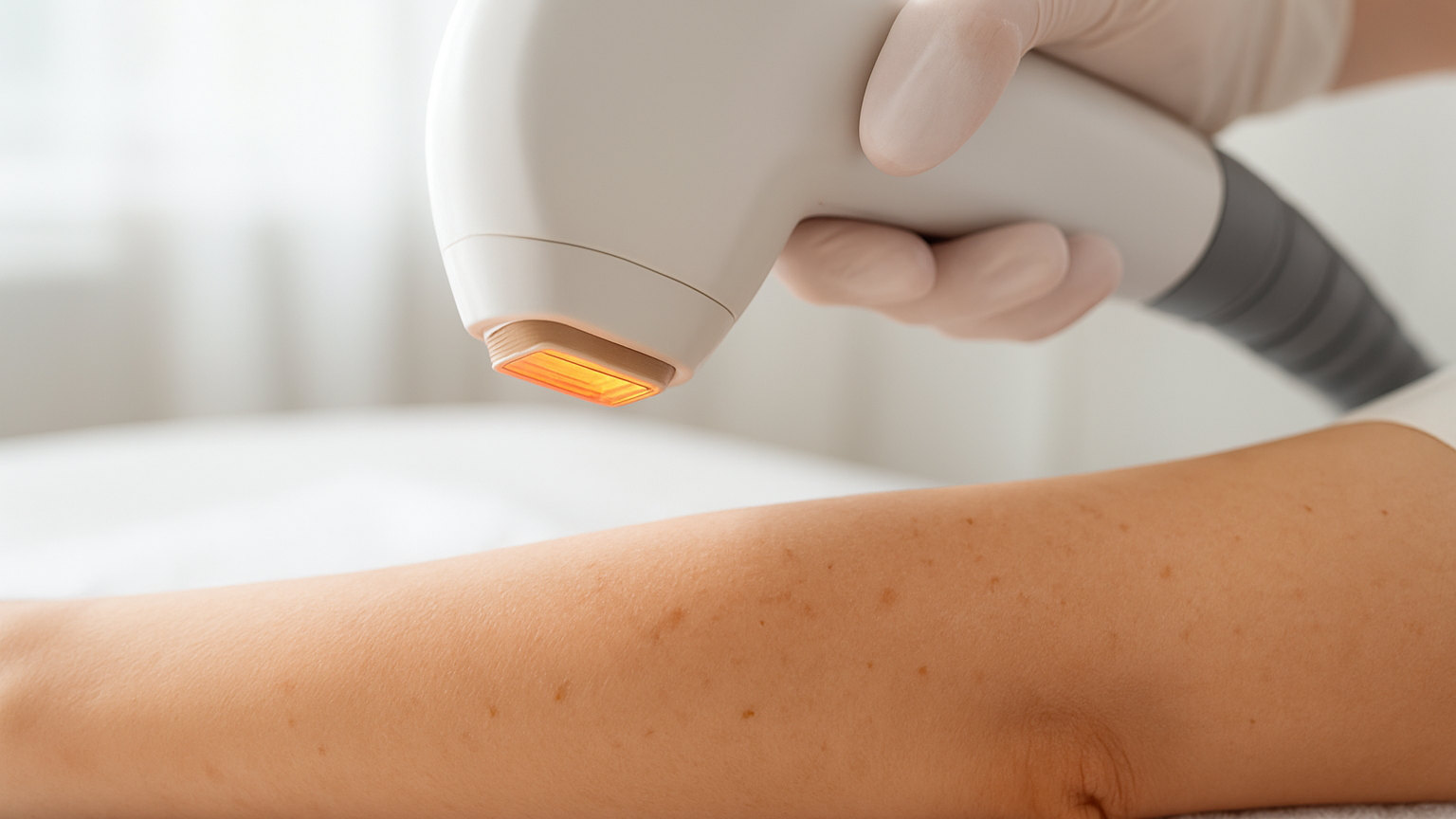
Clinical treatment can achieve in a few weeks what topical products take a year to approach. It can also produce pigmentation considerably worse than the original, and the gap between those outcomes is largely a matter of matching the treatment to the type and the skin tone.
What do chemical peels do?
Remove the upper layers of skin in a controlled way, taking pigmented cells with them and stimulating renewal underneath.
Superficial peels using glycolic, mandelic or salicylic acid work on epidermal pigmentation, need repeating, and have minimal downtime. Medium-depth peels using trichloroacetic acid reach further and produce more substantial results with several days of visible peeling.
They suit sun spots and superficial post-inflammatory marks. In melasma they are used cautiously and at low strength, because aggressive peeling frequently provokes rebound.
What is IPL and what does it treat?
Intense pulsed light is not a laser. It emits a broad spectrum of light, filtered so that the energy is absorbed preferentially by pigment and by haemoglobin.
It is particularly effective for discrete sun spots, which typically darken over a few days and then flake away, and for the vascular component of sun-damaged chests and necks.
It is generally unsuitable for deeper skin tones, because the surrounding skin also absorbs the energy, and it is a poor choice for melasma, where the heat can worsen the condition.
How does laser differ?
A laser emits a single wavelength, which allows more precise targeting.
Q-switched and picosecond lasers deliver very short pulses that shatter pigment particles for the body to clear, and they are used for stubborn lentigines and some deeper pigmentation. Fractional lasers treat columns of skin, improving pigmentation and texture together with more downtime.
Precision matters here more than power, and the settings appropriate for one skin tone can cause burns and permanent pigment change in another.
Why is skin tone so important?
Because treatments that work by heating or injuring tissue provoke a stronger melanocyte response in skin with more active melanocytes.
In medium and deep skin tones, the risk of post-inflammatory hyperpigmentation after peels, IPL and laser is substantially higher, and the resulting discolouration can last far longer than the original problem.
This is not a reason to avoid treatment. It is a reason to see a practitioner with genuine experience of your skin type, to insist on a test patch, and to be sceptical of anyone who does not raise the issue themselves.
What about microneedling?
It creates controlled micro-injuries that stimulate collagen and improve the delivery of topical agents, and it has reasonable evidence in pigmentation, particularly combined with tranexamic acid.
Because it does not rely on heat, it is often better tolerated in melasma and in deeper skin tones than energy-based options. It still carries a risk of inflammation-driven pigmentation if performed too aggressively.
What should happen before treatment?
A consultation that establishes which type of pigmentation you have, since melasma and sun damage need different approaches. Assessment of your skin tone and how it responds to injury.
Often a period of preparation with topical agents for several weeks beforehand, which reduces the risk of rebound. A test patch. And a clear explanation of the number of sessions, the downtime and what happens if it goes wrong.
Anyone offering treatment without a consultation, or promising to clear melasma permanently, is worth walking away from.
What happens afterwards matters too
Rigorous sun protection for weeks, because freshly treated skin pigments readily and unprotected exposure is the most common cause of a poor result.
Gentle products only, no exfoliants, and no heat exposure including saunas and hot yoga. Most disappointing outcomes in pigmentation treatment come from the aftercare rather than the procedure.
How many sessions should you expect?
Three to six for most superficial pigmentation, spaced several weeks apart, and more for anything deeper or for melasma where the aim is control rather than clearance.
Be wary of packages sold upfront for a fixed number of sessions before anyone has seen how your skin responds to the first one. A reasonable clinic assesses after each treatment and adjusts, and is willing to stop if the response is not what was hoped.


