
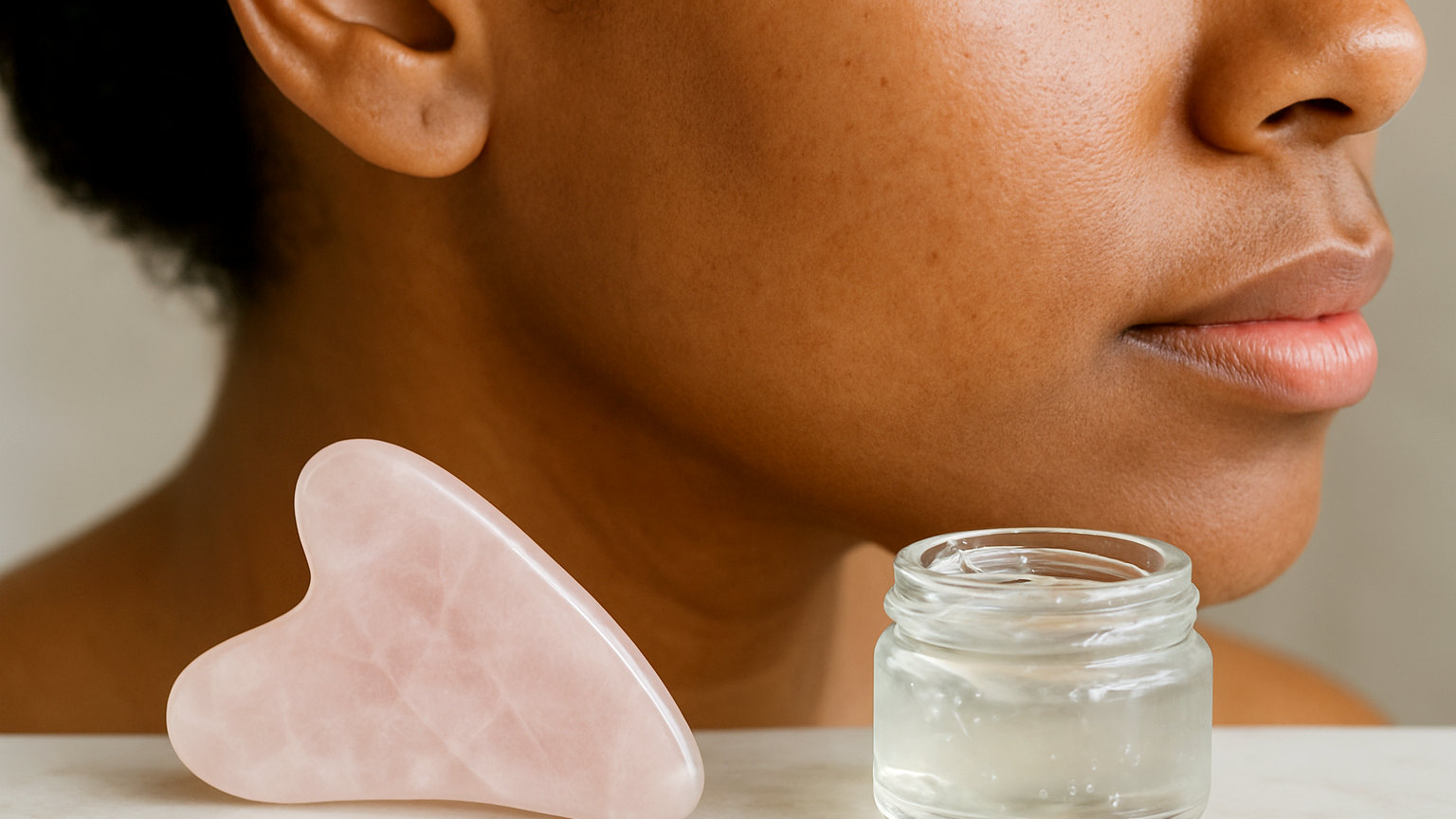
Not everyone with a pigmentation complaint has spots. A more common description is that skin looks generally uneven, blotchy or dull rather than marked in specific places, and a good deal of that turns out not to be pigment at all.
What contributes to uneven tone?
Four things, usually together.
Diffuse pigmentation, where melanin is slightly elevated across an area rather than concentrated in a spot. Vascular redness, from dilated capillaries or persistent flushing. Texture, since a rough surface scatters light unevenly and reads as patchiness. And accumulated dead cells, which absorb rather than reflect light and produce dullness.
Only the first is a pigment problem, which is why pigment-fading serums often disappoint people whose actual complaint is one of the other three.
How do you tell which you have?
Look in natural light and press gently on a patch with a clear fingertip or a glass slide. Redness that blanches under pressure is vascular. Discolouration that stays is pigment.
Run a finger over the skin. If unevenness corresponds to roughness you can feel, texture is doing much of the work.
Take a photograph with flash. Pigment shows more clearly under direct light, while texture-related unevenness tends to flatten out.
What causes dullness specifically?
Slowed cell turnover, which happens gradually with age and rapidly with poor sleep, illness and dehydration. Dead cells accumulate at the surface, and light reflects off an irregular surface rather than a smooth one.
Smoking contributes substantially by constricting the small blood vessels supplying the dermis, which is why the sallow, grey appearance associated with it is a circulation effect rather than a stain.
Dehydration flattens the surface optically. A well-hydrated skin surface reflects light more evenly, which is most of what people mean by radiance.
What actually evens it out?
Regular gentle exfoliation, two or three times a week, addressing the dead-cell component. A retinoid over several months, addressing turnover, texture and pigment at once.
Niacinamide, which helps both pigment and redness and improves barrier function so the surface holds water better. Vitamin C for antioxidant protection and pigment. Azelaic acid where redness is a significant part of the picture.
And sunscreen, because diffuse pigmentation and vascular damage both accumulate from ultraviolet exposure, so protection does more over years than any evening treatment.
Does hydration really change how skin looks?
Immediately and noticeably, which is why hydrating products feel more effective than they are over the long term.
A humectant applied to damp skin plumps the outer layer within minutes, smoothing microscopic irregularities so light reflects more evenly. That is a genuine optical improvement and it lasts hours rather than months.
It is worth doing, and worth understanding as a daily effect rather than a treatment. The lasting changes come from turnover and protection.
How much is lifestyle?
More than for discrete pigmentation. Sleep affects skin blood flow and repair measurably. Alcohol dilates vessels and dehydrates. Smoking has one of the clearest negative effects on skin appearance of anything measurable.
None of that is a substitute for skincare, and all of it shows in the face sooner than most people expect, particularly in the weeks after a difficult period.
How long before it improves?
Hydration within days. Dullness and texture within four to six weeks of consistent exfoliation. Diffuse pigmentation over three to six months. Vascular redness slowest of all, and often needing clinical treatment.
Photographs in consistent light every fortnight are more reliable than daily observation, which is poor at detecting gradual change and tends to notice only what has become worse.
Does makeup help or hinder?
Helps, provided it is removed properly. A base with light-diffusing particles evens the appearance immediately by scattering light rather than by covering, which is more effective than building up thick layers.
Tinted sunscreens are a useful two-in-one here, since the iron oxides that provide the tint also block visible light, which contributes to pigmentation. Nothing about wearing makeup slows the underlying improvement, as long as it is not being used to avoid dealing with the causes.


