
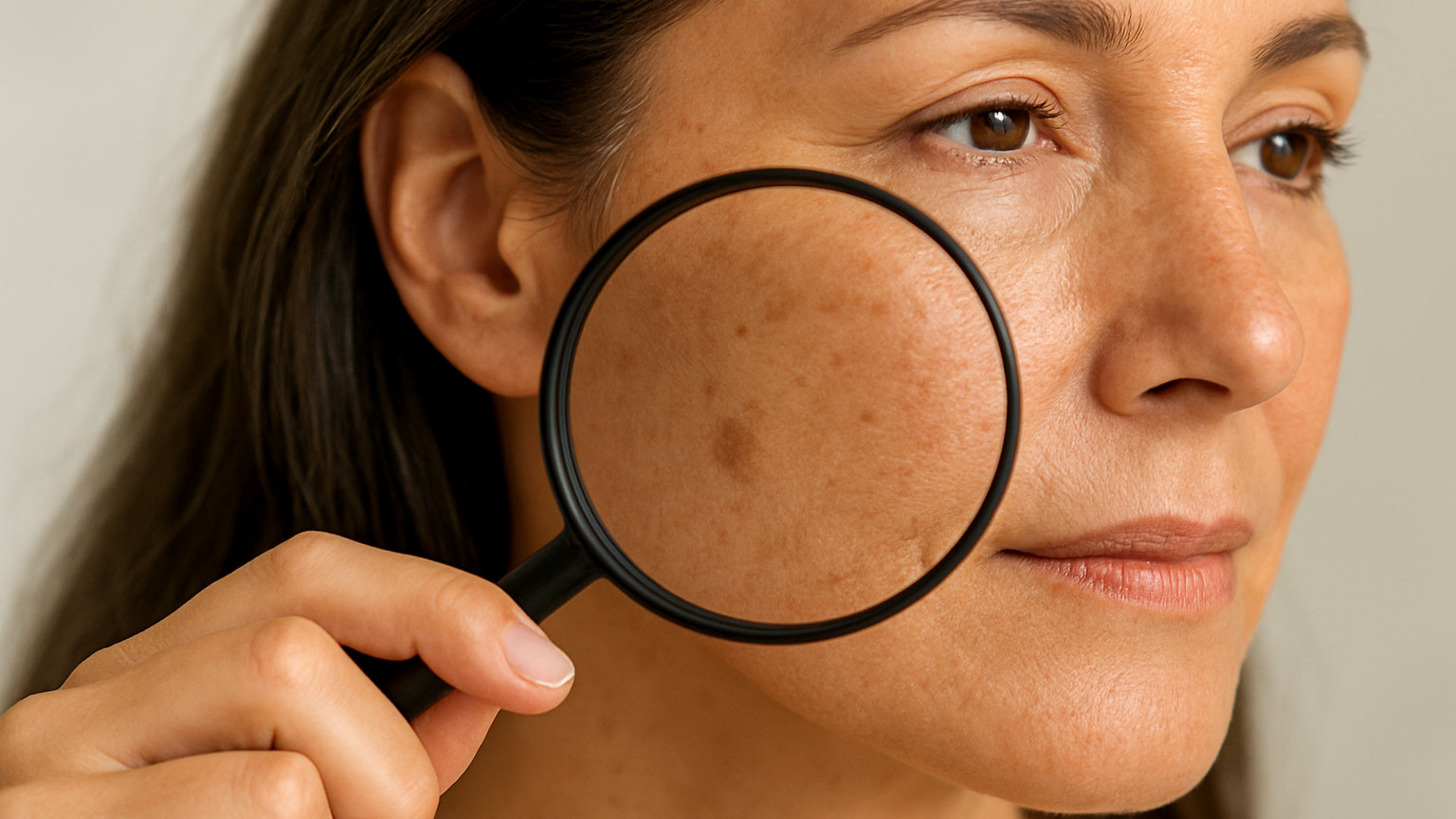
Pigmentation is a single visible symptom with several distinct causes, and they respond very differently to treatment. Working out which kind you have is not a technicality; it determines whether a treatment will help, do nothing, or make it worse.
How does pigment form?
Melanocytes sitting at the base of the epidermis produce melanin and transfer it to surrounding skin cells, where it absorbs ultraviolet light and protects the cell nucleus.
Pigmentation problems occur when that process becomes localised and excessive. Melanocytes in one area produce more melanin than their neighbours, or transfer it more readily, and the result is a patch that is darker than the skin around it.
The trigger for that overproduction is what distinguishes the different types.
What are sun spots?
Sometimes called age spots or solar lentigines, these are the small, well-defined brown patches that appear on the face, backs of hands, chest and shoulders from the thirties onward.
They are caused by cumulative ultraviolet exposure, which increases both the number of melanocytes and their activity in the affected area. They are flat, usually a few millimetres across, and do not fade in winter.
Because the cause is cumulative, they are the most preventable kind and the most clearly linked to how much sun someone has had over decades rather than last summer.
What is melasma?
Larger, symmetrical patches with less defined edges, typically across the cheeks, forehead and upper lip. It is far more common in women and in deeper skin tones.
Hormones are central. It commonly appears in pregnancy, on the combined pill, or on hormone therapy, and it is aggravated by ultraviolet light, visible light and heat. That last point is often missed: melasma flares from heat alone, including cooking and hot yoga.
It is chronic and recurrent rather than curable, and it is the type most likely to worsen with aggressive treatment.
What about marks left by spots?
Post-inflammatory hyperpigmentation, caused by inflammation triggering pigment production. It follows acne, eczema, an ingrown hair, a burn or any injury.
It is more common and more persistent in deeper skin tones. It follows the shape of whatever caused it, which is a useful diagnostic, and it fades on its own over three to twelve months provided the area is protected from sun and not re-inflamed.
Red or purple marks are a related but different thing: post-inflammatory erythema, which is dilated capillaries rather than pigment, and it does not respond to pigment treatments.
Which factors make all of them worse?
Ultraviolet exposure, without exception. Visible light, particularly blue light, which matters for melasma specifically and is a reason mineral sunscreens with iron oxides are recommended for it.
Heat. Inflammation of any kind, including from over-exfoliation or an irritating product. Picking at spots, which is the single largest controllable factor in whether acne leaves marks.
Does skin tone change the picture?
Considerably. Deeper skin tones have more active melanocytes, so pigmentation forms more readily, lasts longer and is more prominent.
It also means treatments carry more risk. Aggressive peels, laser and strong actives can cause rebound pigmentation that is worse than the original problem, so a cautious approach and a practitioner experienced with your skin type matter more than in lighter skin.
When should you see a GP?
Any pigmented patch that changes shape, size or colour, has an irregular border, more than one colour, bleeds, itches or does not heal should be seen promptly rather than treated cosmetically.
Also worth an appointment: pigmentation that appears suddenly and extensively without sun exposure, and melasma that is significantly affecting you, since prescription options are considerably more effective than anything over the counter.
Can pigmentation be prevented?
Sun spots largely can, and that is the most encouraging part of this topic. They are cumulative, so protection at any age reduces what appears later, even for someone who has already had decades of unprotected exposure.
Post-inflammatory marks are prevented by treating inflammation early and not picking at spots. Melasma is the least preventable, since the hormonal trigger is not something most people control, though rigorous protection from light and heat reduces how severe it becomes.


