
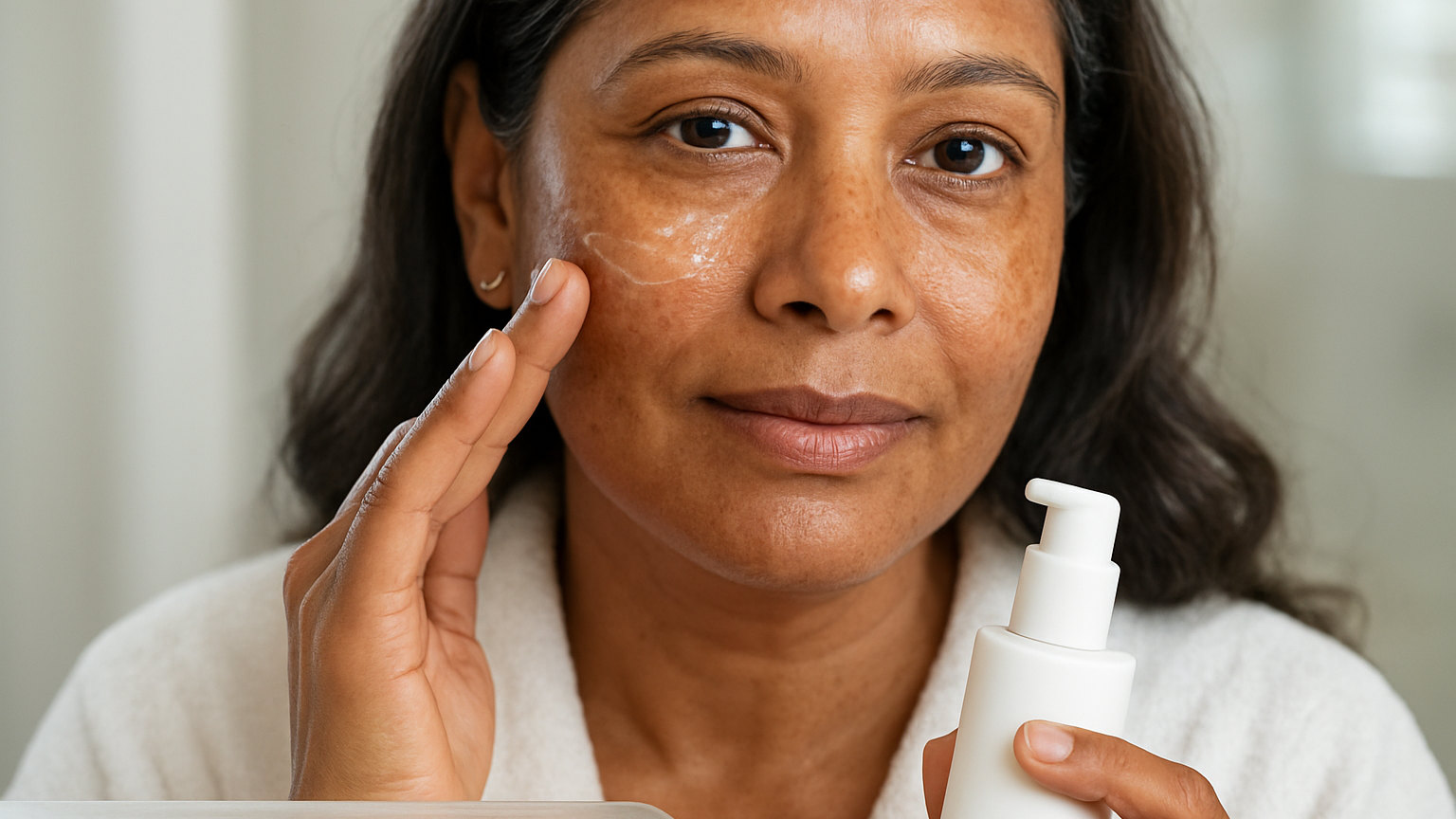
Melasma is the most difficult kind of pigmentation to treat and the one most frequently made worse by treatment. It behaves differently from sun damage in ways that matter, and approaching it as if it were the same thing is the usual route to a poor outcome.
What does it look like?
Larger patches with soft, irregular edges, usually symmetrical across both sides of the face. The most common sites are the cheeks, forehead, upper lip and jaw.
The symmetry is the most useful clue. Sun spots are discrete and scattered; melasma appears in matching patches on both sides, which reflects its hormonal rather than purely environmental origin.
Who gets it?
Predominantly women, and disproportionately those with medium to deep skin tones. It commonly begins in the twenties to forties.
Pregnancy is a frequent trigger, which is why it is sometimes called the mask of pregnancy. The combined contraceptive pill and hormone replacement therapy can also provoke it. A minority of cases occur in men, usually with a strong family history.
Why is heat a trigger?
This is the feature that distinguishes it and the one most often missed. Melasma responds not only to ultraviolet light but to visible light and to heat itself.
That means it can flare from standing over a hob, from a sauna, from hot yoga, or from a long time in front of a fire, entirely independently of sun exposure. It also means that laser treatments, which work by heating tissue, frequently make it worse rather than better.
Anyone whose melasma seems to worsen unpredictably in winter is usually reacting to heat rather than to light.
Why does ordinary sunscreen not seem enough?
Because most sunscreens are formulated against ultraviolet light and offer little protection against visible light, which is a genuine trigger here.
Tinted mineral sunscreens containing iron oxides block a meaningful proportion of visible light, and studies comparing them with untinted formulations in melasma have found better outcomes. For this condition specifically, tinted is not a cosmetic preference but part of the treatment.
Reapplication matters, as does wearing a hat, since protection has to be close to continuous rather than occasional.
Which treatments help?
Tranexamic acid has the best recent evidence, topically and orally, and works on the pathway connecting ultraviolet exposure to melanocyte stimulation. Oral treatment is prescription-only and not suitable for everyone, particularly anyone with a clotting risk.
Azelaic acid is well tolerated, effective and safe in pregnancy, which is significant given how often melasma begins there.
Hydroquinone is effective and prescription-only in the UK, generally used for a limited period under supervision. Niacinamide, vitamin C and cysteamine all have supporting evidence.
What makes it worse?
Aggressive exfoliation, strong peels and laser in inexperienced hands. Anything that inflames the skin, since inflammation stimulates the same melanocytes.
The pattern people fall into is understandable and damaging: frustration at slow progress leads to stronger treatment, which causes rebound pigmentation worse than the original. Melasma rewards patience and punishes force more than any other skin condition.
Does it ever go away?
Sometimes, and it is better described as managed than cured. Melasma that began in pregnancy often fades within a year of giving birth. Melasma linked to the pill may resolve after stopping it, in consultation with a GP.
Otherwise it is a chronic condition that improves with consistent treatment and returns with sun, heat or hormonal change. Framing it that way from the start makes the maintenance easier to sustain than expecting a permanent fix.
Is it linked to anything else?
Thyroid disorders show a higher association with melasma than would be expected by chance, and it is reasonable to mention persistent unexplained melasma to a GP alongside any other symptoms such as fatigue or weight change.
Certain medications also photosensitise the skin and can contribute, including some antibiotics, anti-epileptics and hormonal treatments. If melasma appeared shortly after starting a new medication, that is worth raising rather than assuming it is coincidental.


