
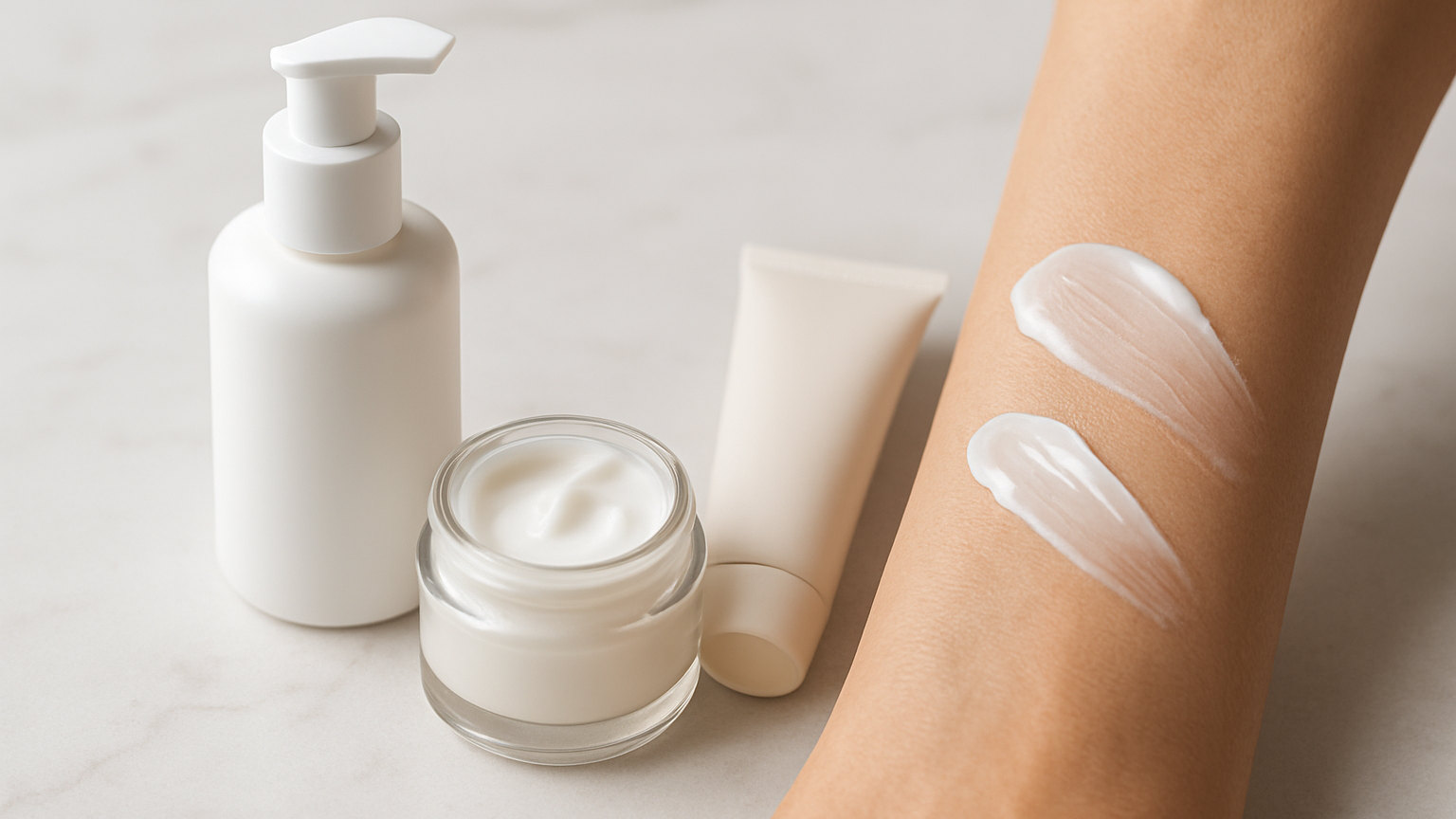
The list of products with genuinely strong evidence behind them is short, cheap and less interesting than the industry would prefer. Everything beyond it is optional, and optional is not the same as useless.
What are the three essentials?
A gentle cleanser, a moisturiser, and sunscreen in the morning. That is a complete routine and will serve most people well for years.
Cleanser removes sunscreen, makeup, sweat and excess oil without stripping the barrier. Moisturiser supports the barrier and reduces water loss. Sunscreen prevents the ultraviolet damage responsible for the majority of visible facial ageing and a large share of skin cancer risk.
Nothing else in skincare has evidence approaching those three, and sunscreen has the strongest of them.
What is worth adding first?
A retinoid, once the basics are established and consistent. It is the only topical ingredient available without a prescription with robust evidence for stimulating collagen, and it also treats congestion, texture and pigmentation.
Start at low strength, twice a week, and increase slowly over months. Added to the three essentials, that is a routine most dermatologists would consider sensible for almost anyone.
What comes after that?
Something targeted at a specific concern you actually have, rather than something targeted at a concern the packaging suggested.
For pigmentation, azelaic acid, vitamin C or niacinamide. For congestion, salicylic acid two or three times a week. For redness or barrier problems, niacinamide and ceramides. For dullness and texture, a gentle exfoliating acid.
One addition at a time, with a fortnight between them.
What can you skip?
Toner, unless it is an exfoliating one you are using deliberately. Essence, which is a hydrating layer under another name. Separate eye cream, which for most people duplicates their moisturiser at several times the price per millilitre.
Sheet masks, which hydrate pleasantly for an evening. Cleansing devices, which clean more thoroughly than is usually the limiting factor. Multi-step routines sold as a set, which mainly increase the number of things that can irritate you.
None of these is harmful. They are simply not doing the work people assume they are.
Does spending more help?
Rarely, and the correlation between price and performance in skincare is weak. Glycerin, ceramides, niacinamide, zinc oxide and retinol are inexpensive raw materials, and a well-formulated product containing them costs a few pounds.
What money buys at the top end is texture, fragrance, packaging and the experience of using it. Those are legitimate things to want, and it helps to know that is what you are buying.
The exception is sunscreen, where paying more for a texture you will genuinely apply every day is money well spent.
How long before you can judge it?
Twelve weeks for most changes, which is roughly three cycles of skin turnover.
Hydration and comfort improve within days. Texture and congestion at four to six weeks. Pigmentation at eight to twelve. Fine lines at six months. Judging a product after a fortnight is the most common reason people conclude nothing works for them.
What if your skin is already fine?
Then the routine is cleanser, moisturiser and sunscreen, and there is nothing wrong with stopping there.
Skincare is prone to a particular kind of escalation, where a routine expands because more feels more thorough. Over-treatment is one of the most common causes of the problems people then buy further products to fix. If your skin is comfortable and clear, adding actives to it is more likely to create a problem than solve one.
Does the routine differ by skin type?
In texture rather than in structure. Every skin type needs cleansing, moisturising and protection; what changes is the formulation.
Oily skin wants a gel cleanser and a fluid moisturiser. Dry skin wants a cream cleanser and something richer with ceramides. Sensitive skin wants fewer ingredients and no fragrance. Combination skin usually needs one moisturiser applied more generously in some places than others rather than two separate products.
What about men?
The same three products, and the same evidence. Male skin is on average thicker and produces more sebum, which shifts the texture preference toward lighter formulations, and daily shaving means the barrier is disrupted more often.
Beyond that, the marketing distinction between men's and women's skincare is largely packaging. A gentle cleanser, a moisturiser and sunscreen serve everyone.


