
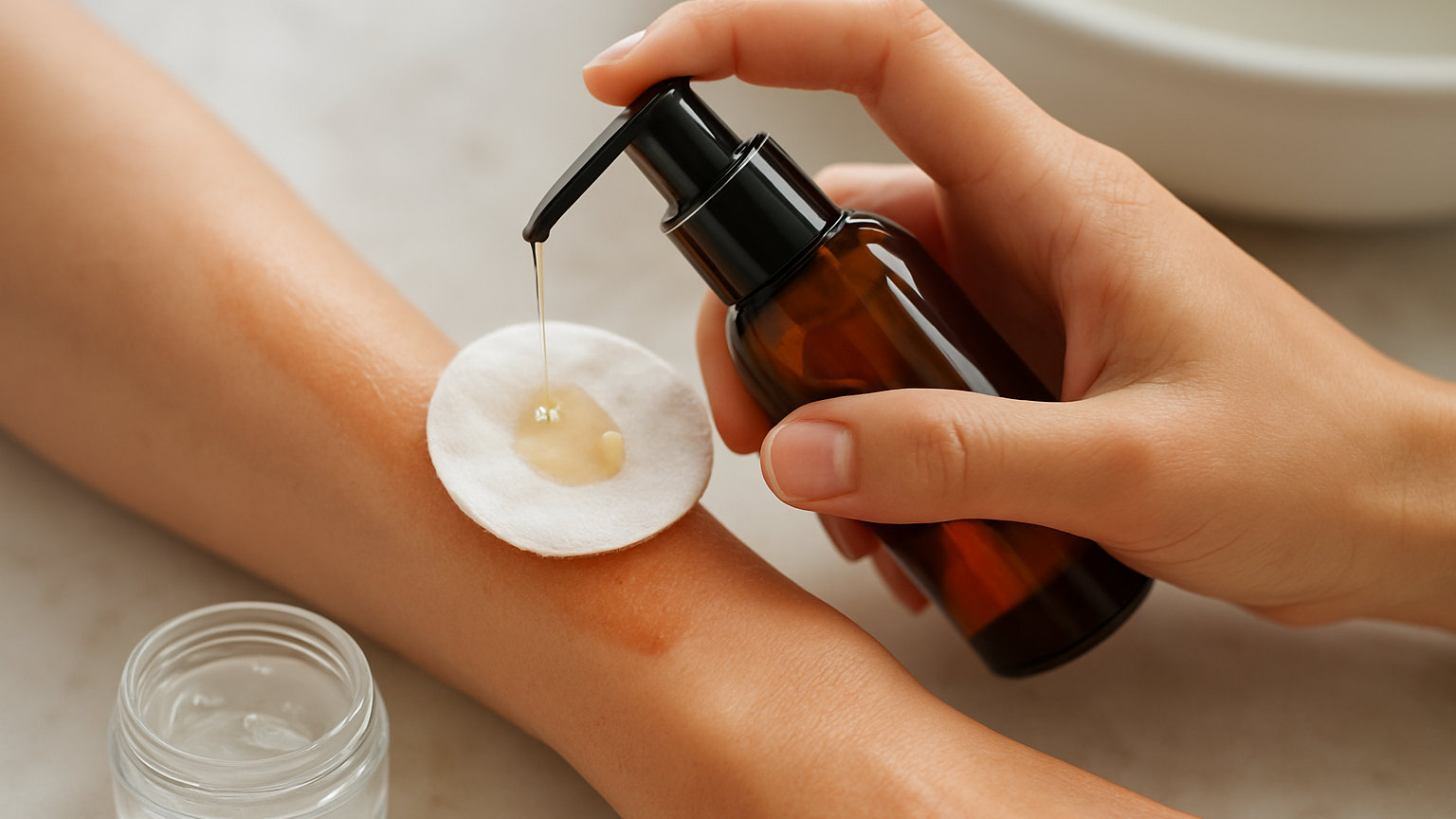
Double cleansing is a genuinely useful technique that solves one specific problem. If you do not have that problem, it is an additional step that costs time and, done with the wrong products, dries your skin.
What is it, and what is it for?
An oil or balm cleanser first, followed by a water-based cleanser. The first dissolves oil-soluble material, the second removes water-soluble material and any residue.
The problem it solves is sunscreen and makeup. Both are formulated to resist water and sweat, which is precisely what makes them difficult for a water-based cleanser to shift. An oil dissolves them in seconds without any scrubbing.
Who genuinely needs it?
Anyone who wears sunscreen daily, which should be most people, and anyone who wears makeup.
Anyone with oily or congested skin, where incomplete removal of the day contributes directly to blockage. Anyone who wears heavier products, waterproof formulas or long-wear bases.
If you wear sunscreen and nothing else, one thorough cleanse with a good cleanser can be adequate, though an oil first still removes it more comfortably.
Who does not need it?
Anyone who wears no sunscreen or makeup, which in practice means an evening at home after a day indoors without protection.
Anyone with dry or sensitive skin who finds two cleanses leave them tight. In that case a single cream or balm cleanse, removed with a damp soft cloth, does the job with less disruption.
And nobody needs it in the morning. There is nothing on your face at seven in the morning that requires two cleansers.
How should you do it?
Apply the oil or balm to dry skin with dry hands, and massage for thirty to sixty seconds so it has time to dissolve what is there. Rushing this is the most common error.
Add a little water to emulsify, which turns the oil milky and allows it to rinse away, then rinse thoroughly. Follow with a gentle water-based cleanser, another thirty seconds, and rinse again.
Lukewarm water throughout. Hot water strips considerably more than either cleanser does.
Does the first cleanse cause breakouts?
Rarely, if it is removed properly, and the concern is usually misplaced. Cleansing oils are formulated to emulsify and rinse, and residue is the problem rather than the oil itself.
If you break out after starting, the likelier causes are insufficient rinsing, a formula containing coconut-derived ingredients that congest your skin, or the second cleanse being skipped. Trying a different oil before abandoning the method is worth doing.
Is micellar water a substitute?
Partly. Micellar water removes light makeup and sweat well and is gentle, which makes it a reasonable option for sensitive skin or for evenings when a full routine is not happening.
It is less effective on sunscreen, particularly water-resistant formulas, and most versions are designed to be rinsed rather than left on the skin. Wiping repeatedly with a dry pad also causes friction that irritates.
What about cleansing balms versus oils?
Largely a matter of preference. Balms are solid until warmed and tend to feel more cushioning, which suits dry skin. Oils are quicker to apply and easier to spread.
Both work by the same principle. What matters more is the second cleanser: a gentle, low-foaming formula near skin pH, rather than something that strips whatever the first step left behind.
Is once ever enough for everything?
With the right product, often yes. A good cream or balm cleanser used with a damp soft cloth removes sunscreen and light makeup in a single step, which is a reasonable answer for anyone finding two cleanses drying.
The principle worth keeping is thoroughness rather than the number of steps. Sunscreen left on overnight congests skin far more reliably than any cleansing oil does.
How do you know your cleanse was thorough?
Sweep a cotton pad with a little micellar water over your face after cleansing and look at it. Colour or a greasy residue means something was left behind, most often around the hairline, the jaw and the sides of the nose.
Those three places are where sunscreen and makeup most reliably survive a rushed cleanse. Doing this once a week for a month is enough to correct the habit without becoming an extra step.


