
Skincare degrades in two different ways: the active ingredients stop working, and the product becomes unhygienic. They happen on different timescales, and neither is well signalled by the date on the box.
What do the symbols mean?
Products with a shelf life under thirty months carry a best-before date. Everything else carries a period-after-opening symbol, an open jar with a number and the letter M, indicating months of use once opened.
Twelve months is common, six for some products and twenty-four for others. The clock starts when you open it, not when you buy it, which means an unopened product in a drawer is generally fine for years.
Writing the opening date on the bottom of the bottle with a marker is a small habit that removes all guesswork.
Which ingredients degrade fastest?
Vitamin C, by a distance. L-ascorbic acid oxidises readily on exposure to air and light, and a serum that has turned yellow or orange has degraded. It is not harmful at that point, simply inert, and the colour change is a genuinely useful indicator.
Retinoids degrade with light and air, which is why they are sold in opaque, air-restricted packaging. A retinoid in a clear jar was compromised before you bought it.
Plant oils go rancid, particularly rosehip and other high-linoleic oils, and develop a distinctive stale smell. Benzoyl peroxide loses potency over time. Sunscreen filters degrade with heat.
What makes a product unhygienic?
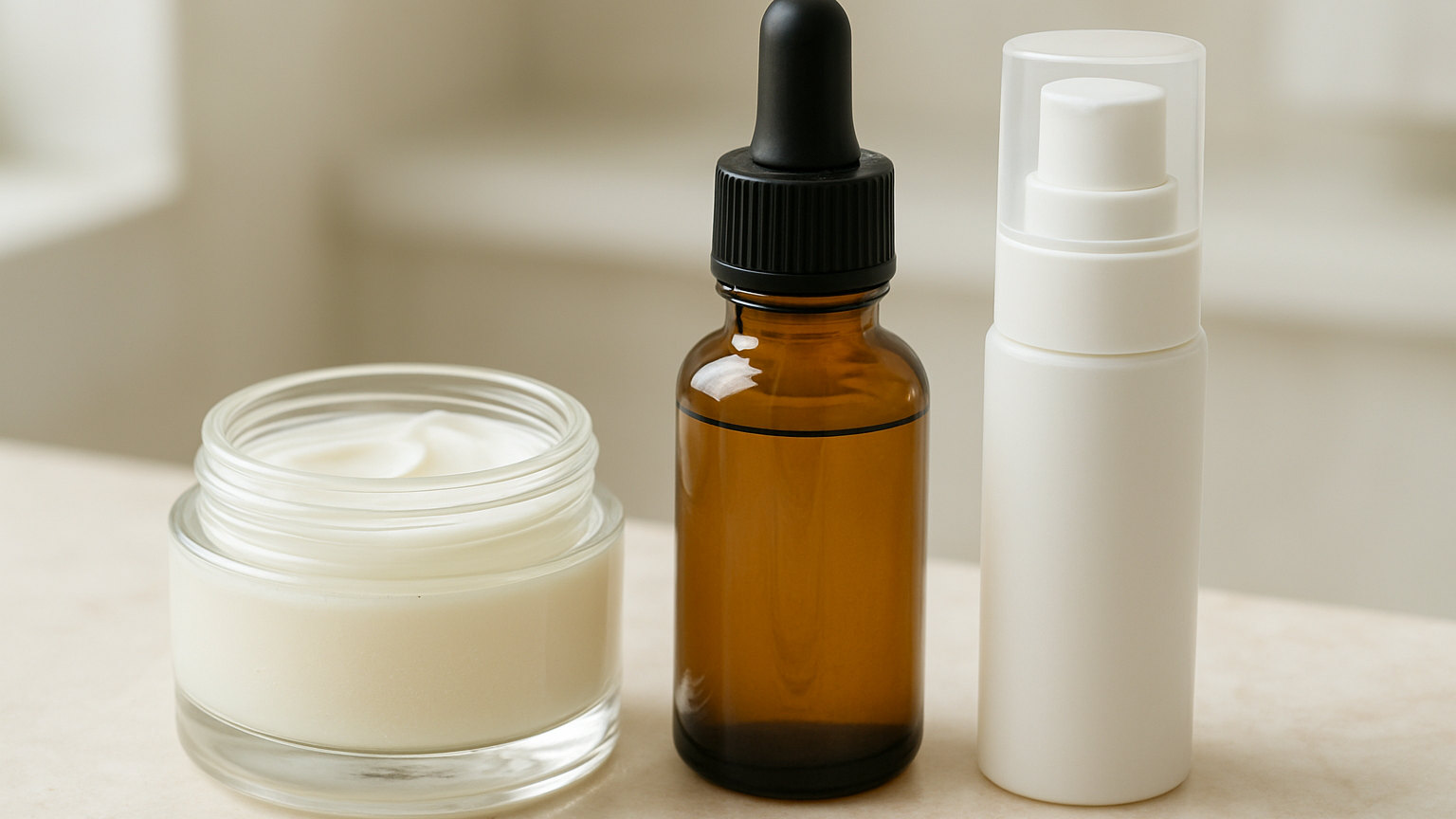
Repeated contact with fingers, air and water. A jar dipped into daily accumulates bacteria in a way a pump does not, which is the main argument for pump and tube packaging beyond convenience.
Water-based products are more vulnerable than anhydrous ones. Anything containing water needs a preservative system, and that system has a finite working life.
Products stored in a bathroom face heat and humidity that shorten everything, which is an inconvenient fact given where almost everyone keeps them.
How can you tell something has gone off?
Separation that does not recombine when shaken. A change in colour, particularly darkening or yellowing. A change in smell, which is often the earliest sign.
A change in texture, becoming grainy, watery or unusually thick. Any visible growth, however small. And stinging or irritation from something that never previously stung.
Where should you store things?
Somewhere cool, dark and dry, which for most homes means a bedroom drawer rather than a bathroom shelf.
Keep vitamin C, retinoids and any oils away from windowsills. Replace caps properly rather than leaving them off between steps. Avoid decanting into other containers, which introduces contamination and removes the protective packaging.
Refrigeration is optional for most things and genuinely helpful for vitamin C and for natural or preservative-light formulations.
Is using an expired product harmful?
Usually not dangerous, and usually pointless. The main risk is irritation from degraded ingredients and, less often, infection from a contaminated product.
The greater cost is invisible: an oxidised vitamin C serum or a degraded sunscreen is doing nothing while you believe it is working. That matters most with sunscreen, where the consequence of a product not performing is not a failed routine but sun damage.
What should you throw away without hesitation?
Anything applied near the eyes past its stated period, since eye infections are the most common consequence of expired cosmetics. Anything that has changed smell, colour or texture. Any sunscreen that has been left in a car or in direct sun.
And anything you cannot date and have owned for longer than you can clearly remember, which for most bathroom cabinets is a substantial proportion of the contents.
Do natural products expire faster?
Generally yes, and it is worth knowing before choosing one on the assumption that fewer preservatives is straightforwardly better.
Preservatives exist to stop bacteria, yeast and mould growing in a water-containing product. Formulations using milder or minimal preservative systems have shorter periods after opening, often six months, and are more vulnerable to contamination from fingers and humidity.
That is a reasonable trade to make deliberately. It is a poor one to make accidentally by keeping a preservative-light product for two years in a warm bathroom.


