
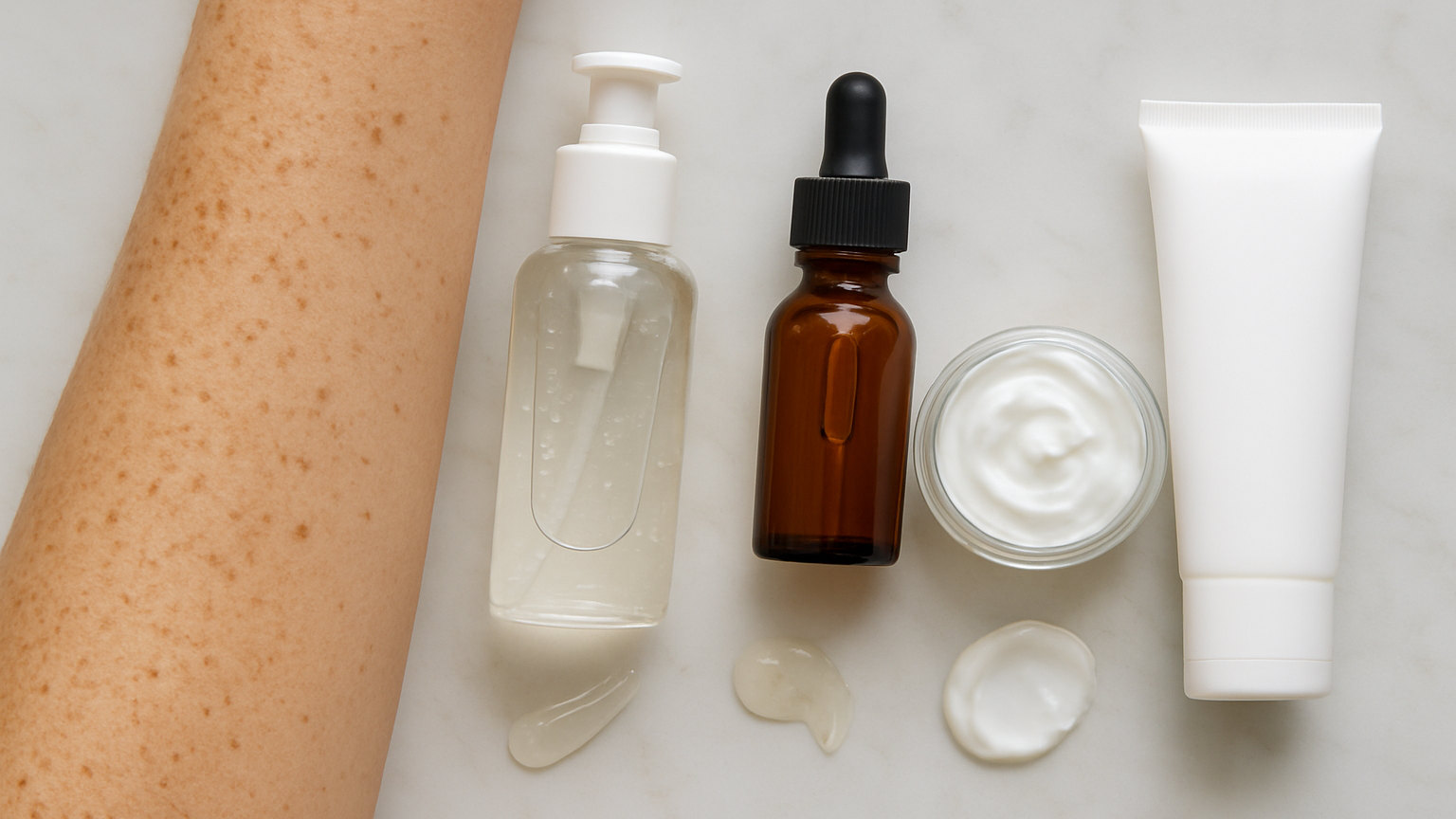
Order matters in skincare for a small number of specific reasons, and a great deal of what circulates online invents rules where none exist. Knowing which are real makes the routine simpler rather than more complicated.
What is the basic principle?
Thinnest to thickest, so that lighter products are not blocked by heavier ones sitting on top of them.
A watery serum applied over a rich cream cannot penetrate the film the cream has formed. The same serum applied first reaches the skin and the cream then seals it in. That single idea covers most of what people need.
What is the morning order?
Cleanser, or water alone if your skin prefers it. Then any water-based treatment such as a vitamin C serum. Then moisturiser. Then sunscreen, last.
Sunscreen goes last because it needs to form a continuous, even film at the surface to work. Anything applied over it disturbs that film, and anything it is mixed with dilutes it.
Makeup, if you wear it, goes after sunscreen has settled for a few minutes.
What is the evening order?
Cleanser, twice if you have worn sunscreen or makeup, with an oil or balm first to dissolve them. Then any treatment such as a retinoid or an exfoliating acid. Then moisturiser.
An oil, if you use one, goes last, since it is largely occlusive and works best sealing what is underneath rather than sitting beneath a cream.
Does waiting between steps matter?
Only in two situations, and the elaborate waiting rules that circulate are largely unnecessary.
Sunscreen benefits from a few minutes to settle before makeup, which prevents pilling and preserves an even film.
Strong actives can be buffered by applying moisturiser first, which is a deliberate reduction in intensity rather than a waiting rule. Beyond those, applying the next step as soon as the previous one has absorbed is fine.
The one genuinely useful timing rule runs the other way: apply humectants to damp skin, within a minute of cleansing, because they need water available to hold.
Does pH layering matter?
Far less than it once did. The advice to wait twenty or thirty minutes after an acid before applying anything else came from concerns about pH-dependent ingredients working properly.
Modern formulations are largely buffered, and skin restores its own pH within minutes. For most people the practical answer is to apply the next step when the previous one has absorbed.
The exception is anyone whose skin is easily irritated, where separating actives by time of day is a reasonable simplification.
Which combinations are worth separating?
Retinoids and exfoliating acids on the same night, which irritates most skin. Benzoyl peroxide applied at the same moment as a retinoid, since it degrades some formulations.
High-strength vitamin C and a retinoid in the same routine, not because they cancel out, which is an outdated claim, but because the combined irritation is more than most barriers tolerate.
The straightforward solution to all of these is morning and night, or alternate nights.
What if you use several serums?
Thinnest first, and consider whether you need all of them. Three serums layered under a moisturiser is usually two more than the skin can meaningfully use, and each additional product is another chance to react.
If you are using several, separating them between morning and evening usually works better than stacking them, and it makes it possible to identify the cause if something goes wrong.
Does any of this matter more than consistency?
No, and that is worth stating plainly. A simple routine applied every day outperforms an elaborate one followed intermittently.
Order optimises what you are already doing. It does not compensate for skipping sunscreen, and it is not the reason a routine is or is not working.
Where do masks and treatments fit?
A rinse-off mask goes after cleansing and before everything else, since the routine restarts once it is removed. A leave-on overnight mask goes last, after moisturiser, because it is functioning as an occlusive layer.
Spot treatments go directly onto clean skin before moisturiser, applied only where needed rather than across the whole area. Sheet masks sit in place of a hydrating serum rather than in addition to one, and following with moisturiser matters, since the hydration they deposit evaporates without something sealing it.


