
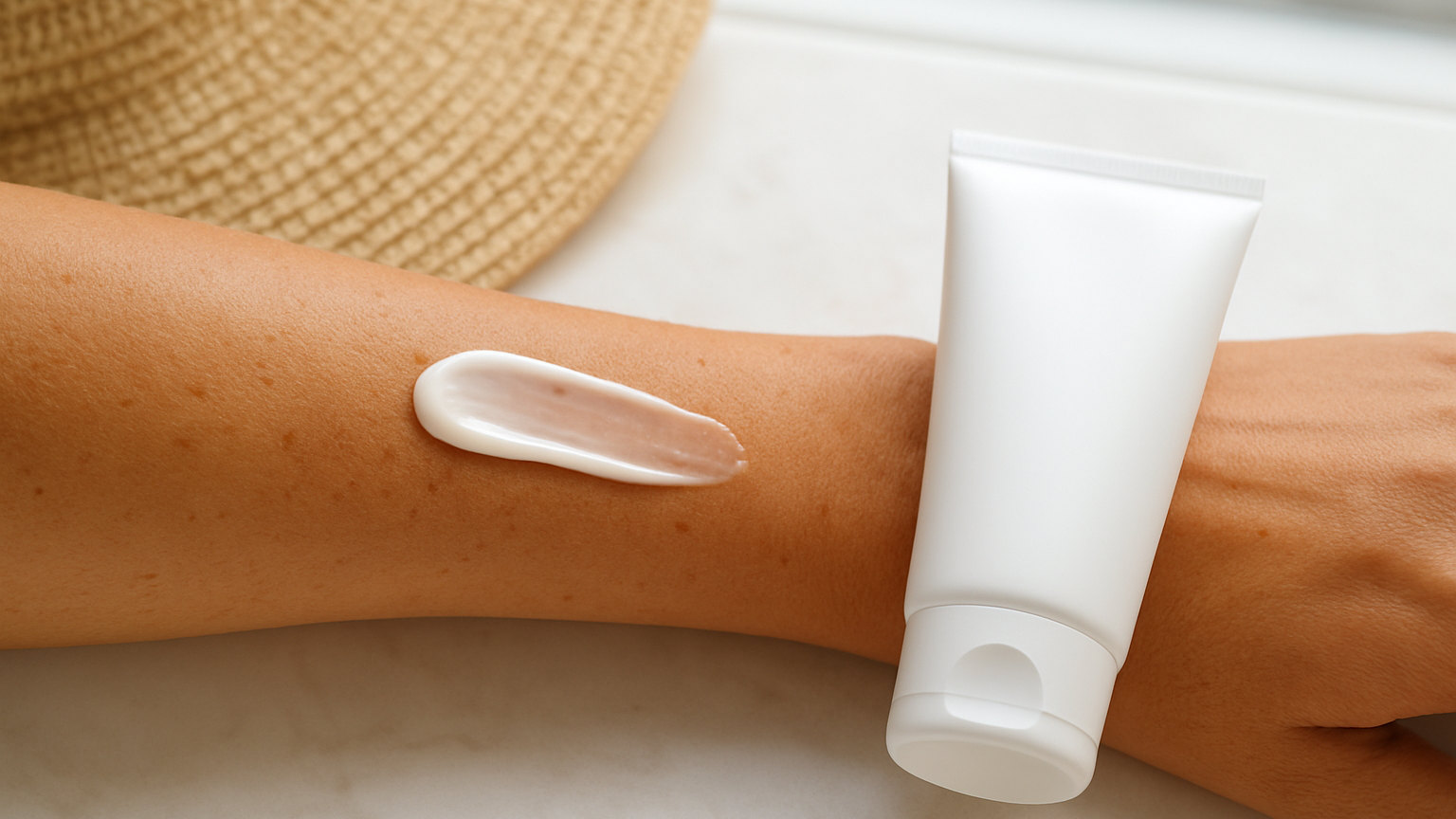
The idea of building up a base tan before a holiday is one of the most durable pieces of sun folklore, and it contains a grain of truth wrapped around a poor trade. A tan does provide some protection. The question is how much, and what it costs to acquire.
How much protection does a tan give?
Very little. Estimates for a moderate tan in fair skin put it at roughly SPF 3, and some research suggests as low as SPF 2 to 4.
Put beside the SPF 30 minimum generally recommended, that is a negligible contribution. It means a tan might extend the time before burning by a small margin while doing nothing meaningful about cumulative damage.
Thickening of the outer skin layer, which also occurs with repeated exposure, contributes a little more. Neither effect approaches what a sunscreen provides.
What is a tan, biologically?
A damage response. Ultraviolet radiation injures DNA in skin cells, and the increase in melanin production is the body attempting to shield the nuclei of those cells from further harm.
That framing is worth keeping in mind, because it means a tan is evidence that damage has already occurred rather than a state of preparedness. There is no version of tanning in which the pigment arrives without the injury that prompted it.
Are sunbeds a sensible way to prepare?
No, and this is the version of the myth that causes most harm. Sunbeds emit predominantly ultraviolet A, which produces pigment darkening with relatively little of the thickening response, so the protection gained is even smaller than from natural sun.
Meanwhile UVA penetrates deeply and is responsible for most photoageing. Use before the age of thirty-five is associated with a substantially increased melanoma risk, and the World Health Organization classifies sunbeds as a group one carcinogen.
So a course of sunbeds before a holiday buys roughly SPF 3 at the cost of concentrated exposure to the most damaging part of the spectrum.
Does it help with holiday burning at all?
Marginally, and not enough to change what you should do. Someone with a base tan still needs the same sunscreen, the same hat and the same shade at midday.
There is also a behavioural cost that is easy to overlook. People who believe they are protected tend to stay out longer and apply less, so the small physiological benefit is frequently outweighed by the change in behaviour it produces.
Is any tan safer than another?
Fake tan is, because it involves no ultraviolet exposure at all. Dihydroxyacetone reacts with proteins in the outermost skin layer to produce colour, and the process is unrelated to melanin.
The important caveat is that fake tan provides essentially no sun protection. A tanned appearance from a bottle offers no more than the SPF 1 to 2 of untanned skin, and treating it as protection is a common and avoidable mistake.
Tanning tablets containing canthaxanthin are a separate matter and are not authorised as food supplements in the UK, having been associated with liver problems and deposits in the retina.
What about people who never burn?
Deeper skin tones have more natural protection, estimated at somewhere in the region of SPF 13 at the highest, which is still below the recommended minimum.
It also offers no protection against visible light, which drives pigmentation, and skin cancer occurs in all skin tones, frequently diagnosed later. Not burning is not the same as not being damaged.
What actually prepares skin for a holiday?
Practical things rather than pigment. Buying enough sunscreen, since a family needs far more than most people pack. Checking that last year's bottle has not expired.
Taking a proper hat and UPF swimwear for children. Checking whether any medication you take causes photosensitivity, since a course of doxycycline and a Mediterranean fortnight is a common and unpleasant combination. And accepting that the first two days need more caution than the rest.


