
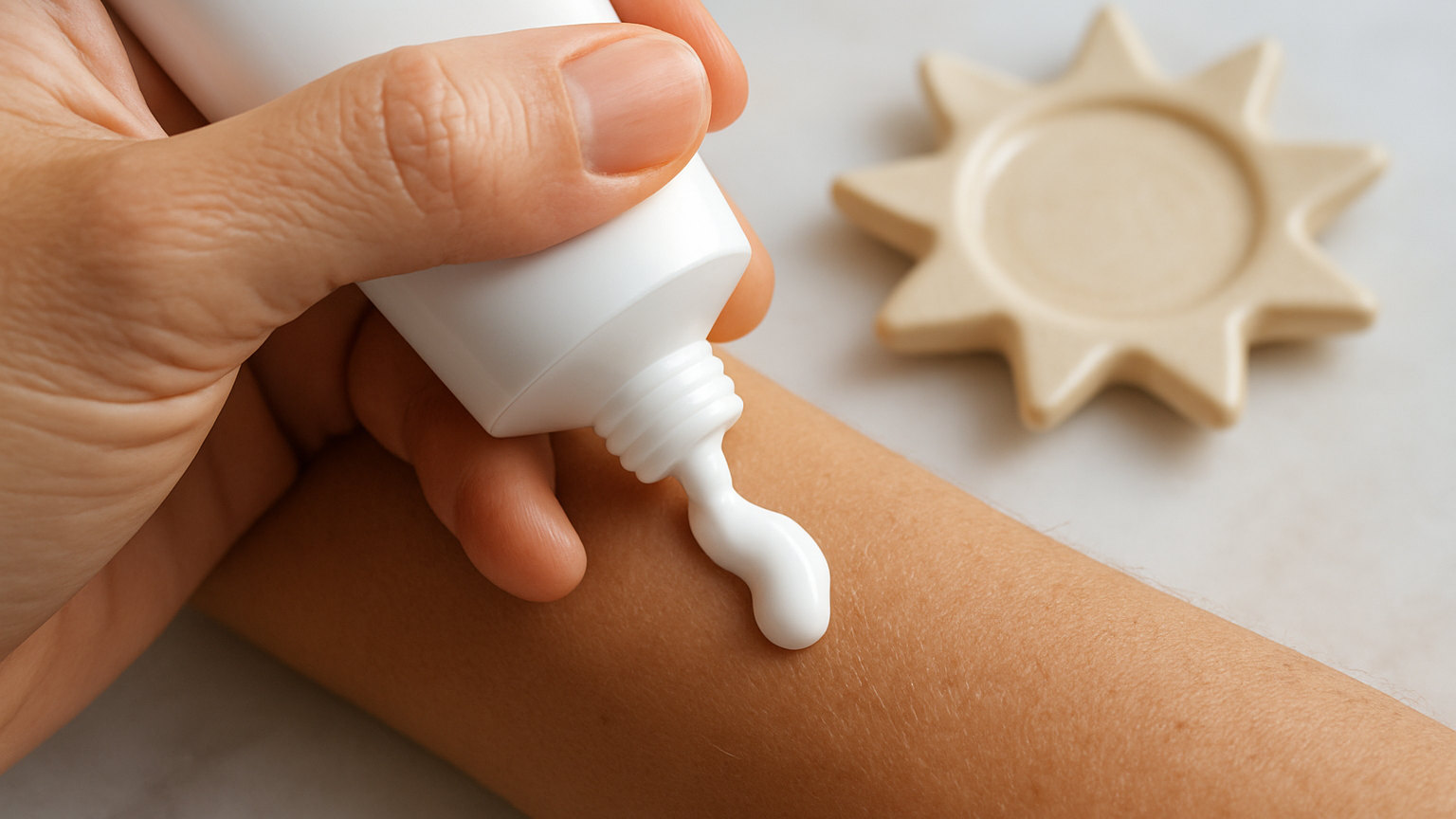
The gap between the protection on the label and the protection people receive is mostly a question of quantity. SPF is measured at a specific thickness, and the amount most people apply is a fraction of it.
What is the tested amount?
Two milligrams per square centimetre of skin. That is the standard used in laboratory testing worldwide, and every SPF figure on every bottle assumes it.
For an average adult face and neck that works out at roughly a third to a half of a teaspoon. For the whole body in swimwear it is around 35 millilitres, or six to seven teaspoons, which is considerably more than most people use in an entire beach day.
How much do people actually apply?
Studies consistently find between 0.5 and 1.0 milligrams per square centimetre, so a quarter to a half of the tested quantity.
The consequence is not proportional. Protection falls off faster than the amount, so applying half the quantity of an SPF 50 does not give you SPF 25. Estimates vary, but the effective protection can drop to a third or less of the labelled figure.
This is why the practical advice is to buy a high factor and apply it generously, rather than to buy a lower factor and assume you will be thorough.
What is the two-finger rule?
Squeeze sunscreen along the length of your index and middle fingers, from the base to the tip. That quantity, applied to the face and neck, approximates the tested amount.
It looks like a great deal more than most people are used to. If it disappears instantly and feels like nothing, you have probably applied too little.
An alternative is the half-teaspoon measure for face and neck, which is more precise and less convenient.
How do you divide it for the body?
A common approach is the teaspoon rule: roughly one teaspoon for the face and neck, one for each arm, one for each leg, one for the front of the torso and one for the back.
That comes to around seven teaspoons, or 35 millilitres, which means a 200 millilitre bottle provides about six full-body applications. Judged against that, most families return from a week away with far more sunscreen left than they should have.
How often should you reapply?
Every two hours during sun exposure, and immediately after swimming, towelling or heavy sweating.
The two-hour figure exists because filters degrade with light exposure and the film is disturbed by movement, clothing and sweat. Water resistance means the product retains a stated proportion of its protection after a set time in water, not that it survives indefinitely.
For a day spent indoors away from windows, a single morning application is reasonable. The reapplication rule is about exposure, not about clock time.
How do you reapply over makeup?
The honest answer is that it is awkward, and the practical options are imperfect.
A powder sunscreen applied generously provides some top-up, though reaching the tested amount with powder is unrealistic. A sunscreen mist held close and applied liberally does more than most people assume, provided enough is used. A cushion compact with SPF works reasonably.
Where possible, prioritising shade and a hat during the middle of the day does more than any of these.
Which areas get missed?
The same ones, consistently: ears, the hairline and any parting, the sides and back of the neck, the eyelids, the lips, the tops of the feet and the backs of the hands.
Studies photographing people under ultraviolet light after they have applied sunscreen show substantial missed areas, particularly around the eyes and temples. Applying deliberately to those places rather than trusting a general sweep is worth the extra few seconds.
Does it matter when you apply it?
Less than the old advice suggested. Organic filters were once said to need twenty minutes to become effective, and modern formulations are largely protective on application.
What does matter is applying it before you dress, so the areas that clothing shifts away from are covered, and letting it settle for a few minutes before makeup so it forms an even film rather than being disturbed.


