
Sunburn is a radiation injury rather than a heat burn, which explains both why it appears hours after the exposure and why several popular remedies make it worse. The damage is done before you feel anything.
What is actually happening?
Ultraviolet radiation damages DNA in skin cells. The body responds with an inflammatory reaction: blood vessels dilate, producing redness and heat, and inflammatory mediators cause pain and swelling.
Cells with irreparable damage undergo programmed death, and it is their loss that produces peeling several days later. That is why redness peaks eight to twenty-four hours after exposure rather than immediately, and why leaving the sun does not stop it developing.
What should you do first?
Get out of the sun and cool the skin. A cool shower or bath, or cool damp cloths applied for ten to fifteen minutes several times, reduces both the heat and the inflammation.
Drink more than usual, because burnt skin loses fluid and mild dehydration is common. Take an anti-inflammatory painkiller if suitable for you, which addresses the mechanism rather than only the sensation.
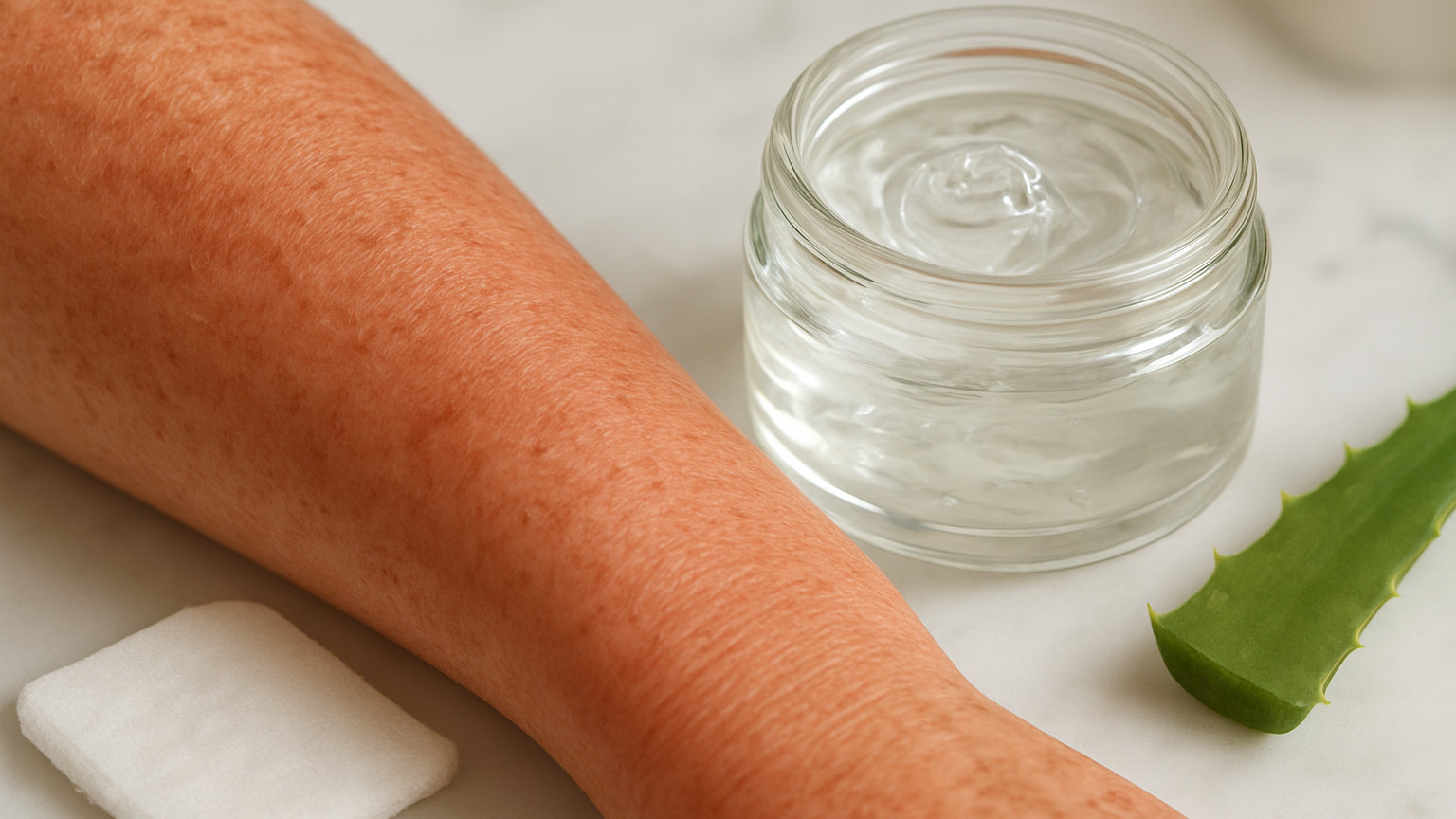
Apply a light, fragrance-free moisturiser while the skin is still damp. Aloe vera gel is soothing and reasonable, though the evidence for it accelerating healing is modest.
What should you avoid?
Ice or ice packs directly on the skin, which can cause further injury to tissue that is already damaged.
Petroleum jelly and thick greasy ointments in the first day or two, which trap heat. Products containing local anaesthetics ending in caine, which frequently cause allergic reactions on damaged skin. Anything with alcohol or fragrance.
Bursting blisters, which removes the sterile covering protecting the wound underneath and invites infection. And picking at peeling skin, which pulls away skin that is not ready and delays healing.
How long does it take to heal?
Mild burn settles over three to five days, with peeling beginning around day three or four. More severe burn with blistering takes a week or longer.
The redness fades before the repair is complete, and skin remains more sensitive and more prone to pigmenting for several weeks. Protecting the area rigorously during that period prevents the burn from leaving lasting discolouration.
When does it need medical attention?
Extensive blistering, particularly over a large area. Fever, chills, nausea, vomiting, dizziness, confusion or a rapid pulse, which suggest heat exhaustion or heatstroke rather than skin injury alone.
Severe pain out of proportion, signs of infection such as increasing redness, swelling, pus or red streaks, and any significant burn in a baby or young child.
Heatstroke is a medical emergency. Sunburn accompanied by confusion or collapse is not a skin problem.
Does a burn cause lasting damage?
Yes, and this is the part worth taking seriously once the discomfort has passed. The DNA damage that caused the inflammation is cumulative.
Research consistently links episodes of severe or blistering sunburn, particularly in childhood and adolescence, with a substantially increased risk of melanoma later in life. Each burn also contributes to the collagen degradation that shows up as photoageing.
The skin recovers its appearance. The underlying risk does not reset.
Does peeling skin need treating?
Only with moisturiser and patience. Peeling is the body removing cells too damaged to keep, and it resolves on its own.
Do not exfoliate it, however untidy it looks, since the skin beneath is new and fragile. Keep it moisturised, keep it covered or protected from further sun, and expect it to take a week or so. If the area beneath looks pale and shiny once peeling finishes, that is normal and evens out over subsequent weeks.
Does aftersun do anything sunscreen would not?
Not much, beyond feeling pleasant. Most aftersun products are moisturisers with aloe vera and a cooling agent, and a plain fragrance-free moisturiser does substantially the same job.
What is worth avoiding is any product containing alcohol high in the ingredient list, which stings and dries, or a local anaesthetic, which frequently causes reactions on damaged skin. Keeping a plain moisturiser in the fridge achieves the cooling effect without either risk.


