
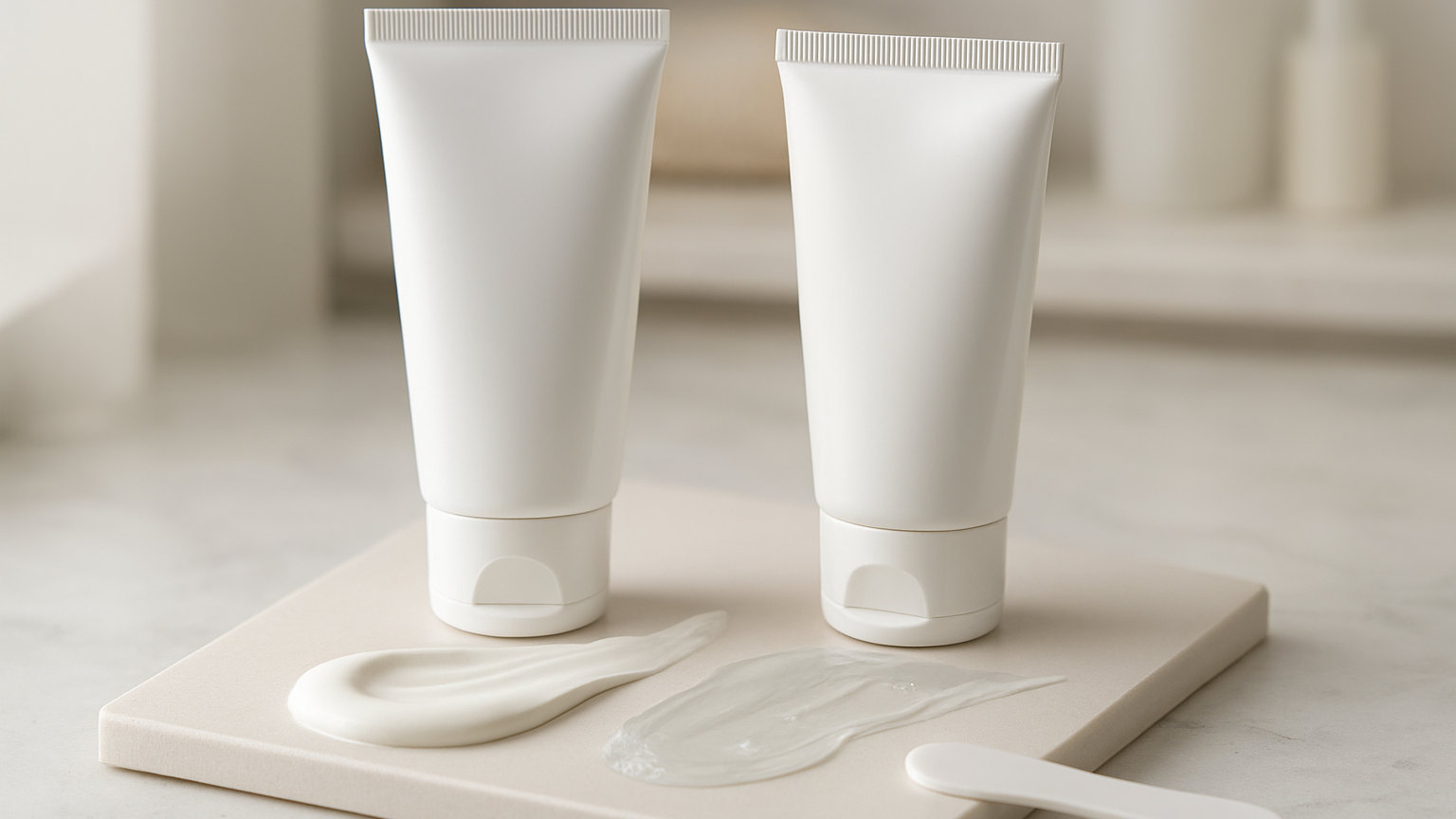
This is the most argued-about question in sun care and one of the less important ones. Both types work, both are regulated, and the difference that matters most is which one you will apply generously every morning without resenting it.
How do the two differ?
Mineral sunscreens use zinc oxide and titanium dioxide, which sit largely on the surface and both scatter and absorb ultraviolet light. Zinc oxide gives the broadest single-filter coverage across UVA and UVB.
Organic filters, usually called chemical, absorb ultraviolet radiation and release it as a small amount of heat. Each covers part of the spectrum, so products combine several to achieve broad protection.
The old shorthand that mineral reflects and chemical absorbs is not accurate. Mineral filters absorb a substantial share of what they block.
Which protects better?
Neither, inherently. Protection depends on the specific filters, their concentration and the formulation, not on which category they belong to.
Modern organic filters available in the UK and EU, including Tinosorb and Uvinul compounds, offer excellent photostable UVA coverage. A well-formulated mineral product at sufficient concentration performs comparably.
What genuinely differs is application. Mineral formulas need to be applied evenly and generously to work as tested, and they are less forgiving of a thin, rushed layer.
Which suits sensitive skin?
Mineral, usually. Zinc oxide is inert, sits mostly on the surface and is one of the least irritating cosmetic ingredients available. It is also mildly anti-inflammatory, which is why it appears in nappy creams and calamine.
Organic filters more commonly cause stinging around the eyes, and a minority of people react to specific ones. For rosacea, eczema or a compromised barrier, mineral is the sensible starting point.
That said, irritation blamed on a filter is frequently caused by fragrance or a preservative in the same product.
Which suits acne-prone skin?
It depends on texture more than on filter type. Heavy, greasy formulations congest skin regardless of what is in them.
Zinc oxide has the advantage of absorbing some surface oil, so mineral products often feel more matte. Fluid and gel organic sunscreens are frequently the most comfortable option for oily skin.
The claim that sunscreen causes breakouts is largely a formulation problem, and it is worth trying two or three textures before concluding the category does not suit you.
What about the white cast?
A genuine drawback of mineral sunscreens and a solvable one. It is caused by the particles scattering visible light as well as ultraviolet, and it is far more noticeable on medium and deep skin tones.
Tinted mineral formulas containing iron oxides largely solve it, and they have a second advantage: iron oxides block visible light, which contributes to melasma and pigmentation. For anyone treating pigmentation, tinted mineral is arguably the best option available.
Are chemical filters safe?
The regulatory position in the UK and EU is more restrictive than in some other markets, and several filters have been reviewed and their permitted concentrations adjusted.
Studies showing systemic absorption of certain filters have been widely reported. Absorption is not the same as harm, and regulators have consistently concluded that approved filters at approved concentrations are safe. Anyone who prefers to avoid the question can use mineral, which is barely absorbed.
Oxybenzone is the filter most often raised, and it is far less used in European products than in American ones.
So which should you buy?
The one you will apply at two finger-lengths every morning without thinking about it. That single factor outweighs every difference discussed above.
A reasonable default is a tinted mineral formula for sensitive skin or pigmentation, and a modern organic or hybrid fluid for everyone else. Owning two, a lighter one for daily use and a more robust one for genuine sun exposure, suits most people better than trying to find one product for both.
What about reef-safe claims?
Reef safe is not a regulated term and no independent body verifies it. It usually indicates the absence of oxybenzone and octinoxate, both restricted in some jurisdictions following research on coral.
The science is contested and the contribution of sunscreen relative to warming and pollution is debated. If it matters to you, mineral formulas using non-nano zinc oxide are the usual choice, and covering up in the water reduces the quantity washing off regardless of formula.


