
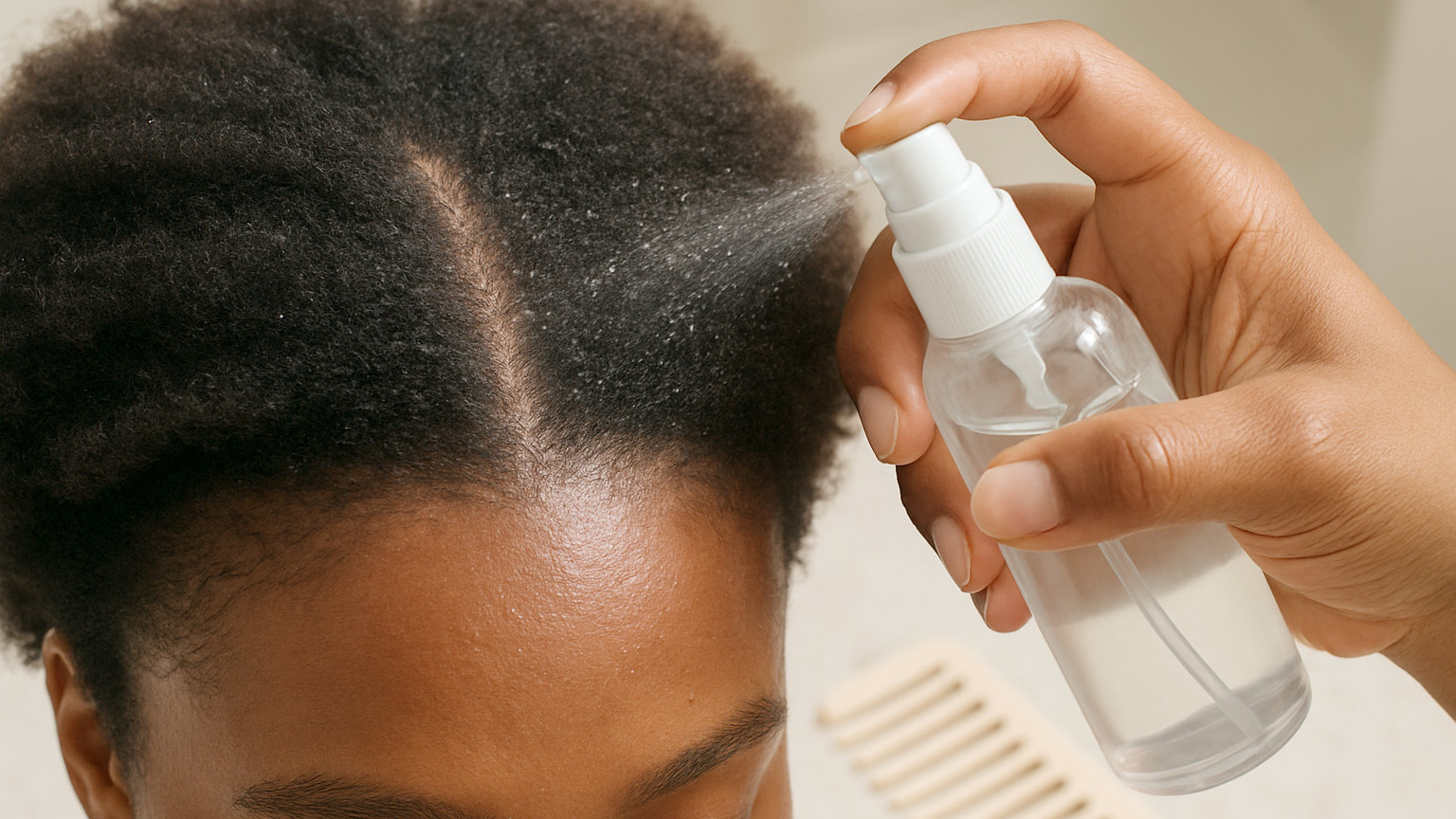
The scalp is among the most frequently burnt parts of the body and among the least protected, largely because sunscreen is difficult to apply to hair-bearing skin. It also matters more than most people realise, because it is a site where skin cancers are found late.
Why does the scalp burn so readily?
Because it faces upward, receiving sun at the most direct angle for most of the day, and because hair provides less protection than it appears to.
A parting exposes a strip of skin that has had no adaptation to sunlight at all. Thinning hair and male pattern baldness expose progressively more, often gradually enough that the person does not adjust their habits.
The scalp also has a rich blood supply and thin skin over bone, which makes burn there particularly uncomfortable.
Why is this a health issue rather than a comfort one?
Because scalp skin cancers are typically found later than those elsewhere. The area is difficult to see, often covered by hair, and rarely examined.
Melanomas on the scalp and neck have been associated with poorer outcomes than those at other sites, largely attributed to later detection. Anyone with thinning hair, a shaved head or a habitual parting has an exposed area they never look at.
Asking a hairdresser or barber to mention anything unusual is a reasonable and underused arrangement.
What should you use on the scalp?
A hat, first. Wide-brimmed rather than a cap, since a cap leaves the ears, the back of the neck and the sides unprotected, which is precisely where damage accumulates.
For sunscreen, dedicated scalp products exist in spray, mist, powder and stick forms. Powder sunscreens containing zinc oxide are particularly practical for a parting, since they do not leave hair greasy. Sticks work well along a parting and on a shaved head.
A regular sunscreen on a bald or shaved head is entirely reasonable, and a mattifying or fluid formula avoids the slick appearance people object to.
Does the sun damage hair itself?
Yes, though differently from skin, since hair is not living tissue and cannot repair itself.
Ultraviolet degrades keratin proteins and breaks disulphide bonds, producing dryness, roughness, split ends and reduced elasticity. It also oxidises melanin in the hair shaft, which is why hair lightens in summer, and why colour-treated hair fades and turns brassy.
Salt water and chlorine compound it by stripping lipids and, in the case of chlorine, reacting with copper in pool water to produce the greenish tint on light hair.
How do you protect hair?
Physical covering is the most effective, again. Beyond that, leave-in conditioners and hair oils containing UV filters offer some protection, though there is no SPF rating system for hair products and claims are difficult to verify.
Wetting hair with clean water before swimming reduces how much salt or chlorinated water it absorbs. Rinsing immediately afterwards removes most of it. A deep conditioning treatment weekly through summer addresses the cumulative dryness.
What about the ears and the back of the neck?
Both are commonly missed and both are frequent sites of sun damage and skin cancer, particularly in men and in anyone with short hair.
The tops and rims of the ears burn readily and are awkward to reach, which is where a stick sunscreen is genuinely useful. The back of the neck is exposed whenever hair is tied up, and a brimmed hat covers it while a cap does not.
How should you check your scalp?
Every few months, with a hand mirror and a wall mirror, parting hair in sections. It is easier with help.
Look for anything new, changing, bleeding, crusting or failing to heal, and for rough scaly patches that persist, which can be actinic keratoses. Anything that does not settle within a few weeks is worth a GP appointment.
Does sun exposure cause hair loss?
Not directly, and the relationship runs the other way. Ultraviolet damages the hair shaft rather than the follicle, so it causes breakage and dryness rather than shedding.
What sun does do is expose a scalp that thinning hair has already left uncovered, which is why the two are so often noticed together. Protecting the scalp matters more as hair thins, not because sun is causing the loss but because there is progressively less covering the skin.


