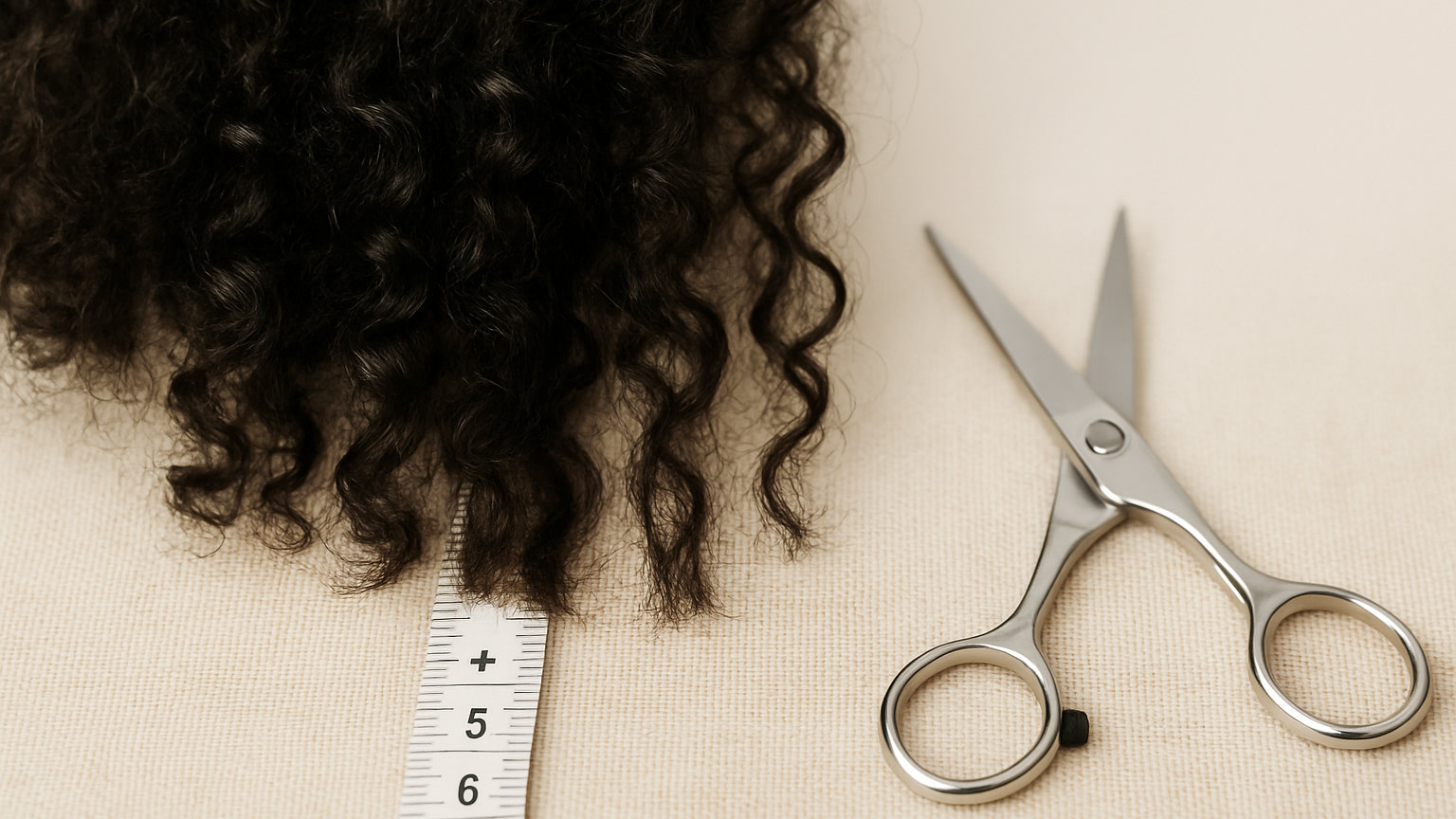
Does Trimming Make Hair Grow Faster?
Cutting the ends cannot affect what happens at the roots, and yet people who trim regularly do end up with longer hair, which is worth explaining properly.
Hair is dead protein, which is the single most useful fact for judging what any product can and cannot do for it. Nothing repairs a split end; a good deal of what is sold as repair is a temporary coating, and there is no shame in wanting one. These guides separate the things that genuinely change hair from the things that make it look better until the next wash, cover the causes of loss and thinning honestly rather than hopefully, and treat the scalp as skin, because that is what it is.
Cutting the ends cannot affect what happens at the roots, and yet people who trim regularly do end up with longer hair, which is worth explaining properly.
Hair is at its weakest when wet, and the ordinary business of towelling and tying it up causes more damage than most heat styling.
It removes what ordinary shampoo leaves behind, which is useful every few weeks and damaging every week.
Mechanical damage from brushing is one of the largest and least discussed causes of breakage, and almost all of it is avoidable.
The idea that hair adapts to a product and stops responding is one of the most widely repeated claims in hair care, and there is essentially nothing behind it.
The curl-pattern chart is the best known system and the least useful, because two other characteristics predict what your hair needs far more reliably.
Conditioner is the product that determines how hair looks and behaves, and most of what goes wrong with it comes down to where and how long.
Shampoo is chosen by scalp rather than by hair, which is the opposite of how almost all of it is marketed.
There is no universal answer, and the two most confident positions on this question are both wrong for most people.