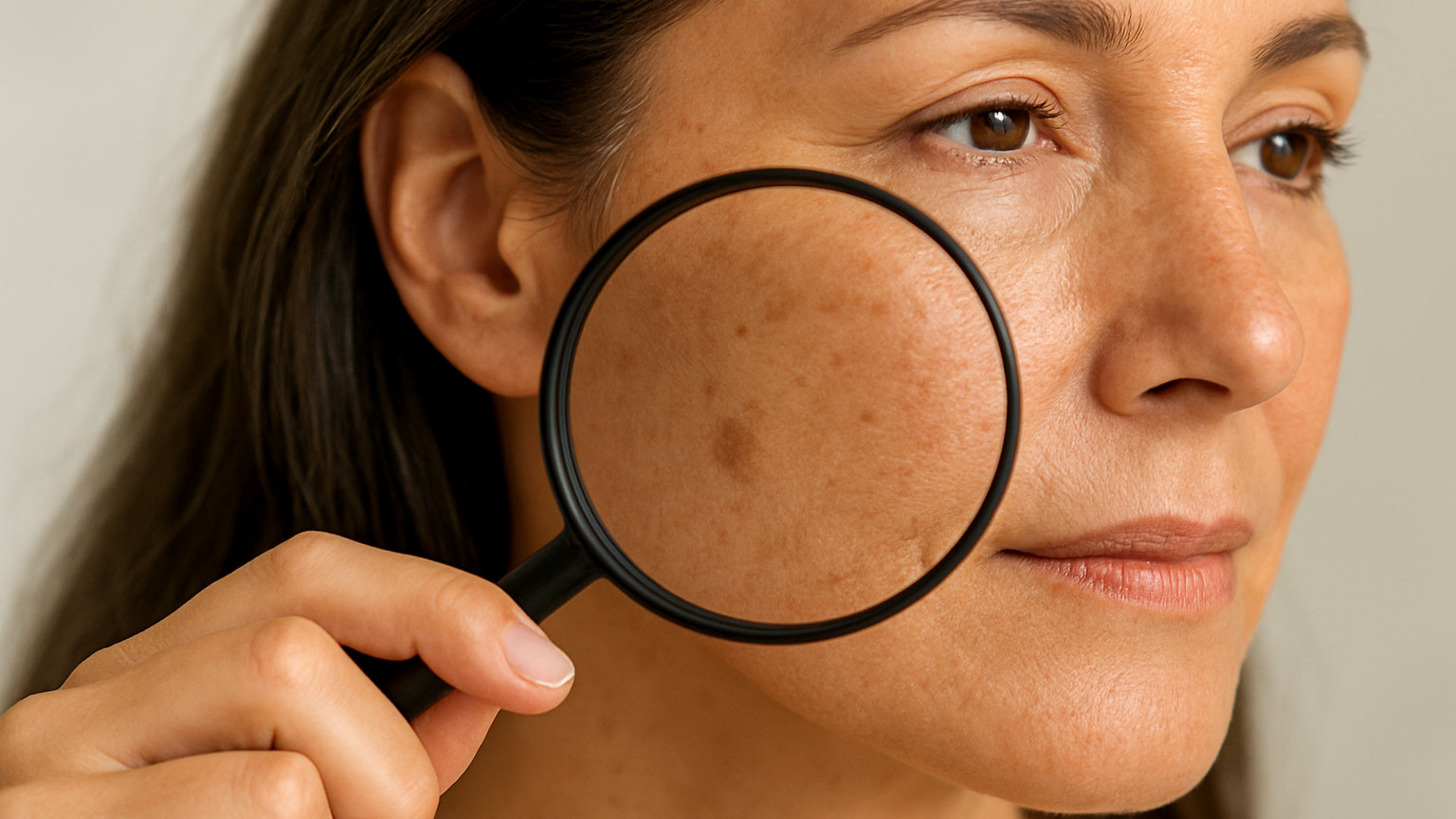
Why Is My Skin Tone Uneven Rather Than Spotted?
Uneven tone is a different problem to discrete dark spots, and a good deal of it is texture and circulation rather than pigment at all.
By Beauty Advice Team
9 Jun 2026

Almost every skincare problem has been solved by an ingredient that costs very little and been repackaged by an industry that charges a great deal for it. These guides start with the concern rather than the product: what is actually happening in the skin, which ingredients have evidence behind them and at what strength, and how long a change honestly takes to show. They also say plainly where the answer is a dermatologist rather than a serum, because acne that scars and moles that change are not skincare problems.
Uneven tone is a different problem to discrete dark spots, and a good deal of it is texture and circulation rather than pigment at all.
Illegal skin lightening products are widely sold in the UK and contain ingredients that cause permanent damage, and the packaging rarely says so.
Exfoliation helps some kinds of pigmentation and reliably worsens others, and the difference comes down to how deep the pigment sits.
These areas get comparable sun exposure to the face with a fraction of the protection, which is why they often show pigmentation first and most obviously.
Progress made over winter can disappear in a fortnight, and the reason is that every treatment for pigmentation works against a daily supply of the cause.
Melasma behaves differently to every other kind of pigmentation, and treating it as if it were sun damage is what makes it worse.
Marks left by spots fade on a schedule set by biology, and most of what people do to speed it up either does nothing or resets the clock.
Pigment-fading ingredients work at different points in the same process, which is why combining two sensibly beats doubling the strength of one.
Pigmentation has several distinct causes that look similar and respond very differently, so identifying which one you have decides everything that follows.
Sebum production follows a predictable curve across a lifetime, which means the routine that suited you at twenty is probably working against you at forty.
Makeup breaking down by lunchtime is usually a skin problem rather than a foundation problem, which is why buying a different foundation rarely fixes it.
There is something in this, though not for the reason usually given, and the advantage is smaller than the compensation people hope for.